Shangqiu Ancient City
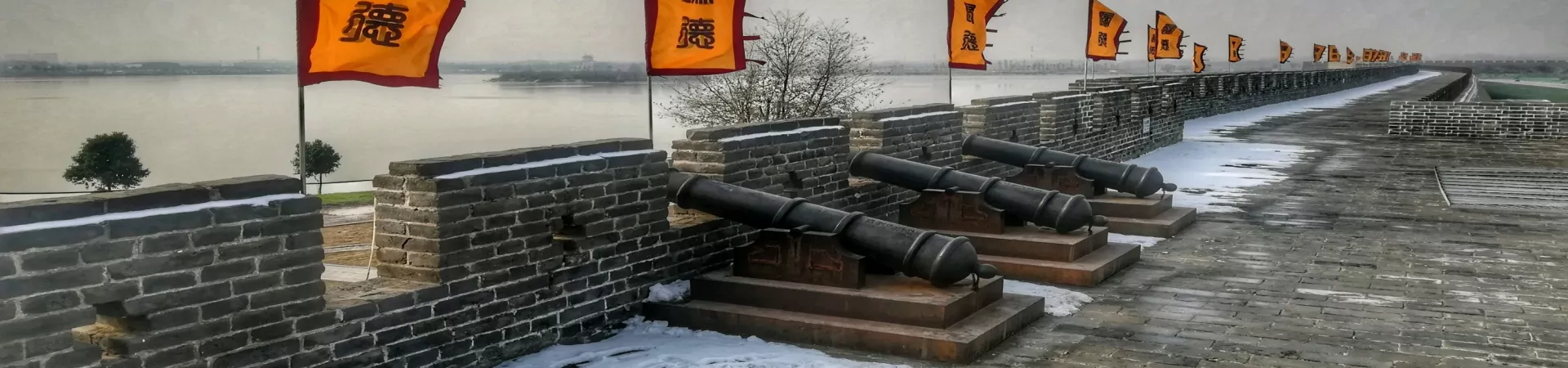
Subtitle: A Journey Through Time: Exploring Shangqiu Ancient City, the Living Testament of China's Commercial Heritage
1. Introduction: The Coin-Shaped City Nestled in the eastern plains of Henan Province, Shangqiu Ancient City, historically known as Guide Prefecture City, stands as a remarkably preserved urban fossil from China's Ming and Qing dynasties. Constructed in 1511 AD during the sixth year of the Ming Emperor Zhengde's reign, this walled city boasts a history spanning over five centuries. More than just a historical site, its unique physical form is a profound architectural metaphor. The city's layout, consisting of a square inner brick wall surrounded by a circular outer lake and earth rampart, was deliberately designed to resemble a giant ancient Chinese coin. This iconic shape is no accident; it pays homage to Shangqiu's legendary status as the birthplace of Chinese commerce, commodity exchange, and the very "Shang" culture that forms a cornerstone of Chinese civilization.
2. Architectural Layout and Unique Design 2.1. The Triple-Layer Defense: Wall, Lake, and Rampart The city's structure is a masterpiece of integrated urban and defensive planning, comprising three distinct concentric layers. At its heart lies the robust square Brick City, the main urban area. This is encircled by a wide, moat-like City Lake, which in turn is surrounded by a circular Earth Rampart (Chengkuo). This "outer round, inner square" (wai yuan nei fang) configuration is exceptionally rare. The nearly 3.6-kilometer-long wall features four main gates facing the cardinal directions. Interestingly, the terrain within the walls is subtly raised in the center, sloping gently towards the edges, forming a "tortoise-shell" shape, another traditional symbol of longevity and stability.
2.2. A Quirk of Feng Shui: The Misaligned Gates One of the city's most fascinating peculiarities lies in its eastern and western gates. According to the principles of Chinese metaphysics and the theory of the Five Elements (Wuxing), the east is associated with Wood and the west with Metal. In the cycle of elements, Metal (west) is said to "overcome" or destroy Wood (east). To neutralize this potentially inauspicious conflict, the city's Ming dynasty planners ingeniously offset the East and West Gates so they do not align directly opposite each other, breaking the direct "confrontation." This intentional misalignment of a city's main axial gates is believed to be unique among all Chinese ancient cities, a testament to the deep cosmological thinking embedded in its design.
3. Cultural Heritage Within the Walls 3.1. Residential Harmony: The Quadrangle Courtyards Inside the city gates, the urban fabric is characterized by traditional Siheyuan (quadrangle courtyards). These residential complexes, with buildings arranged around a central courtyard, reflect the social order and family-centered life of imperial China. Many of the streets and lanes within Shangqiu Ancient City retain their original Ming and Qing dynasty layout and风貌 (fengmao, historical风貌), allowing visitors to stroll through a living architectural museum.
3.2. Legends and Literary Greats: Zhuanghui Hall Among the historic residences, the Zhuanghui Hall holds particular significance. This was the home of Hou Fangyu, a renowned literary scholar and poet who lived through the tumultuous transition from the Ming to the Qing dynasty. The hall's name, meaning "Hall of Regret and Reflection," is derived from his later works and life story, attracting visitors interested in Chinese literature and history.
3.3. Spiritual and Artistic Treasures: The Eight-Guan Zhai Outside the southern gate, along the ancient Song River, lies the Eight-Guan Zhai (Eight Observances Pavilion). This site is famed for housing a priceless cultural relic: the "Record of the Eight-Guan Zhai Meeting to Repay Virtue" stele. The text on this stone tablet was engraved from the calligraphy of the legendary Tang dynasty master, Yan Zhenqing. His powerful, square style is considered a pinnacle of Chinese script, making this stele a major pilgrimage site for calligraphy enthusiasts worldwide.
4. A City Built Upon History 4.1. A Legacy of Scholars and Statesmen Shangqiu Ancient City was not only a commercial hub but also a cradle of talent. From the mid-Ming to early Qing periods, the city produced an impressive number of high-ranking officials, including two Grand Secretaries (equivalent to chancellors or prime ministers), five Ministers of the six key ministries, and over a dozen Vice-Ministers, Provincial Governors, Censors, and Military Commanders. This concentration of scholarly and administrative excellence speaks volumes about the city's cultural and educational atmosphere during its heyday.
4.2. The Layered Past: A Palimpsest of Capitals Perhaps the most awe-inspiring aspect of Shangqiu's history lies literally beneath your feet. The current Ming-era city is merely the top layer of a deep archaeological stack. Due to centuries of flooding and silt deposition from the Yellow River, several ancient cities from previous dynasties are buried underground. These include the capital of the Song State from the Western Zhou Dynasty, the Suiyang City of the Han and Tang dynasties, the Southern Capital of the Northern Song Dynasty, and the earlier Yuan Dynasty Guide Prefecture city. This makes Shangqiu a unique historical archive, preserving a vertical timeline of Chinese urban civilization over three millennia.
Practical Information for Visitors * Location: Shangqiu City, Henan Province, China. * Open Hours: The ancient city walls, gates, and public areas are accessible 24 hours a day, year-round. * Admission: Entry to the ancient city town area and walking along the city walls is free. However, access to specific interior attractions, museums, and historical buildings like Zhuanghui Hall typically requires separate admission tickets. It is advisable to check the latest ticket prices and opening hours for individual sites at the tourist information centers. * Suggested Duration: A comprehensive visit to explore the walls, key historical sites, and museums requires a minimum of 3 hours. A full day allows for a more leisurely pace to absorb the atmosphere. * Contact: For specific inquiries, you may contact the management at +86-370-3313605 or +86-370-3310695.