Liu Bang's Snake Slaying Stele
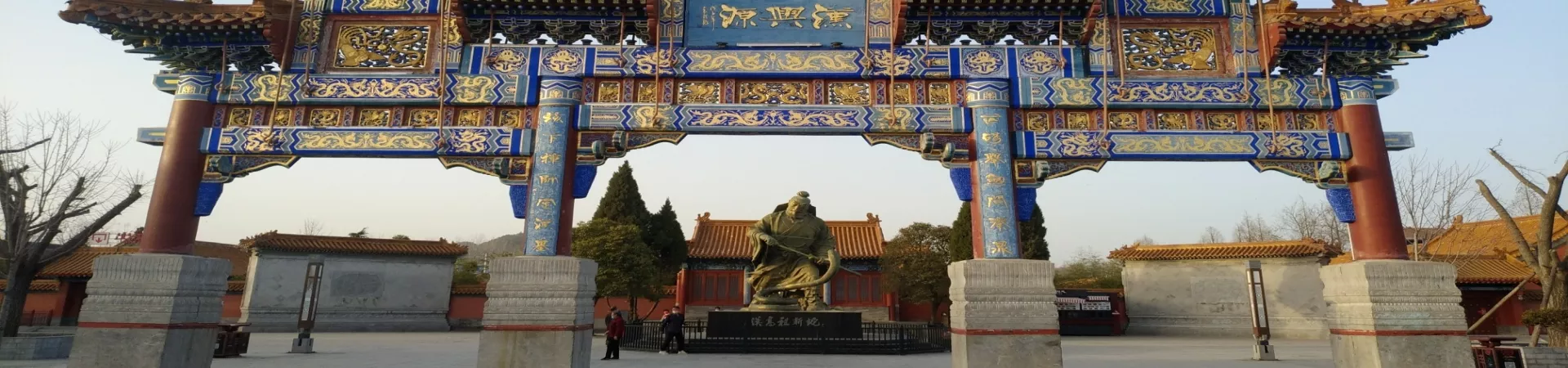
The Stele of Liu Bang Slaying the Snake: Where Legend Meets History in Shangqiu
A Journey to the Cradle of the Han Dynasty
Nestled within the culturally rich city of Shangqiu in Henan Province, a site exists that blurs the line between foundational myth and tangible history. This is the Stele of Liu Bang Slaying the Snake, a monument commemorating one of China's most enduring legends surrounding Liu Bang, the founding emperor of the illustrious Han Dynasty (206 BCE – 220 CE). More than just a stone marker, the stele serves as a powerful symbol, connecting visitors to the dramatic origins of a dynasty that would shape Chinese civilization for centuries. The site is integrated into the broader Hanxingyuan (Han Dynasty Origin) Scenic Area, a park dedicated to exploring the early life and legends of Emperor Gaozu, Liu Bang. A visit here is not merely a tourist stop but a pilgrimage into the narrative heart of China's imperial history, where folklore and historical reverence are etched in stone.
The Legend: A Hero's Omen-Filled Beginning
The story, passed down through generations and immortalized in Sima Qian's Records of the Grand Historian, is a cornerstone of Chinese cultural lore. It tells of a young Liu Bang, then a low-ranking亭长 (village patrol officer), tasked with escorting a group of convicts to Mount Li for labor. During the journey, many prisoners escaped. Knowing the severe punishment that awaited him for failing his duty, Liu Bang made a fateful decision. He released the remaining prisoners and, with a small band of loyal followers, went into hiding.
The Fateful Encounter in the Swamp As they fled through the rainy night, a scout reported back in terror, claiming a giant white snake blocked their path through a marsh. While others urged retreat, an emboldened Liu Bang, allegedly fortified by drink, declared, "A true hero fears nothing on his journey forward!" He strode ahead and, with a single stroke of his sword, cut the giant serpent in two. The group hurried past the site and camped for the night.
The Mysterious Old Woman's Prophecy The legend deepens with a supernatural twist. An old woman was later discovered weeping at the spot where the snake was slain. When asked why, she explained she was mourning her son, the White Emperor's son, who had been slain by the Red Emperor's son. Before anyone could question her further, she vanished. This cryptic lament was interpreted as a profound omen: the white snake represented the waning Qin Dynasty (associated with the element water, symbolized by white), while Liu Bang, as the "Red Emperor's son" (red symbolizing fire, which overcomes water), was destined to overthrow it and establish a new celestial mandate. This tale provided divine legitimacy to Liu Bang's subsequent rebellion, framing his rise not as mere rebellion but as fulfilling a preordained destiny.
The Monument: Stele and Spiritual Resonance
The physical centerpiece of the site is the Stele of Liu Bang Slaying the Snake. While the original stele's history is lost to time, the current monument stands as a modern reconstruction, meticulously crafted to honor the legend. It is a typical Chinese stone stele, mounted on a giant stone tortoise (bixi), a symbol of longevity and enduring legacy.
An Uncanny Phenomenon: The Nocturnal Glow What makes this stele particularly famous is a reported mysterious optical phenomenon. Under the cover of darkness, when car headlights or a strong flashlight beam strikes the stele at a specific angle, the engraved image of Liu Bang holding his sword is said to cast a radiant, shimmering reflection onto a nearby wall. This reflection, often described as resembling a towering, majestic figure with a gleaming sword, is interpreted by many as the "manifestation" of the emperor's spirit. Skeptics attribute it to the unique refractive properties of the stone and the specific carving technique, but for countless visitors, witnessing this "nocturnal glow" is a breathtaking and spiritual experience that makes the ancient legend feel vividly alive.
The Surrounding Park: Context and Atmosphere The stele is situated within the Hanxingyuan Scenic Area, which provides essential context. The park landscape incorporates design elements from the Han Dynasty, with pathways, gardens, and auxiliary structures that evoke the era. Informational plaques detail the history of the Han Dynasty's founding and Liu Bang's life. The atmosphere around the stele itself is one of quiet contemplation, allowing visitors to reflect on the weight of the legend and its significance.
Practical Information for Visitors
Location and Access The Stele of Liu Bang Slaying the Snake is located in Yongcheng City, under the administration of Shangqiu, Henan Province. It is the central attraction within the Hanxingyuan Scenic Area. Shangqiu is accessible by high-speed rail and major highways. From Shangqiu city center, visitors can take a long-distance bus or taxi to Yongcheng and then proceed to the park.
Admission and Hours There is no separate ticket for the stele itself. Admission is covered by the entrance fee to the Hanxingyuan Scenic Area, which is 30 RMB per person. The scenic area's opening hours are seasonal: * Spring, Summer, and Autumn: 8:00 AM – 9:00 PM * Winter: 8:00 AM – 8:30 PM It is highly recommended to visit close to dusk if you wish to experience the famed "nocturnal glow" of the stele, as darkness is required for the effect.
Contact and Further Inquiry For the most current information regarding opening hours, special events, or accessibility, you can contact the scenic area directly at 0370-5970777.