Li Guan Tunnel War Site
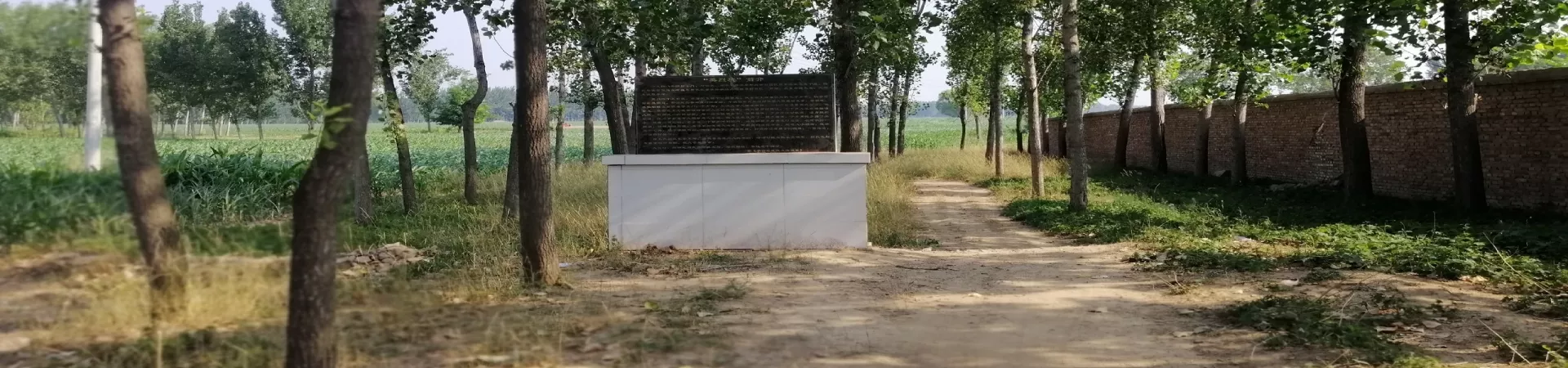
Subtitle: A Journey Through Time: Exploring the Li Guan Tunnel Warfare Site in Shangqiu
Introduction: A Testament to Ingenuity and Resilience
Nestled approximately 31 kilometers north of Minquan County in Shangqiu City, Henan Province, lies a remarkable and somber monument to a people's defiance: the Li Guan Tunnel Warfare Site. Designated as a Cultural Relics Protection Unit of Henan Province, this extensive underground network is far more than a historical relic; it is a tangible narrative of survival, strategic brilliance, and immense sacrifice during the brutal years of the War of Resistance Against Japan. Unlike grand palaces or ancient temples, its power lies in its subterranean silence, telling a story of a community that literally went underground to preserve its existence and fight for its homeland. A visit here is not merely a tour but an immersive descent into a pivotal chapter of local and national history, offering profound insights into the collective spirit of the Li Guan people.
The Strategic Marvel: Architecture of Survival and Resistance
1.1 Scale and Structure of the Tunnel Network The core of the site is the vast, interconnected labyrinth of tunnels engineered by the villagers of Li Guan and surrounding communities. Constructed primarily between 1941 and 1945, this network was a direct response to the "mopping-up" campaigns and scorched-earth policies of invading forces. Centered on the forward station in Li Guan village itself, the tunnels stretched to link over ten neighboring villages, creating a subterranean web with a total length exceeding 25 kilometers. This was not a single, narrow passage but a complex, multi-functional system designed for prolonged habitation and warfare.
1.2 Functional Design and Defensive Features The engineering sophistication of the tunnels is a highlight, reflecting acute strategic thinking. The network typically consisted of multiple layers, including main arteries for movement, narrower branch tunnels, and hidden chambers. Key defensive features were incorporated throughout: * Multiple Entrances/Exits: Well-camouflaged access points were located in innocuous spots such as under kang (heated brick beds), inside hearths, beneath millstones, or within water wells, often concealed by trapdoors. * Ventilation and Drainage: Carefully hidden air vents provided essential oxygen, while drainage channels prevented flooding—a critical consideration for habitability. * Defensive Chokepoints: The tunnels included "plug doors" that could be sealed to isolate sections, bottleneck passages where defenders had the advantage, and vertical "tiger traps" – deep, concealed pits that could incapacitate pursuing enemies. * Living Quarters and Storage: Expanded chambers served as living spaces, makeshift hospitals, workshops for repairing arms, and storage for grain and supplies, allowing the community to survive underground for extended periods.
This underground fortress enabled villagers to evade raids, shelter the wounded, and launch surprise counterattacks, embodying the ethos of "preserving oneself and eliminating the enemy."
Historical Context and Significance: The War Beneath the Earth
2.1 The Role in the Sino-Japanese War The Li Guan tunnels were a quintessential example of the "People's War" strategy and tunnel warfare tactics employed across the North China Plain. During this period, conventional battlefield engagements were often impossible for local militias and civilians. The tunnel networks turned the villages themselves into formidable, hidden strongholds. They provided a secure base for local guerrilla forces, communication lines between villages, and a means to protect the non-combatant population from the frequent and devastating enemy sweeps. The success of Li Guan's network contributed significantly to the resistance efforts in eastern Henan, disrupting enemy logistics and morale.
2.2 A Community's Collective Endeavor It is crucial to understand that the construction was a monumental, communal effort. Every villager, from the elderly to children, played a part—digging, transporting earth, keeping watch, or providing sustenance. This collective endeavor underscores the tunnels' nature not as a military project but as a grassroots, democratic defense system born of necessity and unity. The earth removed was often used to reinforce village walls or scattered discreetly, leaving little trace for aerial reconnaissance.
Key Sites and Memorials Within the Complex
3.1 The "Zhuangzhi Tai" (Platform of High Ambition) This site, often a raised mound or reinforced platform near a tunnel entrance, served as a symbolic and practical point. It was a place for lookouts to survey the surroundings and for leaders to address and rally the community. Today, it stands as a memorial to the unwavering resolve and lofty aspirations of those who refused to submit.
3.2 The "Xue Shui Jing" (Blood-Water Well) One of the most poignant locations on the site, this well bears witness to a tragic event. Historical accounts often tell of enemy troops discovering a tunnel entrance connected to a well. In a brutal act, they might have poisoned the well or, in some narratives, executed villagers there, contaminating the water source. It serves as a stark, visceral reminder of the war's brutality and the price paid by innocent civilians.
3.3 The "Ying Lie Yuan" (Courtyard of Heroes and Martyrs) This area is dedicated to commemorating the individuals who made the ultimate sacrifice. It may include restored buildings used as headquarters or shelters, steles inscribed with names of the fallen, and exhibition spaces displaying artifacts—rusty tools used for digging, simple weapons, personal belongings, and photographs. It transforms the narrative from the architectural to the personal, honoring the courage and sacrifice of named heroes and anonymous villagers alike.
Visitor Practical Information
4.1 Location and Access The Li Guan Tunnel Warfare Site is located in Li Guan Village, north of Minquan County, which is under the administration of Shangqiu City, Henan Province. The nearest major transport hub is Shangqiu, which is well-connected by high-speed rail and conventional trains. From Shangqiu, visitors can take a bus or hire a taxi for the approximately 60-70 kilometer journey to the site. Self-driving is also an option, with navigation to "Li Guan Tunnel Warfare Site" or "Li Guan Di Dao Zhan Yi Zhi."
4.2 Tickets and Contact Information For the most accurate and current information regarding opening hours and admission fees, it is highly recommended to contact the site management directly in advance. Ticket policies for historical and memorial sites in China can vary. * Contact Telephone: 0370-8611013 Prospective visitors should use this number to inquire about operational hours, ticketing details, potential guided tour availability, and any special visitor requirements.
4.3 Tips for a Meaningful Visit * Footwear and Clothing: Wear comfortable, sturdy shoes with good grip, as some tunnel sections may be uneven, damp, or involve stairs. The temperature underground is cooler and consistent, so a light jacket may be advisable. * Mindful Exploration: This is a site of historical significance and solemn remembrance. Maintain a respectful demeanor, especially in areas like the Blood-Water Well and the Courtyard of Heroes. * Guided Tours: If available, consider opting for a guided tour. Local guides can provide invaluable context, point out subtle architectural features, and share oral histories not found on placards. * Physical Considerations: The tunnels, while partially restored for tourism, can be narrow, low-ceilinged, and dark in places. Visitors with claustrophobia or significant mobility issues should assess their comfort level. Lighting is usually installed, but it can be dim.