Eight Guan Zhai
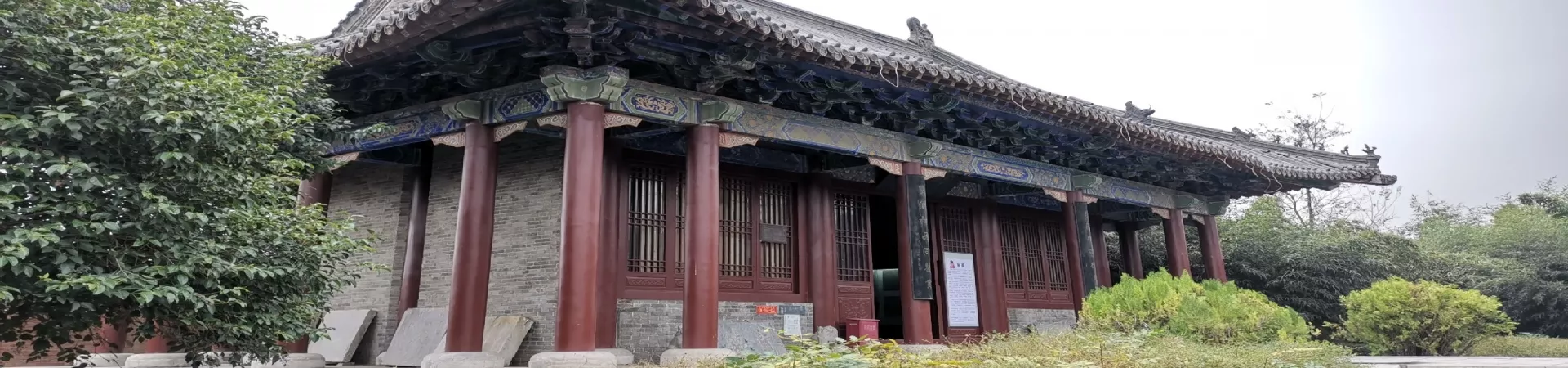
Subtitle: A Stroll Through History: The Eightfold Fast Stele of Shangqiu
1. Introduction: A Riverside Relic of Faith and Artistry
Nestled along the banks of the ancient Song River, just outside the southern gate of Shangqiu's historic walled city, lies a site of profound cultural and artistic significance: the Eightfold Fast Stele, or Baguanzhai. More than just a scenic spot, this location is a tangible portal into a dramatic moment of Tang Dynasty history, immortalized through the brushstrokes of one of China's most revered calligraphers. It stands as a unique monument where communal gratitude, Buddhist devotion, and pinnacle artistic expression converged onto stone, earning its fame throughout China and the wider world.
2. The Historical Backdrop: A General's Sacrifice and a City's Gratitude
The story begins in the tumultuous period of the An Lushan Rebellion. In the seventh year of the Dali era (772 AD), a wave of concern swept through the region. The celebrated calligrapher Yan Zhenqing was moved by news concerning a respected military leader, Tian Shengong, the Military Governor of Henan.
2.1. The Battle for Suiyang Tian Shengong had played a crucial role in defending the strategic city of Suiyang (modern-day Shangqiu). In a fierce, two-day-and-night battle against the rebel forces, his leadership and the troops' desperate struggle succeeded in rescuing the city's entire military and civilian population. Suiyang was saved from destruction.
2.2. A Community's Prayer However, the tremendous physical and mental exertion of the campaign left General Tian critically ill and on the brink of death. Deeply grateful for their deliverance, the people of Suiyang spontaneously organized a grand Buddhist prayer ceremony known as an "Eightfold Fast Assembly" (Baguanzhai Hui). This was a significant act of collective merit-making. Citizens donated grain and money to fund the event, inviting an astonishing 8,000 Buddhist monks to participate.
3. The Creation of a Masterpiece: Yan Zhenqing's Immortal Brushwork
The scale of the public devotion was awe-inspiring. The riverside area became a vast, open-air temple. Incense and offerings filled the suburban fields, the continuous chanting of sutras and Buddha's name echoed day and night, and people from all surrounding villages gathered, their carts and horses clogging the roads.
3.1. The Inscription Witnessing this powerful outpouring of communal piety and gratitude, Yan Zhenqing was profoundly touched. To formally record the event and its virtuous cause, he personally composed a commemorative essay over 900 characters in length. Titled "Record of the Meritorious Deeds at the Eightfold Fast Assembly of Tang's Song Prefecture," this text was then meticulously engraved onto a large stone stele.
3.2. A Calligraphic Treasure While the historical narrative is valuable, the stele's true and enduring glory lies in Yan Zhenqing's calligraphy. This work represents a mature example of his iconic, powerful, and solemn style. The characters are robust and upright, with thick, muscular strokes that convey a sense of unshakable moral fortitude and majestic gravity—qualities often associated with the man himself. For centuries, this stele has been a cornerstone for study and admiration, captivating Chinese and international collectors, researchers, and calligraphy enthusiasts alike. It is universally regarded as a seminal work in the history of Chinese script art.
4. Visiting the Eightfold Fast Stele (Baguanzhai) Today
Recognized for its immense value, the site was among the first group of cultural relics placed under provincial-level protection in Henan. For the modern visitor, it offers a quiet moment of connection with this layered past.
4.1. Practical Information for Visitors * Ticket Fee: A nominal fee of approximately 10 RMB is required for entry. * Opening Hours: Hours vary seasonally. * Summer Period (June 1 - August 31): 08:00 - 17:30 (last admission at 17:30). * Winter Period (December 1 - February 28): 08:00 - 17:00 (last admission at 17:00). * Suggested Duration: A visit typically takes between 1 to 3 hours, allowing time to appreciate the stele, its setting by the river, and the surrounding historical atmosphere.
4.2. The Visitor Experience Standing before the weathered stone, one can contemplate the convergence of narratives it holds: the tumult of war, the relief of survival, the depth of public thanksgiving, and the transcendent beauty of art born from human emotion. The site near the old city wall and river provides a serene context, inviting reflection on how a single moment of collective conscience, captured by a master's hand, can resonate for over a millennium. It is not merely a sight to see but a story to feel, etched in stone and history.