Taining Danxia Landform
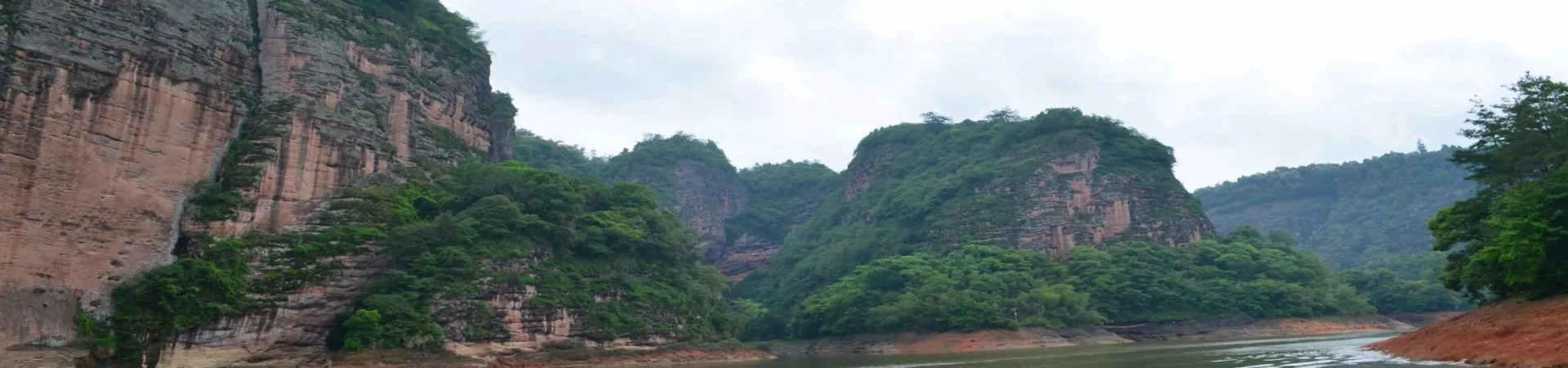
Subtitle: The Cradle of China's Danxia Story – A Journey into Taining's Adolescent Danxia Landforms
1. Introduction to a Geological Masterpiece
Nestled within the Sanming prefecture of Fujian Province, China, the Taining Danxia landscape stands as a unique and pivotal chapter in the Earth's geological narrative. Far more than just visually striking red cliffs and formations, Taining represents a specific, critical stage in the grand evolutionary cycle of Danxia landforms. Recognized by geologists worldwide as "the place where the story of China's Danxia begins," it offers an unparalleled window into the youthful vigor of these spectacular landscapes. Unlike the more widely known, mature pillars of Zhangye or the eroded peaks of Mount Danxiashan, Taining presents a distinct geomorphological character: it is the sole representative in China's subtropical humid zone of adolescent, low-altitude mountain-plateau and canyon-type Danxia. This designation is not merely academic; it translates to a landscape of profound dynamism, where deep, sinuous canyons cut through forested plateaus, creating an intimate and immersive experience of geological forces actively at work.
2. The Unique Geomorphological Identity of Taining
2.1. A Critical Link in the Evolutionary Chain The significance of Taining Danxia is best understood within the continuum of Danxia evolution. Danxia landforms undergo a life cycle from youth to old age, each stage marked by distinct features. Taining is the indispensable adolescent phase. It captures the landscape after significant uplift but before extensive erosion has isolated its peaks. Here, the story is one of connection and incision rather than isolation. It serves as the vital morphological link between the initial uplift of red-bed strata and the final, weathered remnants of an ancient landscape, making it an essential key to deciphering the complete "Danxia story."
2.2. Defining the "Adolescent" Landscape: Plateaus and Gorges The core of Taining's uniqueness lies in its specific combination of features. The term "low-altitude mountain-plateau" refers to the extensive, relatively flat-topped uplands composed of Cretaceous red sandstone and conglomerate. These are not towering, solitary mountains but vast, elevated platforms shrouded in lush, subtropical evergreen broad-leaved forests. The "canyon-type" aspect is equally crucial. The landscape is dissected by an extensive network of deep, narrow gorges and valleys, such as those found along the Jinxi River. These canyons, with their nearly vertical cliffs, are the youthful scars of relentless water erosion, actively carving and deepening the plateau. This combination—a forested plateau intricately laced with water-filled gorges—defines Taining's adolescent character, showcasing both the original bedrock mass and the powerful erosive processes shaping its future.
3. Experiencing the Landscape: Immersive Natural and Cultural Encounters
3.1. Navigating the Watery Labyrinths The primary mode of experiencing Taining's adolescent Danxia is through its waterways. A boat ride through the Shangqingxi Gorge or a bamboo raft journey down the Jinxi River is not just a scenic tour; it is a voyage through a living geological textbook. As you glide on emerald-green waters, you are surrounded by towering red cliffs that rise hundreds of feet straight from the riverbanks. The play of light and shadow on the mineral-streaked rock faces, the reflections in the tranquil water, and the sense of moving through a hidden world create a profoundly serene yet awe-inspiring experience. These gorges are the active arteries of the landscape, demonstrating the erosive power that is currently sculpting the plateau.
3.2. The Forested Plateau and Ancient Cliff Dwellings Venturing onto the plateau itself reveals another dimension. Trails lead through dense, humid forests that blanket the red earth, culminating in stunning overlooks like those at Daqian Mountain or Mao'er Mountain. From these vantage points, the vast expanse of the dissected plateau unfolds, offering a macro view of the canyon networks cutting through the wilderness. Adding a rich cultural layer to the natural spectacle are the mysterious cliffside coffins and rock inscriptions left by ancient minority groups, such as the Guyue people. These historical artifacts, nestled high in the丹霞alcoves, speak to a long-standing human fascination with and adaptation to this formidable landscape.
4. Conservation and Global Significance
4.1. A UNESCO World Heritage Site The outstanding universal value of Taining Danxia was formally recognized when it was inscribed, as a core component of the "China Danxia" serial site, on the UNESCO World Heritage List. UNESCO's designation specifically highlights Taining's role in representing the youthful stage of Danxia development, characterized by "spectacular red cliffs and erosional gorges." This status underscores its global importance as a benchmark site for understanding erosional processes on continental red-bed strata in a humid monsoon climate.
4.2. Preserving a Dynamic Laboratory As a protected area, Taining serves as an ongoing natural laboratory for geomorphologists, ecologists, and conservationists. The intact ecosystem spanning from aquatic environments in the gorges to subtropical forests on the plateaus supports rich biodiversity. Conservation efforts here are crucial not only for safeguarding breathtaking scenery but also for protecting the integrity of an active geological process and the unique species that inhabit this transitional landscape. It is a place where the forces that shape our planet are visibly at play, preserved for continued study and sustainable appreciation by visitors from around the world.