Shaanzhou Dikengyuan
Subtitle: A Journey into the Earth: Exploring the Ancient Pit Dwellings of Shanxian, Sanmenxia
1. An Architectural Marvel Born from the Loess
Nestled within the vast expanse of the Loess Plateau's edge, in the Shanxian district of Sanmenxia, Henan Province, lies a remarkable and ancient form of human habitation: the Pit Courtyard, or Dikengyuan. Known locally as the "Skywell Courtyard" (Tianjing Yuan) or "Underground Cave," these structures are a living legacy of prehistoric cave-dwelling traditions, often poetically referred to as the "underground siheyuan" (the traditional Chinese courtyard house) of Northern China. With a history stretching back an astonishing four millennia, these dwellings are a profound testament to human adaptation and ingenuity. While the most concentrated and preserved examples are found in the Shanzhou area of Sanmenxia, similar pit dwellings can also be spotted in parts of neighboring Shanxi, Shaanxi, and Gansu provinces, painting a broader picture of this unique architectural culture across the Yellow River region.
2. Engineering Simplicity: How a Pit Courtyard is Built
The genius of the Pit Courtyard lies in its straightforward yet effective construction method, perfectly suited to the local environment.
2.1. Excavating the Earthly Abode The process begins on a flat expanse of the thick, compact loess soil. Here, a large rectangular or square pit, measuring approximately 6 to 7 meters deep and 12 to 15 meters long on each side, is dug straight down into the ground. This massive excavation, involving around 2,000 cubic meters of earth, forms the central courtyard—an open-air space sunk below the surface.
2.2. Crafting the Cave Rooms Once the pit is formed, the next step is to carve out the living quarters. Into the four vertical walls of the pit, 10 to 14 yaodong (cave rooms) are meticulously dug. Each cave room is spacious, averaging about 3 meters in height and 4 meters in width, with a depth ranging from 8 to 12 meters. The architecture of these caves is distinctive: the lower two meters of the wall are vertical, providing stable, straight sides, while from that point up to the ceiling, the wall curves gracefully into a rounded vault or arch. This arched design is not only aesthetically pleasing but crucial for structural integrity, distributing the weight of the earth above.
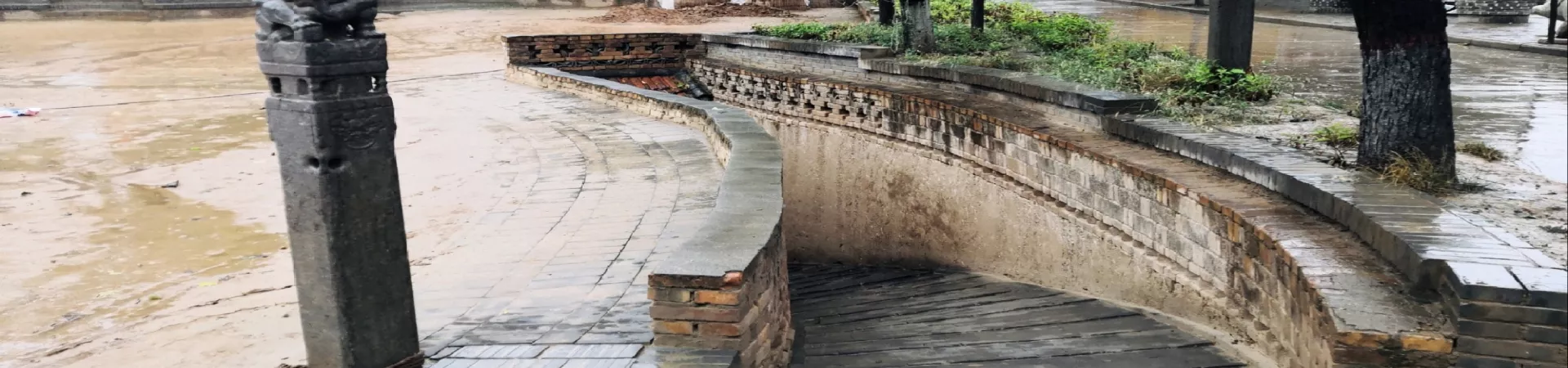
2.3. The Gateway to the Surface Among these cave rooms, one is specially designed as the connection to the world above. Instead of a standard cave, this passage is carved into a sloping, stepped tunnel that gently ascends from the courtyard floor to the ground level. This tunnel, known as the "gateway cave" or men dong, serves as the main entrance and exit for the inhabitants, a sheltered passageway bridging the underground home with the surface.
3. The Wisdom of Underground Living
This architectural choice was driven by profound practicality and a deep harmony with the natural world, particularly for the historically less affluent communities of the western Henan mountains.
3.1. A Natural Climate Control System The thick loess layer provides exceptional insulation. The earth maintains a relatively constant temperature, ensuring the cave dwellings are naturally cool during the sweltering summer heat and comfortably warm throughout the harsh, cold winters. This passive climate control made the Pit Courtyard an ideal and energy-efficient home.
3.2. Economy and Affordability For the local people, building a home primarily required labor rather than expensive materials like bricks, timber, or tiles. The primary "construction material" was the earth itself, making it an incredibly affordable and accessible housing solution. Its durability and low maintenance needs added to its appeal.
3.3. A Deep-Seated Cultural Bond Beyond mere shelter, the Pit Courtyard represents a deep, visceral connection between the people of the Loess Plateau and their land. For generations, this architectural form was not just a place to live but an expression of a lifestyle intrinsically tied to the yellow earth. It fostered a sense of family, community, and continuity, with the sunken courtyard serving as a private, protected communal space for daily life, rituals, and gatherings. The enduring popularity of these dwellings for centuries speaks to this deep-seated affection and cultural identity.
4. Visiting the Shanxian Pit Courtyard Site
Today, several well-preserved Pit Courtyard complexes in the Shanzhou area have been developed into cultural tourism sites and museums, offering visitors a rare chance to step into this underground world.
4.1. Ticket Information * Standard Ticket: 60 RMB (Chinese Yuan). * Concession Ticket: 30 RMB (Typically applicable to students, seniors, etc.). * Note: Ticket prices and policy are subject to change. It is highly recommended to verify the latest information through official channels before your visit.
4.2. Opening Hours The site's operating hours vary seasonally: * Winter Hours (Approx. December 1 - February 28): 8:30 - 18:00. Last admission is usually at 17:30. * Summer Hours (Approx. June 1 - August 31): 8:00 - 18:00. Last admission is usually at 18:00. * Note: Hours for spring and autumn (March-May, September-November) may differ. Always check the official schedule for the exact date of your visit.
4.3. Contact Details For the most accurate and current information, you can contact the site directly. * Phone: +86 398 3266666
Walking down the sloping tunnel into a Pit Courtyard is akin to traveling back in time. The quiet, enclosed courtyard, surrounded by the dark mouths of the cave rooms, creates an atmosphere of profound peace and timelessness. Visitors can explore the caves, often furnished to depict traditional living, cooking, and workshop spaces, gaining a tangible understanding of the resourcefulness and resilience of the people who called these earth-embraced homes their own. It stands as a powerful symbol of a harmonious human-earth relationship, carved directly into the fabric of the Loess Plateau itself.