Hangu Pass Tourist Area
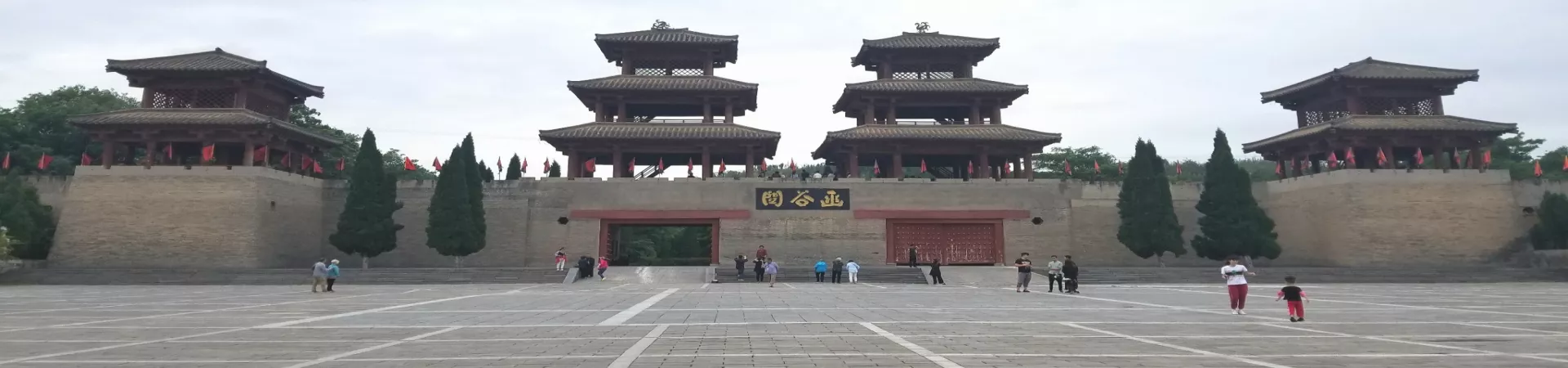
A Journey Through Time: Exploring Hangu Pass, Where History and Legend Converge
Nestled within the dramatic landscapes of Sanmenxia, Henan Province, lies Hangu Pass, a name that resonates with the profound echoes of ancient China. More than just a scenic spot, it is a monumental testament to the nation's early military strategy, philosophical thought, and rich tapestry of legends. Recognized as one of the earliest and most formidable fortified passes in Chinese history, its very structure—a strategic stronghold built within a deep, narrow valley as impenetrable as a sealed box (hence the name "Han," meaning "case" or "envelope")—dictated the fate of empires and inspired tales that have endured for millennia.
The Strategic Crucible: A Fortress Shaping History
An Unassailable Stronghold The pass's legendary defensibility is immortalized in the Chinese idiom "one man can hold the pass against ten thousand." This was not mere hyperbole. The natural topography, featuring towering cliffs and a constricted pathway, allowed a determined few to thwart vast armies. Walking through the reconstructed gateways and along the ancient walls, visitors can almost feel the weight of history and visualize the countless soldiers who stood guard at this critical chokepoint on the eastern approaches to the ancient Qin state.
Echoes of Ancient Battles Hangu Pass was the stage for pivotal conflicts that shaped the Warring States period and beyond. The thunder of war drums here signaled events like the "Meeting at the Pass," the coalition of "Six States Against Qin," and the "Battle of Xiyuan." Each clash was a struggle for supremacy, and the pass's control often meant the difference between survival and conquest. The site serves as an open-air museum of military history, where the strategies of ancient generals come to life against a backdrop of enduring stone and earth.
The Realm of Legend: Where Stories Permeate the Landscape
Beyond its martial significance, Hangu Pass is enveloped in an aura of mythology and folklore. Several of China's most beloved idioms and stories trace their origins to this very ground.
The Auspicious Arrival: "Purple Air from the East" Perhaps the most serene legend associated with the pass is "Zǐ Qì Dōng Lái" (Purple Air Comes from the East). It is said that the guardian of the pass, seeing a veil of purple mist—an auspicious omen—drift in from the horizon, knew a great sage was approaching. That sage was Laozi, the revered philosopher, riding on his ox. This story beautifully sets the stage for the pass's philosophical legacy.
Tales of Cunning and Debate Other stories add layers of intrigue and intellectual fervor. "Jī Míng Gǒu Dào" (The Cock Crows and the Dog Steals) recounts a clever escape from the pass using deception and unusual talents. Meanwhile, the philosophical paradox known as "Gongsun's White Horse" debate is also linked to discourses that occurred here, highlighting the pass's role as a crossroads not just for armies, but for ideas.
The Cradle of Taoist Thought: Laozi and the Daodejing
The Immortal Manuscript Hangu Pass's most profound contribution to world civilization is undoubtedly its connection to Laozi (Lao Tzu), the founder of Taoism. According to historical records by Sima Qian, it was here, as Laozi departed westwards, that the pass keeper persuaded him to record his wisdom. The result was the "Daodejing" (Tao Te Ching), the fundamental text of Taoist philosophy. Comprising roughly five thousand characters, this concise yet infinitely deep work explores the Dao (the Way), virtue, naturalness, and wu wei (effortless action).
A Site of Philosophical Pilgrimage This transformative event elevates Hangu Pass from a military site to a sanctuary of philosophical birth. Visitors can reflect upon the spot commemorating this moment, contemplating how ideas penned here over two millennia ago went on to influence Chinese culture, art, governance, and spirituality profoundly, with ripples felt across the globe.
Essential Visitor Information
Planning Your Visit
- Suggested Duration: Allocate approximately 1 to 3 hours to fully explore the historical sites, walk along the ancient walls, visit the monuments dedicated to Laozi and the pass's history, and absorb the panoramic views of the surrounding "valley like a box."
Ticket Information
- General Admission: 75 RMB.
- Concession Tickets (38 RMB): Available to full-time university students and below with valid student ID, and to teachers with valid certification.
- Free Admission: Granted to children under 1.4 meters or 6 years old; adults aged 60 and over (with valid ID from mainland China, Hong Kong, Macao, or Taiwan); active-duty military personnel, police officers, national fire and rescue staff with valid ID; journalists, tour guides with group, and individuals with disabilities (with valid certification).
Operating Hours
- October 9 - April 30: 08:00 - 17:30 (last entry at 17:30).
- May 1 - October 8: 08:00 - 18:00 (last entry at 18:00).
- The pass is open daily throughout the week.
Contact
- For any inquiries, you may contact the site at: +86 398 6923333.
A visit to Hangu Pass is a multi-layered journey. It is an exploration of military ingenuity, a walk through the landscapes of timeless legends, and, most significantly, a pilgrimage to the birthplace of one of humanity's great philosophical traditions. It stands as a powerful reminder of how a single place, forged by geography, can become an indelible imprint on a nation's historical and cultural consciousness.