Dahai Caoshan
Subtitle: A Journey to the "Alpine Meadow of Yunnan": Discovering the Seasonal Splendors and Cultural Tapestry of Da Hai Cao Shan
Introduction Nestled within the Qujing region of Yunnan Province, China, lies Da Hai Cao Shan (Great Sea Grass Mountain), a breathtaking alpine meadow landscape often celebrated as the "New Zealand of Yunnan." This destination defies singular description, as its character transforms profoundly with each passing season, promising a uniquely captivating experience regardless of the time of year. Its remarkable ability to evoke the vast, rolling grasslands of Inner Mongolia in spring and summer, and then transition to the stark, pristine majesty of the Tibetan Plateau in autumn and winter, has earned it a prestigious spot among the "108 Most Beautiful Landmarks of China" as recommended by National Geographic Chinese Edition. More than just a scenic wonder, Da Hai Cao Shan is a living cultural landscape, home to the Yi ethnic people, whose unique traditions and architecture add profound depth to the visitor's journey.
The Seasonal Tapestry of the Landscape 1. Spring and Summer: An Emerald Expanse From April to September, Da Hai Cao Shan undergoes a remarkable metamorphosis. The vast slopes, once dormant, erupt into a vibrant sea of green. The alpine meadow comes alive with a lush, velvety carpet of grass that stretches seamlessly over rolling hills, under an expansive sky often dotted with fluffy, swift-moving clouds. This is the season where the comparison to the Mongolian steppe feels most palpable. The air is fresh and cool, filled with the earthy scent of grass and wildflowers. Myriad wildflowers—daisies, gentians, and countless other native species—stitch a brilliant, multicolored pattern into the "Seven-Colored Grass Tapestry," creating a dazzling, painterly scene that feels both serene and invigorating. It is a perfect time for leisurely hikes, photography, and simply lying on the grass to absorb the boundless, pastoral beauty.
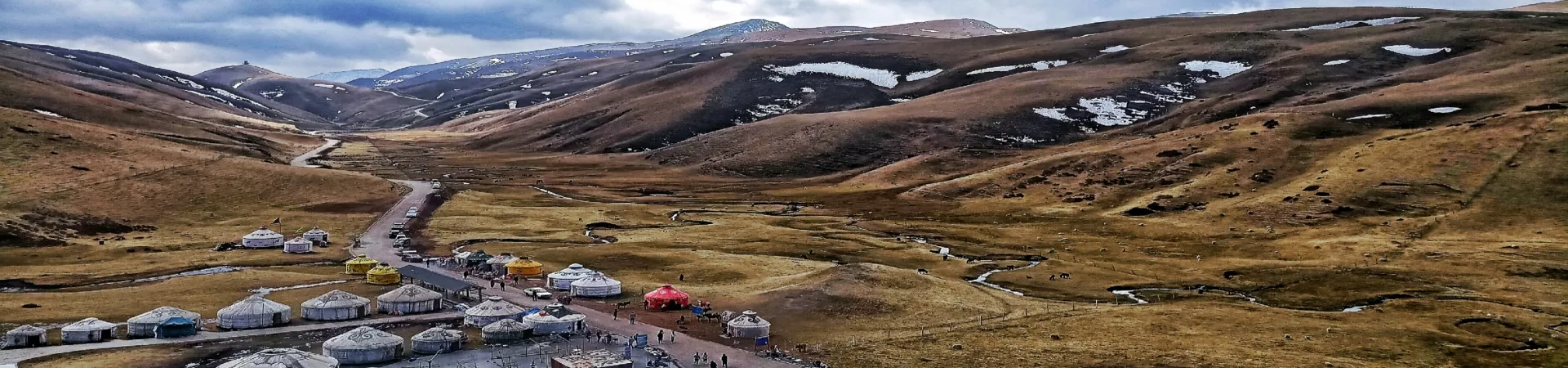
2. Autumn and Winter: A Sublime, Snowy Realm As temperatures drop from October onward, the landscape shifts towards a more dramatic, minimalist aesthetic. The grasses turn golden, then fawn, painting the mountains in warm, amber hues under the crisp autumn sun. This transition soon gives way to winter's touch. From approximately November to March, Da Hai Cao Shan is frequently blanketed in snow, transforming into a serene, monochromatic world of white. The undulating hills, now covered in a thick, pristine layer of snow, reflect the clear, sharp sunlight, creating a scene of breathtaking purity reminiscent of Tibet's high-altitude vistas. This season offers a stark, quiet beauty, ideal for witnessing the play of light and shadow on the snow and experiencing the profound silence of the alpine wilderness.
Iconic Sights and Natural Phenomena 1. The Majestic Gu Niu Zhai Peak Dominating the southeastern skyline is the imposing Gu Niu Zhai Peak. Its summit is often shrouded in swirling mists and fast-moving clouds, creating a dynamic and mystical backdrop. The interplay of light, cloud, and the rugged peak provides a constantly changing spectacle, a focal point that anchors the entire landscape.
2. The Elusive "Buddha's Halo" For the fortunate visitor under ideal conditions—typically around sunrise on clear, thin-cloud days—Da Hai Cao Shan may reveal one of its most magical secrets: the appearance of a "Buddha's Halo" (a Brocken spectre). This atmospheric optical phenomenon, where a visitor's shadow is cast onto mist or clouds below and appears magnified and surrounded by a circular rainbow, is a breathtaking and almost spiritual sight. While never guaranteed, the possibility adds an element of wonder to an early morning visit.
The Cultural Heart: The Yi People and Their Slate Houses The true soul of Da Hai Cao Shan resides with its indigenous Yi ethnic community. Their presence is most tangibly felt in their distinctive traditional architecture: the slate house. These unique dwellings are constructed using locally sourced blue slate stones, meticulously stacked to form sturdy walls and, most notably, split into tiles to roof the houses. This method of using natural slate for roofing is rare and considered virtually unique to this area within and beyond Yunnan. Visiting a local village to observe these harmonious, stone-built homes offers a direct connection to the land and its people. Engaging with the local Yi residents, known for their warm hospitality and淳朴 (chún pǔ, simple and honest) folkways, provides invaluable insight into their rich cultural heritage, from their vibrant festivals and intricate embroidery to their deep-rooted connection to this majestic environment.
Practical Visitor Information 1. Ticket Information * Standard Ticket: 30 RMB (applicable year-round). * Concession Ticket (Half-price): Available for minors with a height between 1 meter (inclusive) and 1.4 meters (inclusive), and full-time undergraduate students or below upon presentation of valid student ID. * Free Admission: Granted to children under 1 meter in height, seniors aged 70 and above with valid ID, and active-duty military personnel with valid ID. * Note: The above information is for reference. Please confirm the latest prices and policies at the ticket office on the day of your visit.
2. Opening Hours The scenic area is generally open from 09:00 to 17:30 daily, with last admission at 17:30. These hours are subject to change, particularly during severe weather conditions in winter.
3. Suggested Duration A visit typically requires between 1 to 3 hours, allowing time to explore key viewpoints, take photographs, and appreciate the landscape. Those interested in longer hikes or deeper cultural immersion may wish to allocate additional time.
4. Contact For inquiries, you may contact the management at 0874-5123345 or 0874-5123321.