Quanzhou Kaiyuan Temple
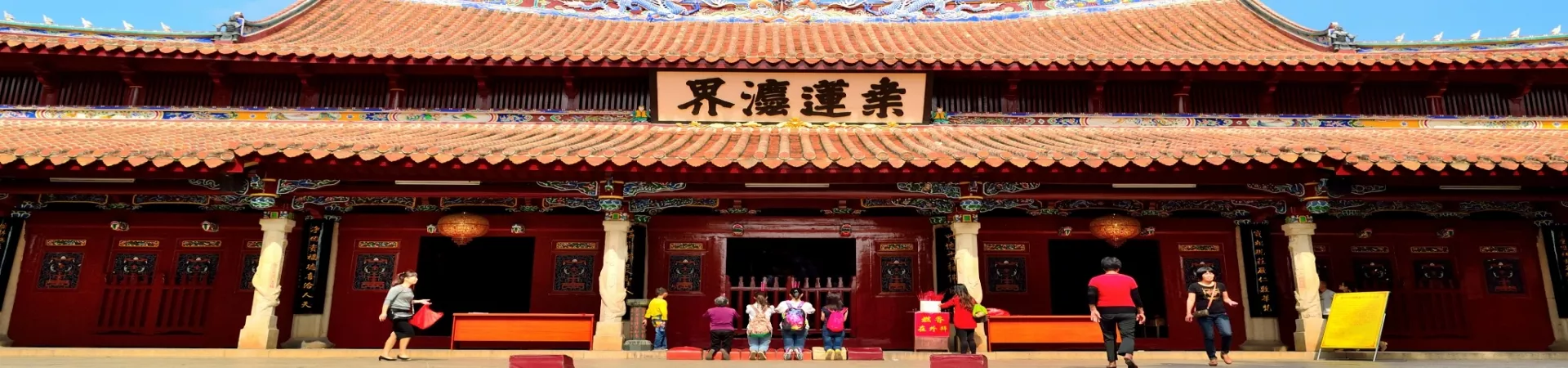
A Visitor's Guide to Quanzhou Kaiyuan Temple: History, Architecture, and Seasonal Splendor
Nestled in the heart of Quanzhou, a city once hailed as the "Alexandria of the East," the Kaiyuan Temple stands not merely as a place of worship but as a monumental testament to China's profound religious history and its centuries-old maritime exchange. As the largest Buddhist temple complex in Fujian province and a pivotal cultural relic along the southeastern coast, it offers visitors a profound journey through time, art, and spiritual tranquility.
A Legacy Carved in Stone and Scripture
The temple's origins are deeply intertwined with the zenith of the Tang Dynasty, a period when Quanzhou flourished as a central hub of the Maritime Silk Road. This historical context is crucial to understanding the temple's significance; it was a spiritual anchor for both local devotees and the myriad international merchants, sailors, and travelers who passed through the city.
The temple's architectural grandeur is immediately apparent in its sprawling layout, featuring majestic halls, serene courtyards, and iconic pagodas that follow the classical Song Dynasty style. However, its true treasure lies within the Scripture Repository. This hall safeguards a remarkable collection of cultural artifacts spanning from the High Tang era to the Republic of China. The collection includes 32 exquisite statues of Buddhas, Bodhisattvas, Arhats, Heavenly Kings, and divine guardians, crafted from jade, bronze, porcelain, and wood. Each piece narrates a chapter of evolving artistic styles and devotional practices across dynasties. Further enriching this repository are precious calligraphic works and inscribed wooden couplets by renowned masters such as the Ming Dynasty calligrapher Zhang Rui tu and the revered modern monk Hong Yi, whose elegant brushstrokes add a layer of scholarly and spiritual depth.
Architectural and Ritual Uniqueness
The Hall of Ordination Altar One of the Kaiyuan Temple's most distinguished features is its Ordination Altar. This structure holds exceptional national importance, as it is one of only three such historically preserved ordination platforms in all of China, alongside the Jietan Temple in Beijing and the Zhaoqing Temple in Zhejiang. This altar was the sacred site where formal ordination ceremonies for Buddhist monks were conducted, underscoring the temple's status as a central and authoritative institution in Chinese Buddhist hierarchy and ritual practice for centuries.
The Twin Pagodas: Zhenguo and Renshou Dominating the temple's skyline are the twin stone pagodas, the Zhenguo Pagoda (East Pagoda) and the Renshou Pagoda (West Pagoda). Erected during the Song Dynasty, these five-story octagonal towers are masterpieces of medieval stone masonry. They are adorned with intricate carvings of Buddhist figures, celestial beings, and narrative reliefs that serve as a stone scripture, illustrating doctrinal tales. Their resilience through earthquakes and centuries of weathering stands as a symbol of enduring faith and architectural ingenuity. Climbing to their upper levels (when accessible) offers a panoramic view of the ancient city, beautifully framing the temple within modern Quanzhou.
Seasonal Beauty and Practical Information
The Cherry Blossom Corridor A visit in early to mid-March unveils the temple's most photogenic spectacle. The path leading to the West Pagoda transforms into a Cherry Blossom Corridor, where delicate blossoms in shades of soft pink and rose pink burst into full bloom. This vibrant, fleeting beauty creates a stunning visual dialogue with the ancient, solemn gray stone of the Renshou Pagoda, a harmonious contrast between the ephemeral and the eternal that captivates every visitor.
Planning Your Visit
- Location: Central Quanzhou, Fujian Province.
- Opening Hours: 6:30 AM - 5:30 PM, daily year-round.
- Admission: Free of charge. (Note: It is always advisable to check for any updated policies directly with the temple.)
- Suggested Duration: A thorough exploration requires 1 to 3 hours, allowing time to appreciate the main halls, study the pagodas, stroll the courtyards, and visit the Scripture Repository.
- Transportation: The temple is easily accessible by public bus. Key routes include Bus No. 6, 26, 33, 41, 601, K602, and the Ancient City Tourist Line 2. Alight at the Kaiyuan Temple West Gate bus stop; the entrance is approximately a 150-meter walk from there.
A trip to the Kaiyuan Temple is more than a sightseeing stop; it is an immersive encounter with the spiritual and cultural soul of ancient Quanzhou. From its hallowed halls and rare artifacts to its symbolic pagodas and seasonal blossoms, the temple provides a serene yet powerful connection to a past where diverse cultures converged under the umbrella of profound contemplation and artistic expression.