Quanzhou Prefecture Confucian Temple
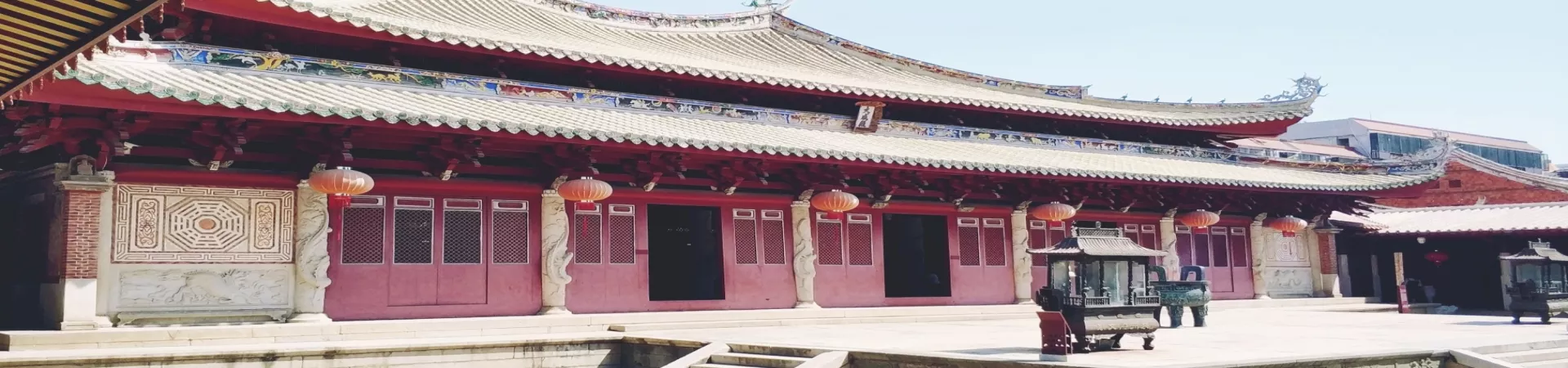
Subtitle: A Millennium-Old Sanctuary of Learning: Exploring Quanzhou's Confucian Temple Complex
1. Introduction: The Heart of Quanzhou's Cultural Heritage Nestled within the bustling modern city of Quanzhou, a UNESCO World Heritage port city in Fujian Province, stands a monument of serene grandeur and profound historical significance: the Quanzhou Prefectural Confucian Temple (Quanzhou Fuwenmiao). Recognized as a Major Historical and Cultural Site Protected at the National Level, this temple complex is not merely an ancient relic but a vibrant testament to China's enduring scholarly traditions and architectural evolution. It represents the epicenter of classical education and Confucian veneration in southeastern China for over a millennium. As the largest and most renowned Confucian temple complex in the entire southeast region, it offers visitors an unparalleled journey through time, showcasing a harmonious blend of imperial architectural styles and local Minnan (Southern Fujian) artistry.
2. Historical Evolution: A Legacy Carved Through Dynasties The temple's story begins in the twilight of the Tang Dynasty's Kaiyuan era (circa 741 AD), marking its initial establishment. Its destiny as a premier institution of learning was cemented in the early Northern Song Dynasty. Around 982 AD, during the Taiping Xingguo period, it was formally established as the Zhouxue, or Prefectural School. The complex's history is one of resilience and reaffirmation of its cultural role. After relocating for a period, it was moved back to its current sacred site in 1109 AD. A significant reconstruction followed in 1137 AD during the Southern Song, laying down the essential layout and spirit that have endured.
2.1. Architectural Synthesis Across Four Dynasties What makes the Quanzhou Confucian Temple exceptionally captivating is its architectural tapestry, woven over four major imperial dynasties. It is a living museum of classical Chinese temple architecture, seamlessly integrating design elements from the Song, Yuan, Ming, and Qing dynasties. This continuous evolution within a single complex is rare. The Song Dynasty foundations and principles of design, emphasizing simplicity, elegance, and harmony with nature, form the core. Subsequent expansions and renovations added layers of complexity and grandeur, reflecting the changing aesthetics and technical advancements of later eras, yet always respecting the site's fundamental solemnity and purpose.
3. Architectural Grandeur and Spatial Harmony The complex is celebrated for its majestic scale, complete traditional规制 (guīzhì, layout rules), and awe-inspiring presence. Its design follows the classic Chinese temple axis, featuring a sequence of courtyards, gates, halls, and pavilions that guide visitors on a symbolic path from the secular world to the realm of scholarly and spiritual wisdom.
3.1. Layout and Key Structures The symmetrical and balanced layout creates a profound sense of order and tranquility. The main buildings typically align along a central north-south axis, beginning with the Lingxing Gate (the main entrance gate), progressing through the Dacheng Gate, and culminating at the Dacheng Hall (Hall of Great Accomplishment). This hall, the principal structure, would have housed the spirit tablets of Confucius and his disciples and was the site for major ceremonial rites. Flanking courtyards might have contained buildings like the Minglun Tang (Hall of Illuminated Ethics), used for lectures and study.
3.2. The Fusion of Art and Craftsmanship The temple is a masterpiece of artistic synthesis. It exemplifies the organic integration of Zhongyuan (Central Plains) cultural styles from the Song Dynasty with the distinctive features of ancient Minnan architecture. This fusion is evident in the elegant sweep of the roof ridges, often adorned with intricate ceramic figurines depicting mythological creatures—a hallmark of Minnan craftsmanship. The detailed woodcarvings on brackets (dougong), beams, and fascia boards showcase both classical motifs and local artistic flair. The use of local materials and decorative techniques creates a unique aesthetic that is stately yet distinctly regional.
4. Cultural Significance: More Than Just a Temple The Quanzhou Prefectural Confucian Temple was the cornerstone of education and civil culture in ancient Fujian. For centuries, it functioned as the premier state-run academy, preparing scholars for the rigorous imperial examinations that shaped China's bureaucratic elite. It was a place where the philosophy of Confucius—emphasizing ethics, morality, family loyalty, and social harmony—was studied, ritualized, and propagated.
4.1. A Center for Scholarly Pursuits and Rituals Beyond its architectural splendor, the temple complex pulsed with intellectual and ritual life. The annual ceremonies, especially the commemorative rites for Confucius, were grand events that reinforced the social and moral order. The classrooms and libraries within the complex nurtured generations of literati, officials, and thinkers, directly influencing the cultural and administrative development of the Quanzhou region and beyond. Its reputation as the largest complex of its kind in the southeast attracted scholars from a wide area, solidifying Quanzhou's status not only as a global trading hub but also as a center of learning and refined culture.
5. Practical Information for Visitors To fully appreciate the tranquility and scale of the complex, visitors are advised to allocate at least 1.5 to 2 hours for their exploration.
5.1. Opening Hours The temple is open to the public daily from 8:00 AM to 5:30 PM. The last admission is at 5:30 PM. These hours are consistent throughout the year, from January 1st to December 31st. It is always prudent to check for any unexpected closures on national holidays or for maintenance before your visit.
5.2. Experiencing the Temple A visit here is a step into a contemplative space. Walking through its successive gates and courtyards allows one to experience the gradual transition into a sanctuary of knowledge. Pay close attention to the architectural details: the stone carvings on balustrades, the painted beams under the eaves, and the solemn atmosphere within the main halls. The spatial arrangement itself tells a story of hierarchical value and philosophical ideals. The temple stands in quiet contrast to the dynamic city surrounding it, offering a profound insight into the historical soul of Quanzhou.