Chengtian Temple
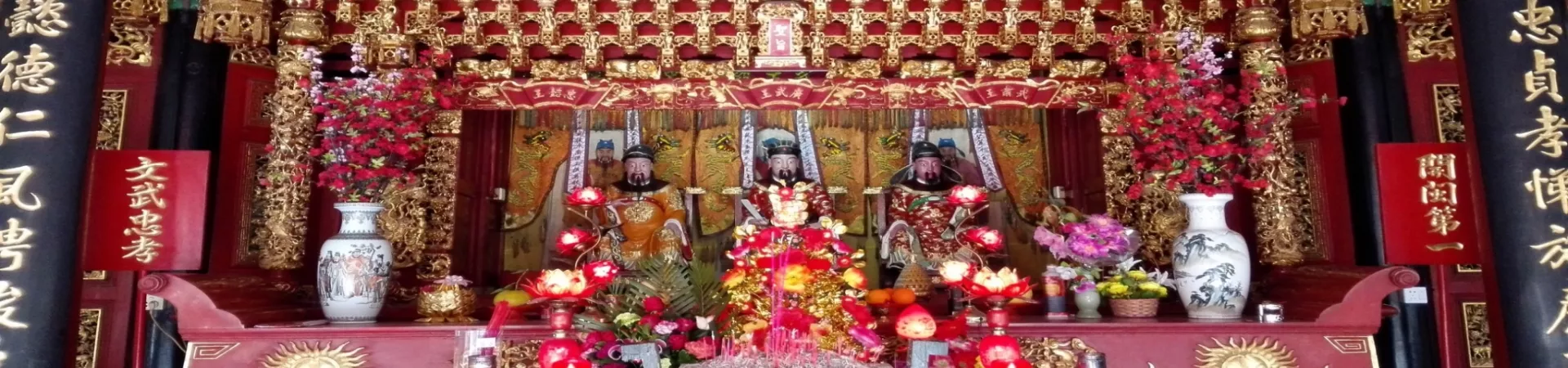
Subtitle: A Sanctuary of Serenity in the Urban Heart: Discovering Quanzhou's Chengtian Temple
Introduction: An Oasis of History and Tranquility
Nestled in the southeast of the old city, just outside the historic Chongyang Gate in Quanzhou, Fujian Province, lies the Chengtian Temple, a profound spiritual haven often referred to as the "Moon Terrace Temple." More than just a place of worship, it stands as a living chronicle of Quanzhou's illustrious past, offering visitors a rare, peaceful respite from the modern urban bustle. Its journey from a private garden to a revered Buddhist monastery encapsulates over a millennium of cultural and religious evolution, making it an indispensable stop for anyone seeking to understand the soul of this ancient maritime capital.
I. A Journey Through Time: The Historical Tapestry
The temple's history is a fascinating narrative of transformation and enduring faith.
- Origins as a Southern Garden: The site's story begins not as a temple, but as the luxurious "Southern Garden" of Liu Yixiao, a military governor during the tumultuous Five Dynasties period. This aristocratic beginning hints at the location's long-standing significance as a prized piece of land.
- Foundation and Early Names: The conversion from a secular retreat to a sacred space occurred between 954 and 960 AD during the Later Zhou dynasty. Initially established as "Nanchan Temple" (Southern Chan Temple), it was dedicated to the practice of Chan (Zen) Buddhism. Its pivotal moment came in 1007 AD during the Song Dynasty, when it was bestowed the imperial name "Chengtian Temple," meaning "Temple to Bear the Heavens," signifying its elevated status.
- Evolution and Resilience: The temple's name and fortunes saw further changes. Between 1056 and 1063, it was briefly known as "Nengren Temple" before reverting to Chengtian Temple in 1117. Throughout the Song Dynasty, it flourished as a major religious center, renowned for its grand halls, vibrant monastic community, and thriving incense fires. Like much of Quanzhou's heritage, it has undergone periods of damage and restoration, with the current structures largely reflecting reconstructions from the Ming and Qing dynasties onwards, faithfully preserving classical southern Chinese architectural styles.
II. Architectural and Spiritual Landscape
Stepping into Chengtian Temple is an exercise in serene discovery. The layout follows a traditional axial symmetry, guiding visitors through a sequence of halls that gradually deepen the sense of tranquility.
- The Sequential Halls: The journey typically begins at the Heavenly King Hall, guarded by statues of the Four Heavenly Kings. This leads to the core Mahavira Hall, the principal building housing statues of the Buddhas and Bodhisattvas, where rituals and prayers are conducted. Behind it, the Fatang Hall serves as a place for scripture lectures and dharma assemblies.
- A Symphony of Ten Scenes: Historically, the temple's fame was magnified by its celebrated "Ten Scenes of Chengtian." These were poetic vignettes that captured the temple's natural beauty and meditative atmosphere in different seasons and times of day. They included:
- The Banyan Path's Noonday Shade: Cool, dappled light filtering through ancient banyan trees.
- The Reclining Pine in Clear Breeze: A specific pine tree shaped by the wind.
- The Pagoda Without Roosting Birds: A pagoda so serene it discouraged birds from nesting.
- The Jade Terrace's Bright Moon: The view of the moon from a specific platform.
- Rolling Up the Bamboo Blind to Morning Sun: The first light entering a hall.
- Pushing Open the Awning to Evening Rain: The sound and scent of rain in the courtyard.
- The Square Pond's Plum Blossom Reflection: Blossoms mirrored in still water.
- The Whistling Hut's Bamboo Sound: The wind rustling through bamboo groves.
- Parrot Mountain's Evening Clouds: The view of clouds over a hillock resembling a parrot.
- The Stone Parrot: A naturally formed parrot-shaped rock. While some specific elements may have evolved, the essence of these scenes—the interplay of architecture, ancient flora, light, and sound—continues to define the temple's uniquely poetic ambiance today, inviting visitors to slow down and observe.
III. Practical Information for the Visitor
Chengtian Temple is remarkably accessible, both in location and policy, encouraging spontaneous contemplation.
- Admission and Opening Hours: In a generous spirit, the temple offers free admission to all visitors. It is open daily from 8:00 AM to 4:00 PM, year-round. This allows for a flexible visit, whether as a dedicated morning excursion or a quiet afternoon retreat.
- Suggested Duration: To fully appreciate the architecture, soak in the atmosphere, and explore the courtyards at a leisurely pace, a visit of 1 to 3 hours is recommended. This provides ample time to move beyond the main halls, discover quieter corners, and perhaps witness or partake in moments of monastic life.
- Visitor's Etiquette: As an active place of worship, visitors are encouraged to maintain a respectful demeanor. Speaking in hushed tones, dressing modestly, and being mindful when photographing during ceremonies are appreciated gestures that honor the site's primary purpose.
Conclusion: The Enduring Allure
The Chengtian Temple is not merely a collection of old buildings; it is a sensory and historical experience. It represents the layered identity of Quanzhou—a city where commerce and spirituality, history and daily life, have always intermingled. It offers a tangible connection to the Song Dynasty's cultural zenith and serves as a peaceful sanctuary that has calmed minds for generations. For the modern traveler, it is a place to wander, reflect, and discover the quiet, enduring heartbeat of one of China's most historically significant cities.