Old Dragon Head Scenic Area
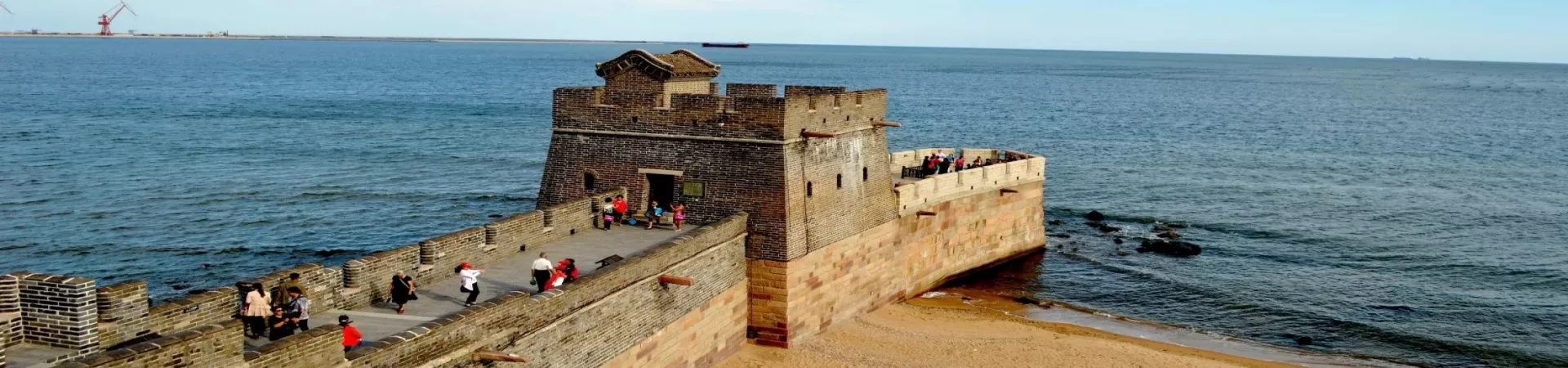
The Laolongtou Scenic Area is located at the southern tip of the city of Shanhaiguan, approximately 5 kilometers from the city center, on the banks of the Bohai Sea. Dating back to the Ming Dynasty during the Wanli period, it was built by General Qi Jiguang and is the only section of the Great Wall of China that extends into the sea.
The scenic area is reminiscent of a massive dragon, with its eastern end inserted into the sea at a distance of 4 kilometers south of Shanhai Pass. It resembles the dragon's head, held high in the air, thus earning the name "Laolongtou" or "Old Dragon's Head". This section of the wall, known as the "Sea Wall", served as the starting point of the Ming Dynasty's Great Wall in the east.
The Laolongtou Scenic Area comprises several historical and natural attractions. The Ninghai City, which once played an important role in defending the city from invasions, is a preserved section of the wall. The Ruhecheng, a stone city inserted into the sea, and the Chenghailou, a tower standing on the high headland, are both well-preserved historical relics. The scenic area also includes the Nanhaikou Pass and the temple of the Sea God, offering visitors a glimpse into ancient Chinese coastal defense systems.
The area offers a serene and peaceful ocean view with a splendid sunrise view and is an excellent spot for beachside morning exercises. The air at the beach is fresh, and the sand is soft and suitable for walking. Visitors can also enjoy a refreshing swim in the sea.
For transportation, visitors can take public bus routes 25, 301, 35, or T1 to the Laolongtou stop, or take the Shanhaiguan Scenic Area shuttle to the Laolongtou Scenic Area stop.
The admission fee for the Laolongtou Scenic Area varies depending on the season: 20 RMB during off-season and 50 RMB during peak season. Please note that all fees are subject to change based on official updates.
The scenic area is open daily from 08:00 to 17:30 during off-season (from November 1 to March 31) and until 17:00 during peak season (from April 1 to October 31). For your convenience, please arrive at the entrance before closing time to avoid any last-minute disruptions to your visit.