Qingdao flower stone floor
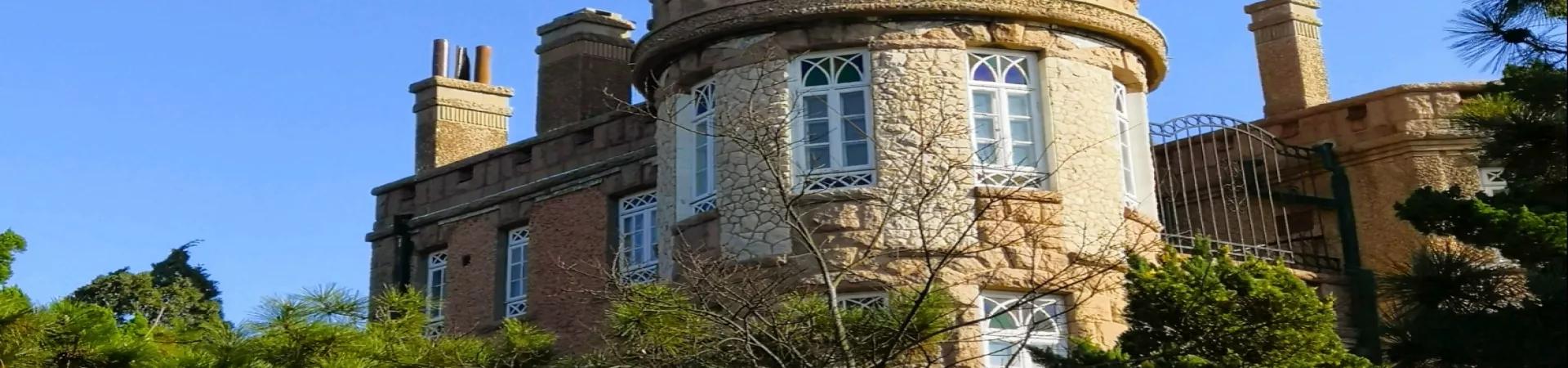
Subtitle: A Timeless Sentinel by the Sea: Exploring Huashi Villa, Qingdao's Architectural Gem
Introduction: A Cliffside Castle Overlooking the Waves
Perched dramatically on a solitary headland that juts boldly into the sea at the southern tip of Qingdao's famed Badaguan (Eight Great Passes) scenic area, Huashi Villa stands as a majestic and enigmatic landmark. This unique structure, embraced by ocean on three sides, commands breathtaking panoramic views, offering a tangible connection between the city's rich historical tapestry and the boundless Yellow Sea. More than just a building, it is a silent narrator of 20th-century history, a masterpiece of eclectic architecture, and a beloved cultural icon that continues to captivate photographers, history enthusiasts, and casual visitors alike.
I. Architectural Marvel: A Symphony of Styles in Stone
A. The Essence of Eclectic Design Huashi Villa is celebrated as a quintessential example of an eclectic European castle-style building, a physical poem composed from various Western architectural traditions. Its designer, a White Russian architect in exile, masterfully blended distinct elements into a surprisingly harmonious whole. The villa avoids being a mere copy of a single style, instead presenting a curated collection of aesthetic motifs that speak to a cosmopolitan vision.
B. Deconstructing the Facade and Form The villa's exterior is a rich text of architectural details. Its sturdy granite base and rough-hewn stone walls, from which it derives its name "Huashi" (meaning "Flower Stone," likely referring to the varied textures and colors of the stonework), lend it a romantic, medieval fortress-like solidity. This robustness is elegantly contrasted by classical Greek-inspired colonnades and ornate Romanesque arched windows, which frame the seascape like living paintings. The most striking feature is the distinctive sloped roof, crowned with a sharp, pointed iron spire—a common feature in Nordic and Russian architecture—that pierces the sky, adding a fairytale silhouette against the coastal horizon.
C. Interior Layout and the Crown Jewel The main structure comprises five levels, each serving a distinct purpose in its original residential design. The interior, though often less emphasized than the exterior, typically featured functional living spaces, salons, and service areas reflective of early 20th-century luxury. However, the architectural journey culminates at the very top. The fifth floor is entirely dedicated as an observation deck—the "Guanhai Tai" (Sea-Viewing Platform). This open terrace is the villa's masterpiece, providing an unobstructed 270-degree vista of the azure sea, the rugged coastline, and the lush, garden-like streets of the Badaguan district. It is here that the villa's strategic and poetic placement is fully appreciated.
II. Layers of History: From Private Residence to Public Icon
A. Construction and Early Lore Built in the 1930s during a period when Qingdao was a focal point of international interest, Huashi Villa's origin story is intertwined with the city's cosmopolitan past. The involvement of a White Russian designer is a direct reflection of the community of exiled Russians who found refuge in Qingdao after the Russian Revolution, contributing significantly to its urban culture. Local lore persistently claims that the villa once served as a temporary residence for Chiang Kai-shek in the years before the Chinese Communist Party's liberation in 1949. While historical documentation for this specific claim can be elusive, such stories powerfully anchor the villa in the tumultuous narrative of China's republican era, fueling its aura of mystery.
B. Transformation into a Cultural Landmark Following the founding of the People's Republic of China, Huashi Villa, like many historical properties, transitioned from private ownership to public stewardship. It has been meticulously preserved and is now a protected cultural relic site. Its primary function today is that of a museum open to the public, allowing visitors to explore its halls, imagine its past, and ascend to its legendary viewing platform. This accessibility has transformed it from an exclusive retreat into a shared treasure.
III. The Modern-Day Experience: Visiting Huashi Villa
A. Practical Information for the Visitor * Opening Hours: The villa is open daily from 8:30 AM to 5:00 PM, with last admission at 4:30 PM. * Admission Fee: A modest ticket fee of approximately 8.5 RMB is required for entry. Visitors are advised to confirm the latest prices and hours through official channels prior to their visit. * Suggested Duration: A thorough visit, including time to appreciate the architecture, explore the interior exhibits, and soak in the views from the platform, typically takes about one hour.
B. Access and Transportation Reaching Huashi Villa is straightforward via Qingdao's efficient public bus system. Several bus routes, including 202, 206, 223, 228 (loop line), and 231, stop at the Wushengguan Road Station. From there, a short and pleasant walk through the serene, tree-lined avenues of the Badaguan area leads directly to the villa's entrance. The walk itself is part of the experience, offering glimpses of the district's diverse architectural styles.
C. The Unspoken Role: A Premier Photography Destination Beyond its historical and architectural significance, Huashi Villa has organically evolved into one of Qingdao's most sought-after outdoor photography locations. Its picturesque stone facade, the dramatic backdrop of sea and sky, and the elegant classical details make it an irresistible setting. It is particularly famous as a "saintly site" for wedding photography. On any given day, it is common to see several couples in elegant attire posing against its timeless walls, symbolically beginning their future with a piece of history and the vast ocean behind them. This vibrant contemporary use ensures the villa remains a living, dynamic part of the city's cultural landscape.
IV. The Enduring Allure: Why Huashi Villa Captivates
Huashi Villa's enduring appeal lies in its powerful synthesis of place, form, and memory. Its unparalleled location creates a profound sense of solitude and connection with nature. Its architecture is a tangible record of a specific, international moment in Qingdao's development, frozen in stone and mortar. The layers of history—both verified and legendary—invite contemplation and curiosity. Finally, its active role in modern life, as a museum and a backdrop for personal celebration, bridges the past and present. It stands not as a remote monument, but as an accessible, engaging, and profoundly beautiful chapter in the ongoing story of Qingdao.