Qingdao Christian Churches
Subtitle: A Timeless Testament to Faith and Architecture: Exploring Qingdao's Jiangsu Road Christ Church
Introduction: A Glimpse into Qingdao's Colonial Heritage
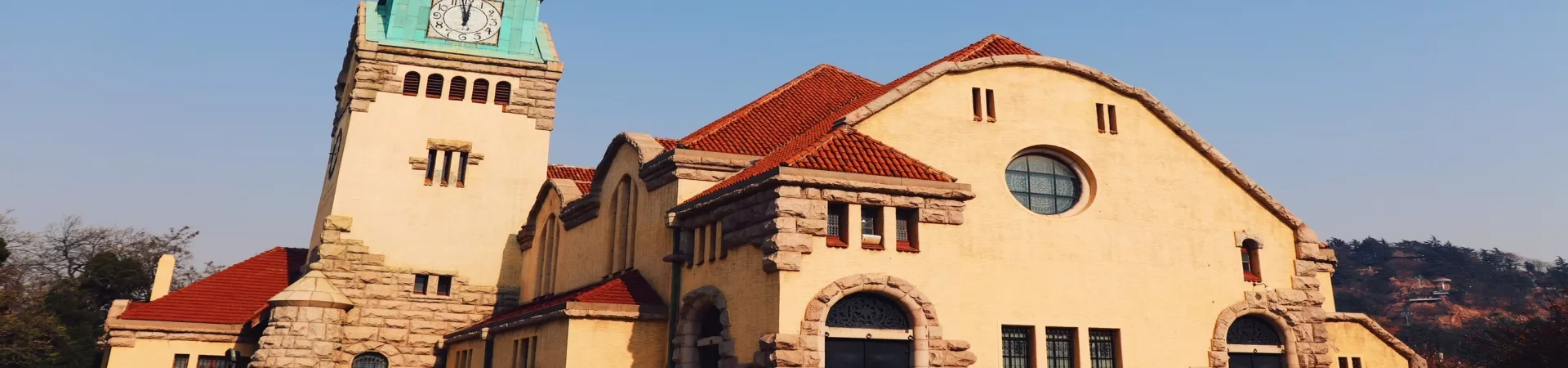
Nestled on the gentle slopes of Signal Hill (Xinhaoshan) and overlooking the vast expanse of the Yellow Sea, the Jiangsu Road Christ Church stands as one of Qingdao's most iconic and picturesque landmarks. More than just a place of worship, it is a profound symbol of the city's unique historical tapestry, where European architectural ambition met Chinese coastal scenery. Originally named the "Gospel Church," this stone-clad edifice transcends its religious function to offer visitors a captivating journey into early 20th-century history, architectural brilliance, and panoramic beauty. Its distinctive silhouette, reminiscent of a romantic German castle, has become an inseparable part of Qingdao's urban identity, inviting travelers to step back in time and experience a serene moment amidst the city's modern bustle.
Architectural Splendor: A German Neo-Romantic Masterpiece
Design and Construction Constructed between 1908 and 1910 during the German concession period, the church is a quintessential example of German Neo-Romanticism and Jugendstil (Art Nouveau) influences. The design, attributed to German architect Curt Rothkegel, deliberately eschews the grandiose Gothic style for a more rustic, fortress-like appearance. This choice creates an enchanting, almost storybook aesthetic that effortlessly blends with the natural landscape of the hill.
Structure and Materials The church's most striking feature is its complete construction from local granite. The massive, rough-hewn stones are meticulously fitted together without plaster, showcasing exceptional masonry skills and giving the building a sense of enduring strength and organic unity with its site. The structure is clearly divided into two main sections: the main hall (nave) for congregation and the commanding bell tower.
The Bell Tower: Guardian of Time The bell tower is arguably the church's most famous element. It houses a magnificent, three-faced clock manufactured by the renowned German company J. F. Weule. Installed in 1909, this mechanical clock is a marvel of precision engineering. Its gears and mechanisms, largely original, have been faithfully keeping time for over a century. The fact that it remains accurate to this day is a testament to the quality of its craftsmanship and the care of its maintenance. The clock's distinct chimes, echoing across the hill and nearby streets, have served as an auditory landmark for generations of Qingdao residents.
Interior and Spiritual Ambiance
The Main Sanctuary Stepping inside the main hall offers a contrast to the rugged exterior. The interior is characterized by a solemn and serene atmosphere. Its layout follows a typical Protestant cruciform plan. The spacious nave is lined with dark wooden pews, leading the eye towards the simple yet elegant pulpit and altar. The architectural focus here is on creating a space for reflection and community rather than ornate decoration.
Notable Interior Features * Stained Glass Windows: While not excessively lavish, the windows feature beautiful stained glass that filters sunlight into soft, colored hues, adding warmth and depth to the stone interior. * Wooden Gallery: A wooden gallery runs along the sides, which once provided additional seating and now offers a different perspective of the hall's architecture. * Atmosphere: The interior remains cool and quiet, a peaceful refuge. The faint scent of old wood and stone enhances the feeling of historical continuity.
A Visitor's Practical Guide
Location and Transportation The church is located at 15 Jiangsu Road, Shinan District, at the top of Signal Hill. The most straightforward way to reach it is by public bus. Numerous bus lines stop at the nearby "Qingyifuyuan" (Hospital of Qingdao University) station, including routes 1, 214, 220, 221, 225, 228, 231, 367, Tunnel Line 1, and Tunnel Line 5. From the bus stop, it is a short but moderately steep walk up the hill, passing charming old streets that set the stage for the church's reveal.
Visiting Hours and Admission * Opening Hours: The church is open to visitors daily. However, hours differ: * Monday to Saturday: 8:30 AM - 4:30 PM (last entry at 4:30 PM). * Sunday: Open for worship services in the morning. Tourist visiting usually begins around 11:30 AM, with closing at 4:30 PM (last entry 4:30 PM). * Admission Fee: There is an entrance fee of 10 RMB per person. This fee contributes to the preservation and maintenance of this historical site.
The Panoramic View: A Breathtaking Reward No visit is complete without taking in the view. The church's elevated position on Signal Hill provides one of the finest vantage points in central Qingdao. From the platforms around the church, visitors are treated to a spectacular, unobstructed panorama. To the south lies the sparkling blue expanse of the Yellow Sea, with its sailing boats and distant islands. Below, the red-roofed buildings of the old German concession spread out like a mosaic, intersected by green treetops and the city's winding roads. It is a perfect spot for photography, contemplation, and appreciating the harmonious blend of natural and urban landscapes that define Qingdao.
Historical Significance and Cultural Role Beyond its physical beauty, the Jiangsu Road Christ Church is a silent witness to Qingdao's transformative years. It served the spiritual needs of the German community in the early 1900s and has continued to function as an active Protestant church for Chinese congregations through decades of change. It stands as a monument to cultural exchange and resilience. Its architecture influenced local building styles and remains a key reference point for the "red roofs and green trees" aesthetic that characterizes old Qingdao. Today, it is protected as a key historical and cultural relic, ensuring that its story will continue to be told.
Tips for Your Visit * Allocate 1 to 2 hours for a thorough visit, including time to appreciate the architecture, explore the interior, and enjoy the views. * Wear comfortable shoes for the walk up the hill and on the stone surfaces. * Be mindful and respectful as it is an active place of worship, especially on Sunday mornings. Maintain a quiet demeanor inside the hall. * For the best light for photography of the exterior and the views, consider visiting in the morning or late afternoon. * Combine your visit with a stroll through the surrounding Signal Hill Park and the nearby former German Governor's Residence to fully immerse yourself in the area's history.
Information last verified: July 2023