Qinglong 24 Daoguai Scenic Area
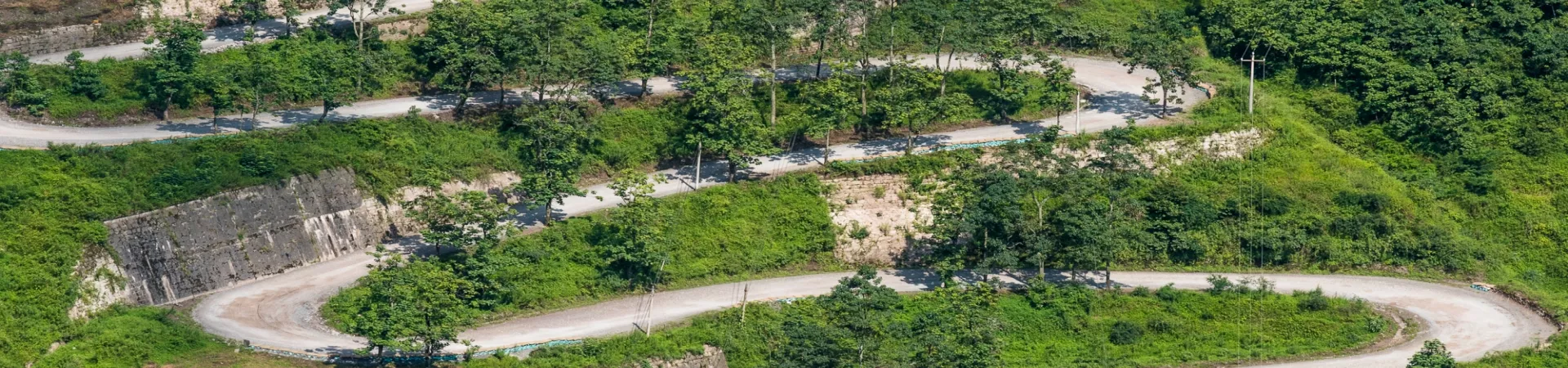
Subtitle: A Journey Through History and Majesty: Exploring the Twenty-Four Bends of Qinglong
1. Introduction: A Road Forged in History and Landscape
Nestled within the mountainous heart of Southwest China's Guizhou Province, in the Qianxinan Buyei and Miao Autonomous Prefecture, lies an engineering marvel and a powerful historical symbol: the Qinglong Twenty-Four Bends (晴隆二十四道拐). This serpentine stretch of road, comprising 24 hairpin turns carved precariously into the steep slope of a mountain, is far more than a dramatic scenic route. It is a testament to human ingenuity during wartime, a crucial lifeline of the World War II era, and a breathtaking vantage point offering some of the most spectacular views in the region. A visit here is a multi-layered experience, combining awe-inspiring natural geography with profound historical reflection, making it an essential destination for history enthusiasts, photography aficionados, and adventurous travelers alike.
2. The Historical Backbone: The "Stilwell Road" and the Hump Route
2.1. A Vital Artery in World War II To understand the significance of the Twenty-Four Bends is to travel back to the 1930s and 1940s. During the Second Sino-Japanese War and World War II, with much of China's coastline blockaded, the need for an overland supply route from Allied-held Burma into China's interior was critical. This led to the construction of the famed Burma Road and its later extension, often referred to as the Stilwell Road (named after American General Joseph Stilwell). The section at Qinglong, with its 24 sharp bends ascending the majestic Huagaoshan Mountain, became one of the most challenging and iconic segments of this entire supply network.
2.2. Supporting the "Hump" and the War Effort This treacherous mountain road served as a crucial inland transfer point. Supplies flown from India over the eastern Himalayas—the perilous aerial corridor known as "The Hump"—would land in Kunming and other locations, and were then transported overland. The Twenty-Four Bends became a gateway, funneling trucks loaded with fuel, ammunition, and essential materials towards the wartime capital of Chongqing and fronts across China. It symbolized the unyielding spirit of resistance and the remarkable international cooperation between Chinese and American forces. The sight of countless military trucks navigating these dizzying curves remains an indelible image of that period.
3. Experiencing the Bends: Scenery, Perspective, and Exploration
3.1. The Panoramic View from the Observation Platform The primary way to comprehend the scale and geometry of the Twenty-Four Bends is from the dedicated observation platform on the opposite mountainside. From this vantage point, the entire ribbon of road unfolds below like a intricate model. You can witness the full sequence of 24 tight, consecutive curves—a dramatic zigzag pattern etched into the green slopes. It is a photographer's paradise, especially at sunrise or sunset when the light casts long shadows and highlights the contours of the landscape. The platform area often features informative plaques detailing the road's history.
3.2. Traversing the Road Itself For a more immersive experience, visitors can travel on the historic road itself. While the original stone surface has been modernized, the sensation of navigating each sharp turn, feeling the steep gradient, and viewing the sheer drop-offs provides a tangible connection to the past. It allows one to appreciate the immense skill and courage required of the drivers who maneuvered heavy vehicles along this path under constant threat. Some tours offer this drive as part of the itinerary.
3.3. The Qinglong Twenty-Four Bends Museum and Memorial To deepen your historical understanding, a visit to the on-site museum or exhibition hall is highly recommended. It houses a collection of historical photographs, documents, artifacts, and sometimes even restored vintage vehicles from the WWII period. Exhibits typically detail the construction of the road, the daily lives of the drivers and workers, the strategic importance of the supply route, and the broader context of the China-Burma-India theater. It serves as a solemn memorial to all who labored and sacrificed to keep this artery open.
4. Practical Visitor Information
4.1. Location and Access The Twenty-Four Bends Scenic Area is located approximately 3-4 kilometers southwest of Qinglong County town in Qianxinan Prefecture, Guizhou. The most common access point is via the county town, which is connected by highway and bus services from major cities like Guiyang and Kunming. From Qinglong town, local taxis or arranged tours can take you to the scenic area's entrance.
4.2. Ticketing and Operating Hours The scenic area charges an admission fee which typically includes access to the observation platform, museum, and surrounding park areas. There is often an option for a combined ticket that includes a sightseeing bus to transport visitors from the entrance to the main viewing areas. * General Admission (with sightseeing bus): Approximately 50 RMB. * Concession Ticket (with sightseeing bus): Approximately 20 RMB (usually applicable to children, students, and seniors—valid ID may be required). * Operating Hours: The area is generally open from 8:00 AM to 6:00 PM daily. Last admission is usually at 6:00 PM. It is advisable to verify current prices and hours before your visit, as they are subject to change.
4.3. Planning Your Visit * Best Time to Visit: Spring (March-May) and Autumn (September-November) offer the most comfortable weather with clear skies, ideal for photography. The road and scenery are accessible year-round. * What to Bring: Wear comfortable walking shoes with good grip, as there will be some walking on potentially uneven paths. Bring sun protection (hat, sunscreen) and water, especially in summer. A camera is essential. * Suggested Duration: Allocate 2 to 4 hours for a comprehensive visit, allowing time for the observation platform, the museum, and leisurely contemplation of the views. * Contact: For the most current information, you can contact the scenic area at +86-859-7611100.