Zhenyuan Ancient City - Zhusheng Bridge
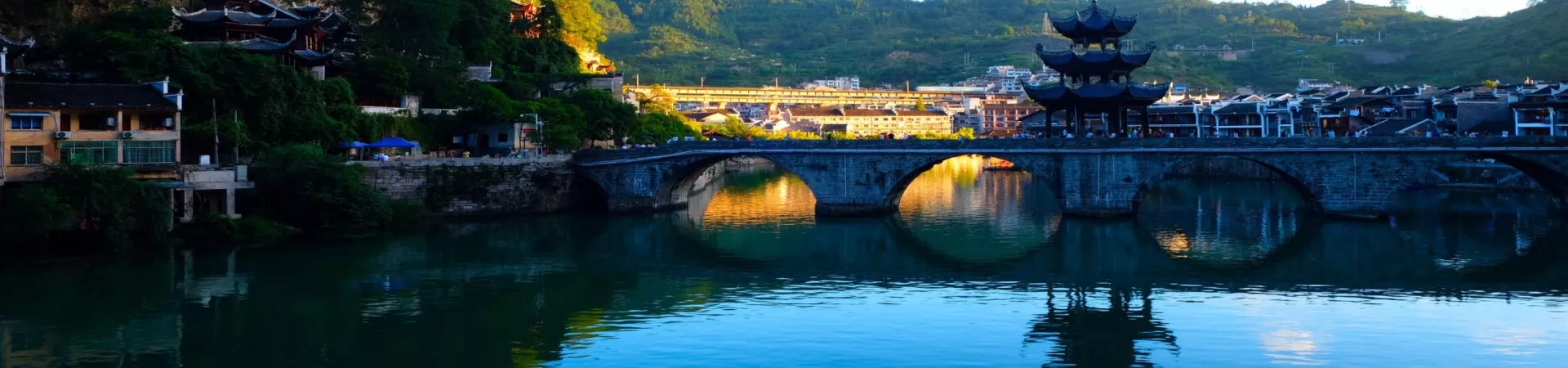
Subtitle: A Bridge Through Time: The History and Allure of Zhusheng Bridge in Zhenyuan
1. Introduction: The Gateway to an Ancient Town
Spanning the majestic Wuyang River in the heart of Zhenyuan Ancient Town, Qiandongnan Prefecture, Guizhou Province, stands Zhusheng Bridge, an architectural gem that is far more than a mere river crossing. This ancient stone arch bridge, with its weathered stones and elegant pavilions, serves as a vital link—not only between the two halves of the town but also between the present and a rich, layered past. For visitors exploring the "Eastern Venice" of China, Zhusheng Bridge is an essential starting point and a lasting symbol of the area's cultural fusion, historical turbulence, and serene beauty. Its presence dictates the flow of life in Zhenyuan, offering ever-changing vistas that capture the town's spirit from dawn until the lanterns illuminate the night.
2. A Turbulent History: From Wuxi Bridge to Zhusheng Bridge
2.1. Foundation and Early Ambitions The story of Zhusheng Bridge begins not with that name, but as Wuxi Bridge during the Hongwu reign of the Ming Dynasty (late 14th century). Its initial construction was a significant undertaking, spearheaded by local Tusi chieftains—Tian Daya, the Pacification Commissioner of Sinan, and He Hui, the Hereditary Magistrate of Zhenyuan—who jointly petitioned the imperial court for its building. This early phase represents a period of local autonomy under the Tusi system, where indigenous leaders governed frontier regions like Zhenyuan. The bridge was conceived as a crucial infrastructure project to connect communities and facilitate control.
2.2. Interruption and a Cycle of Repair The project, however, was soon marred by the very internal strife that characterized some Tusi rule. Violent feuds within the powerful Tian family led to intervention by the central Ming government, resulting in the "Gaitu Guiliu" policy—the replacement of hereditary chieftains with state-appointed officials. This political upheaval left the bridge unfinished. Thus began a centuries-long cycle of collapse and reconstruction, a physical testament to the region's instability and the persistent need for this vital link. Each repair, often funded by local magistrates or communities, added a layer to the bridge's resilience.
2.3. The Final Reconstruction and Imperial Homage The bridge as seen today took its final form in 1723, following a major reconstruction during the Qing Dynasty. This year held special significance as it coincided with the birthday of the reigning Kangxi Emperor. To mark this occasion and express loyalty to the throne, the local officials renamed the structure Zhusheng Bridge, meaning "Bridge to Extend Birthday Wishes to the Emperor." This act of renaming was a profound political and cultural gesture, symbolizing the full integration of Zhenyuan into the imperial administrative system and aligning local identity with the central power in Beijing.
3. Architectural and Scenic Splendor
3.1. Structure and the Qinglong Cave Complex Zhusheng Bridge is a robust, seven-arched stone bridge. Its most distinctive feature is the three-story, octagonal Qinglong Pavilion (Black Dragon Pavilion) that crowns its center. This pavilion is not merely decorative; it is an integral part of the larger Qinglong Cave ancient architectural complex built into the cliffside on the bridge's northern shore. The bridge, the pavilion, the temples, and the monastery paths form a harmonious Taoist ensemble, creating a stunning visual dialogue between human artistry and natural grandeur. Walking across the bridge offers direct access to this sacred site, blurring the line between utilitarian structure and spiritual pathway.
3.2. A Panorama of Timeless Beauty The true magic of Zhusheng Bridge lies in the panoramic views it affords. To the north, ancient dwellings with their distinctive horse-head walls cascade down the slopes of Mount Shi. To the south, the bustling life of Zhenyuan's old streets unfolds. The Wuyang River, emerald green by day, reflects the entire scene, doubling its beauty.
3.3. The Unforgettable Nightscape As dusk falls, the experience transforms. The bridge, the pavilion, and the cliffside temples are outlined in golden strings of light, their reflections shimmering perfectly on the river's dark surface. Boats glide silently underneath, and the silhouettes of the mountains against the twilight sky complete a picture of serene, almost ethereal, beauty. This nightscape is consistently hailed as one of the most captivating sights in all of Zhenyuan.
4. Practical Visitor Information
4.1. Location and Access Zhusheng Bridge is the central landmark of Zhenyuan Ancient Town. The most convenient access is via public bus No. 1, disembarking at the "Zhusheng Bridge" stop, from which the bridge is immediately visible and accessible on foot. The town itself is well-connected by rail and long-distance bus from major cities like Guiyang and Kaili.
4.2. Admission and Opening Hours Access to walk across Zhusheng Bridge itself is free of charge and open to the public 24 hours a day, year-round. This allows for visits at any time to capture different moods and lighting. However, entry into the adjoining Qinglong Cave national historic site complex (which includes the pavilion on the bridge and the temples on the cliff) requires a separate entrance ticket. For the most current and detailed pricing information, it is advisable to consult directly with the scenic area administration.
4.3. Suggested Duration and Tips A visit to appreciate the bridge, walk across it, and photograph the vistas can comfortably take under an hour. However, to fully immerse in the atmosphere, many visitors choose to return at different times of the day, especially at night. Combining the bridge visit with an exploration of the Qinglong Cave complex and the ancient lanes on both riverbanks can easily fill half a day. For any specific inquiries, the local tourist information can be contacted.
Information last updated: January 10, 2023. Credit and thanks to contributing travel enthusiasts for their input.