Meizhou Island National Tourism Resort - Mazu Temple
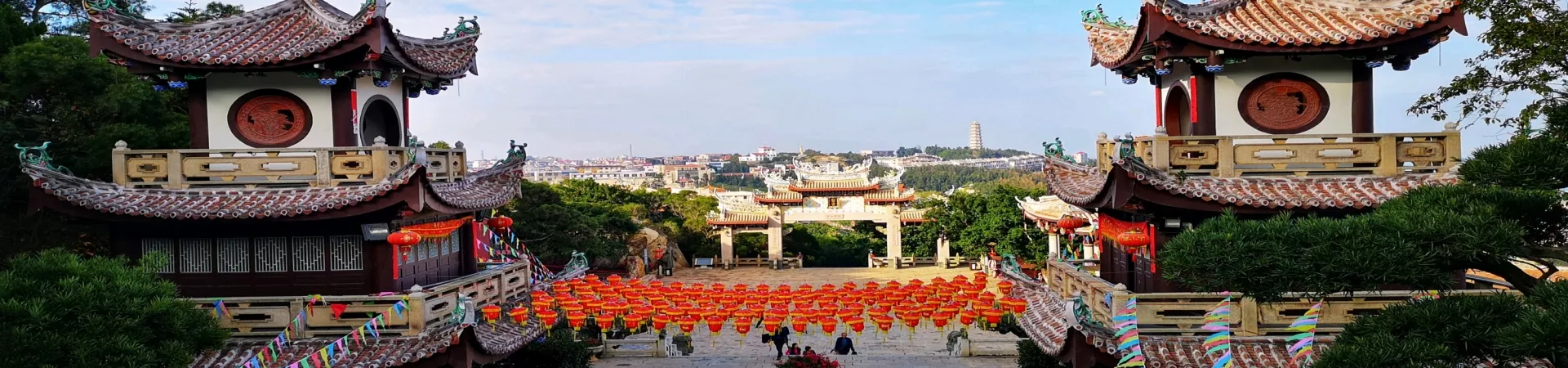
Subtitle: The Spiritual Heart of the Sea: A Visitor's Guide to Meizhou Island's Mazu Temple
Introduction: The Cradle of a Global Belief
Nestled on Meizhou Island in the Taiwan Strait, under the administration of Putian City, Fujian Province, lies the Meizhou Ancestral Temple, commonly and reverently known as the Meizhou Mazu Temple. More than just a historical site, it is the spiritual epicenter, the sacred birthplace for over 200 million Mazu devotees across the globe. This temple is not merely a collection of halls and shrines; it is the very root from which the veneration of the Sea Goddess Mazu spread, transforming her from a local protector into a transnational deity of peace and safe passage. The journey here is a pilgrimage to the source, offering a profound understanding of a cultural and religious phenomenon that has shaped maritime communities worldwide for a millennium.
1. A Journey Through Time: Historical Evolution
1.1. Humble Beginnings: The "Goddess's Shrine" The temple's origins date back to the early Northern Song Dynasty (circa 987 AD). Its inception was modest, described in historical records as nothing more than "a few sparse rafters"—a simple structure known then as the "Divine Maiden's Shrine" (神女祠). It was built to honor Lin Mo, a kind-hearted young woman from Meizhou who was believed to have performed miracles, especially in aiding fishermen and sailors, and whose spirit continued to offer protection after her untimely death.
1.2. Expansion and Imperial Recognition Over the subsequent centuries, as tales of Mazu's divine interventions spread, the shrine gained prominence. It underwent numerous reconstructions and significant expansions, particularly during the Ming and Qing dynasties, evolving from a small village shrine into a grand temple complex. Successive emperors bestowed titles upon Mazu, elevating her status, which in turn led to the architectural enhancement of her ancestral home. Each expansion added layers of cultural and architectural significance, reflecting the growing devotion and the temple's increasing importance.
2. The Temple Complex: Architecture and Spiritual Layout
2.1. The Ascending Axis: A Pilgrim's Path The temple complex is masterfully built along a central axis ascending the slope of the island's northern peak. This layout symbolizes a spiritual ascent. The visit typically follows a upward path through several majestic gates and halls.
2.2. Key Structures and Halls * The Mountain Gate (Shan Men): The imposing entrance that marks the transition from the secular world into the sacred precinct. * The Bell and Drum Towers: Flanking the courtyard, they represent the order of the universe and are used during ceremonies. * The Main Hall (Daxiong Baodian): Often the architectural centerpiece, housing significant statues of Mazu and where major rituals are conducted. * The Heavenly Empress Palace (Tianhou Gong): A central hall dedicated to Mazu in her elevated title as "Heavenly Empress," showcasing intricate carvings and devotional offerings. * The Ascending Rain Pavilion (Shengzi Dian): A key site commemorating Mazu's birth and her miraculous deeds. * The Summit: The Giant Mazu Statue: Towering over the complex at the peak is the iconic 14-meter-tall granite statue of Mazu, gazing serenely over the strait. This modern addition has become the defining image of the island, offering breathtaking panoramic views and a powerful sense of connection.
3. Mazu Belief: From Local Heroine to Global Guardian
3.1. The Core Legend The temple's essence is the story of Lin Mo (960-987 AD). Renowned for her medical knowledge, weather prediction skills, and, most famously, her fearless acts of rescuing sailors and guiding ships through storms, she became a local legend. After her death, the belief that her spirit continued to protect seafarers solidified into a formal cult.
3.2. The Phenomenon of "Fenling" and Global Spread A unique practice called "fenling" (分灵), or the dividing of the spirit, is central to Mazu's global reach. Devotees from other regions would come to the Meizhou Ancestral Temple to conduct rituals to invite a branch of Mazu's spirit to their local temple. As Chinese diaspora communities, particularly in Southeast Asia, migrated across the oceans, they carried this practice with them. Through this process, over 10,000 Mazu temples worldwide trace their spiritual lineage directly back to this single site on Meizhou Island, making Mazu a truly international goddess of the sea.
4. Practical Information for Visitors
4.1. Location and Access Meizhou Island is located approximately 40 kilometers southeast of downtown Putian City. Visitors must take a ferry from the Wengang Pier in Putian to the island. The temple complex is situated on the island's northern shore.
4.2. Opening Hours and Admission * Opening Hours: The temple grounds are generally open from 08:30 to 17:30, daily throughout the year (including weekends). Some outer courtyards may be accessible earlier or later. * Admission: For the most accurate and current ticket prices, it is highly recommended to consult the official scenic area information upon arrival or check their official channels. Fees may vary for the island entry, ferry, and access to different parts of the complex.
4.3. Suggested Duration and Best Time to Visit * Suggested Visit Duration: A comprehensive visit to the temple complex, including the climb to the statue and time for reflection, typically requires 2 to 3 hours. Allocating a half-day for the entire trip from Putian, including ferry transfers, is advisable. * Best Time to Visit: The island is visitable year-round. The most vibrant time is during Mazu's Birthday (23rd day of the 3rd lunar month, usually in April or May) and the Mazu Culture Tourism Festival, when thousands of pilgrims gather for spectacular ceremonies. Spring and autumn offer the most pleasant weather.
4.4. Cultural Etiquette for Visitors * Dress modestly as a sign of respect within the temple grounds. * Observe silence and respectful behavior in prayer halls. * Photography is usually permitted in courtyards, but avoid using flash inside halls and be mindful of worshippers. * Follow the designated walking paths, often moving in a clockwise direction.
4.5. Contact Information For specific inquiries, you may contact the temple management at: +86 594 5094688.