Shangcheng Buddhist Temple
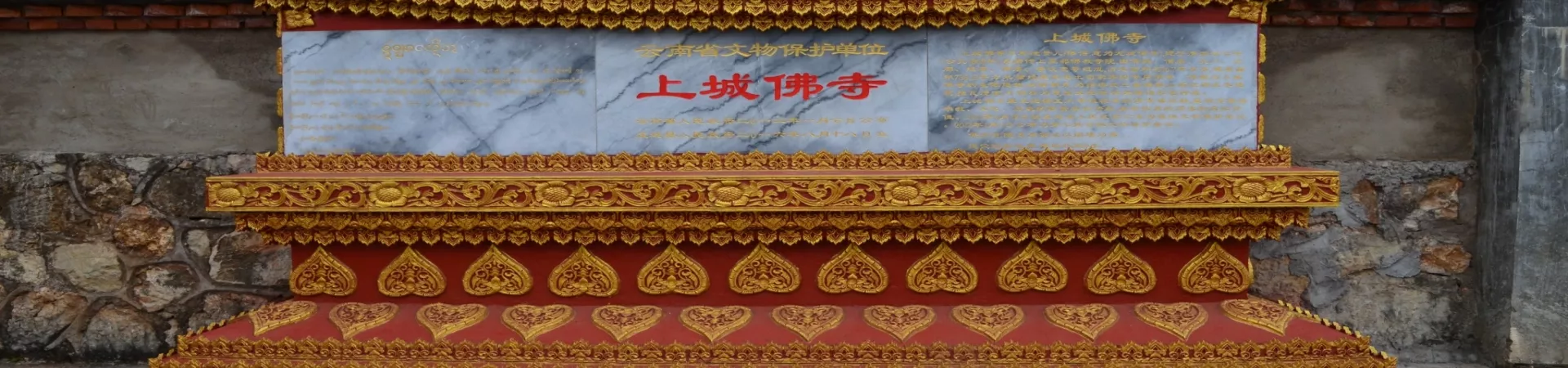
Subtitle: A Sacred Sanctuary in the Heart of Dai Culture: Exploring Shangcheng Buddhist Temple
1. An Enchanting Setting and Legendary Origins
Nestled upon the serene Jinshan (Golden Mountain) and adjacent to ancient groves of dragon's blood trees, the Shangcheng Buddhist Temple is not merely a standalone structure but an integral and revered component of the historic Nayun Dai Ancient Town. Its location is immediately evocative, blending spiritual tranquility with the raw, natural beauty of Pu'er's landscape. The temple's very foundation is intertwined with local myth, giving it an aura of mystical significance. According to enduring legend, a stone cave within the temple grounds forms a hidden, subterranean channel connecting directly to the Longtan (Dragon Pool) of the Nanlei River. It is said that a dragon residing in the pool would frequently travel this secret passage to ascend to the temple, drawn by the sacred ceremonies. Here, it would listen to scriptures being chanted, receive Buddhist teachings, and bask in the sanctifying smoke of incense and offerings. This captivating tale is the origin of the temple's alternative and poetic name, "Longmian Si" – the Dragon's Temple or the Temple of the Dragon's Audience.
2. A Legacy of Royal Patronage and Spiritual Prestige
2.1. The Tusi's Private Sanctuary The historical importance of Shangcheng Buddhist Temple is profound. During the era of the Tusi (local chieftain) system, which governed the Dehong and surrounding regions for centuries, this was no ordinary place of public worship. It served explicitly as the private, exclusive family temple for the successive Tusi rulers of Menglian. This royal patronage elevated its status above all other local temples, making it the spiritual and ceremonial heart of the ruling aristocracy. The architecture, artifacts, and rituals within were undoubtedly influenced by and reflected the power and piety of the Dai nobility.
2.2. A Beacon for Buddhist Scholars The temple's reputation for sanctity and its royal connections made it a mandatory destination for learned Buddhist monks traveling through the region. Whether from other parts of Yunnan, different Buddhist traditions within China, or from neighboring Theravada Buddhist countries like Myanmar, Thailand, or Laos, visiting high monks would typically seek residence at Shangcheng Temple. This practice transformed the site into a vibrant hub for theological exchange, scholarly discussion, and the cross-pollination of Buddhist ideas, further cementing its status as a center of spiritual excellence and intellectual discourse.
3. The Living Heart of Dai Theravada Buddhism and Culture
3.1. A Vibrant Center for Religious Practice Today, while its role as a royal enclave has passed into history, Shangcheng Temple has seamlessly transitioned into a vital, active center for the local Dai community. It remains a foremost site for Theravada Buddhist religious activities. Monks reside, study, and meditate here, while the lay community gathers for major festivals such as the Water-Splashing Festival (Songkran), Kathina robe-offering ceremonies, and daily almsgiving. The rhythmic chanting of Pali scriptures, the scent of frangipani flowers and incense, and the sight of saffron-robed monks create an immersive atmosphere of living faith.
3.2. A Repository and Showcase of Dai Heritage Beyond its purely religious function, the temple has evolved into what can accurately be described as the primary cultural nexus for the Dai people in the area. It acts as a dynamic 传播中心 (dissemination center) for Dai culture, art, customs, and folkways. The temple complex itself is an open-air museum of traditional Dai architecture, characterized by its multi-tiered, sweeping roofs, intricate wooden carvings, and ornate gilding.
3.3. Architectural and Artistic Treasury As a crucial 收集地和展示厅 (collection site and exhibition hall), the temple safeguards a vast array of cultural treasures. This includes palm-leaf manuscripts containing classical Dai literature, Buddhist texts, and historical records; exquisite murals depicting Jataka tales (stories of the Buddha's past lives) and local legends; finely crafted sculptures of the Buddha in various mudras; and traditional Dai musical instruments used in ceremonies. Every corner, from the main prayer hall to the supporting structures, offers insights into the Dai's sophisticated artistic sensibilities and deep spiritual worldview.
4. The Visitor Experience: Immersion in Tradition
4.1. Witnessing Daily Rituals A visit to Shangcheng Temple provides a rare opportunity to observe the harmonious daily rhythm of a working Theravada monastery. The early morning alms round, where devotees offer food to the monks, is a particularly poignant ritual demonstrating the symbiotic relationship between the monastic community and the laity. Visitors are encouraged to observe quietly and respectfully, gaining an authentic glimpse into a timeless tradition.
4.2. Exploring Architectural Harmony The temple's layout and design warrant careful observation. The integration with the hillside, the symbolic meanings behind architectural elements like the stupas and nagas (serpent deities), and the contrast between the vibrant colors of the temple and the lush green backdrop of Jinshan and the dragon's blood trees create a powerful aesthetic and spiritual experience. The legendary stone cave, whether approached as myth or geological wonder, adds a layer of intrigue to the exploration.
4.3. Engaging with a Living Culture Ultimately, Shangcheng Buddhist Temple is not a relic frozen in time. It is a living, breathing institution where history, religion, and culture converge. A traveler here engages with more than just buildings; they witness the ongoing story of the Dai people, their unwavering faith, and their rich artistic heritage, all preserved and celebrated within this sacred and legendary sanctuary on Golden Mountain.