Mojiang Wenmiao
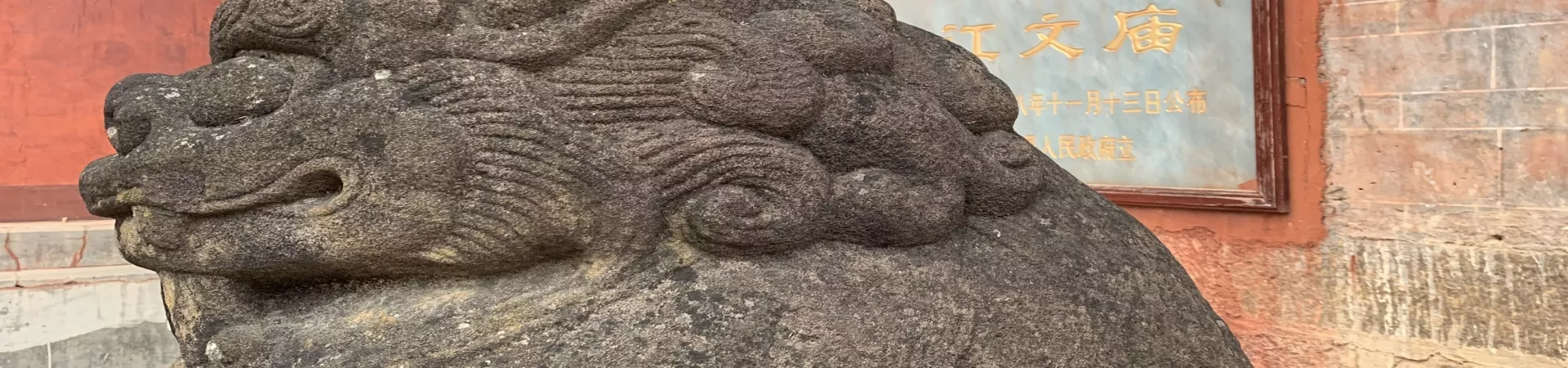
Subtitle: A Journey Through Time and Culture at Mojiang Confucian Temple
Introduction: The Gateway to Pu'er's Cultural Heritage
Nestled in the heart of Mojiang Hani Autonomous County, a region celebrated for its dramatic landscapes and the unique cultural tapestry of the Hani people, stands a monument of classical Chinese thought and architecture: the Mojiang Confucian Temple. More than just a historical site, it serves as a profound cultural counterpoint and a testament to the enduring influence of Confucian philosophy in Yunnan's diverse ethnic mosaic. For the discerning traveler venturing beyond Pu'er's famed tea mountains, this temple offers a serene and intellectually stimulating retreat. It is a place where the orderly, scholarly principles of Confucianism meet the vibrant, earth-centered traditions of local ethnic groups, creating a unique dialogue within its tranquil courtyards. A visit here is not merely a step back into imperial China's educational system but an immersion into a space of harmony, respect for knowledge, and architectural elegance.
1. Historical Significance and Foundation
1.1. Imperial Endorsement and Local Initiative The Mojiang Confucian Temple was originally constructed in 1821, during the reign of the Daoguang Emperor in the Qing Dynasty. Its establishment was a significant event, often initiated through a combination of imperial decree and the fervent efforts of local magistrates and literati. The founding of a Confucian temple in a relatively remote prefecture like Pu'er underscored the Qing government's policy of cultural integration and the spread of standardized education and civil values throughout its vast empire. It symbolized the extension of the central plains' core philosophical system into the southwestern frontier.
1.2. A Center for Cultivation and Civil Service For nearly two centuries, this temple complex functioned as the spiritual and academic heart of Mojiang. It was far more than a place of worship; it was the local center of the "Temple of Culture," or Wenmiao, which housed the official academy (Xuegong). Here, scholars and aspiring candidates for the formidable imperial civil service examinations would study the classic Confucian texts—the Four Books and Five Classics. The temple was a beacon of learning, where the ideals of benevolence (ren), righteousness (yi), propriety (li), wisdom (zhi), and fidelity (xin) were cultivated, shaping the region's bureaucratic and intellectual elite.
2. Architectural Layout and Symbolic Design
2.1. The Axial Symmetry and Spatial Progression The temple exemplifies traditional Chinese temple architecture, adhering to a strict north-south axial layout that reflects Confucian ideals of order, hierarchy, and balance. Visitors progress through a series of courtyards and gates, each step representing a journey towards higher wisdom and moral refinement. This deliberate spatial sequence creates a gradual transition from the profane outer world to the sacred, scholarly inner sanctum.
2.2. Key Structures and Their Functions 2.2.1. The Lingxing Gate (Star of Literature Gate) The journey begins at the Lingxing Gate, the majestic main entrance. Dedicated to the celestial star associated with scholarship in Chinese mythology, passing through this gate symbolizes the scholar's pursuit of literary excellence and divine favor in academic endeavors.
2.2.2. The Dacheng Hall (Hall of Great Accomplishment) The architectural and spiritual core of the complex is the Dacheng Hall. This grand hall, typically with its sweeping double-eaved roof, golden-glazed tiles, and intricate wooden brackets (dougong), was the venue for the most important ceremonies, including worship rites for Confucius. Inside, one would traditionally find a memorial tablet dedicated to "The Greatest Sage and First Teacher," Confucius himself, often accompanied by tablets of his principal disciples.
2.2.3. The Eastern and Western Chambers Flanking the main courtyard are the long, veranda-lined Eastern and Western Chambers. These halls served as galleries honoring Confucius's eminent disciples and later master interpreters of his philosophy, such as Mencius and Zhu Xi. They physically represent the transmission and expansion of the Confucian school of thought.
2.2.4. The Xiangxian Temple (Temple of Local Worthies) & The Jiexiao Temple (Temple of Chastity and Filial Piety) These auxiliary halls highlight the social application of Confucian virtues. The Xiangxian Temple commemorated locally renowned officials and scholars who embodied Confucian ideals, providing models for the community. The Jiexiao Temple honored local women and men recognized for extraordinary filial piety or chastity, reinforcing the core family values central to social stability in Confucian doctrine.
3. Cultural Resonance in a Diverse Region
3.1. Confucianism and Ethnic Harmony in Mojiang The presence of a quintessential Han Chinese cultural institution in the Hani Autonomous County is particularly significant. It illustrates the historical interactions and coexistence between different ethnic groups in Yunnan. The temple stands as a symbol of cultural exchange, where the state-promoted Confucian values interacted with the rich, animist traditions and communal social structures of the Hani people. This juxtaposition invites contemplation on the multifaceted nature of Chinese cultural identity.
3.2. A Living Heritage Site While no longer an active academy, the Mojiang Confucian Temple has been preserved and restored as a key cultural relic. It functions as a public museum and a quiet urban oasis. Visitors today can attend cultural events, calligraphy exhibitions, or traditional music performances held within its grounds, experiencing the space as a continuing center for community and cultural education.
4. Practical Visitor Experience
4.1. Atmosphere and Aesthetic Appreciation The temple offers a respite from the bustle of modern life. The atmosphere is one of profound peace, punctuated by the rustle of ancient cypress trees, the scent of old wood and incense, and the play of sunlight on stone courtyards. The architectural details—carved stone pillars, roof ridge ornaments, latticework doors—reward close observation and provide excellent opportunities for photography, especially in the soft morning or late afternoon light.
4.2. Reflective Exploration To fully appreciate the site, visitors are encouraged to wander slowly. Reflect on the scholarly pursuits that once animated these halls. Consider the arduous journey of examination candidates from this frontier region to the imperial capital. Observe the harmony of the architecture with its natural surroundings, a principle valued in both Confucian and local Hani worldviews.
4.3. Integration with a Broader Itinerary A visit to the Mojiang Confucian Temple pairs perfectly with exploration of Pu'er's other attractions. It creates a rich cultural narrative when combined with a visit to the nearby Mojiang International Twins Park (playing on the county's fame for a high twin birth rate), a journey through the vast Pu'er Tea Plantations, or an immersive experience in a Hani village to understand the local terraced agriculture and vibrant festivals. This contrast deepens the understanding of the region's complex cultural layers.
In essence, the Mojiang Confucian Temple is a capsule of intellectual history and architectural grace. It provides a unique lens through which to understand the historical processes of cultural dissemination, education, and ethnic integration in southwest China. For any traveler seeking depth and context beyond scenic beauty, it is an indispensable stop in the Pu'er region.