Anyuan Film and Television City
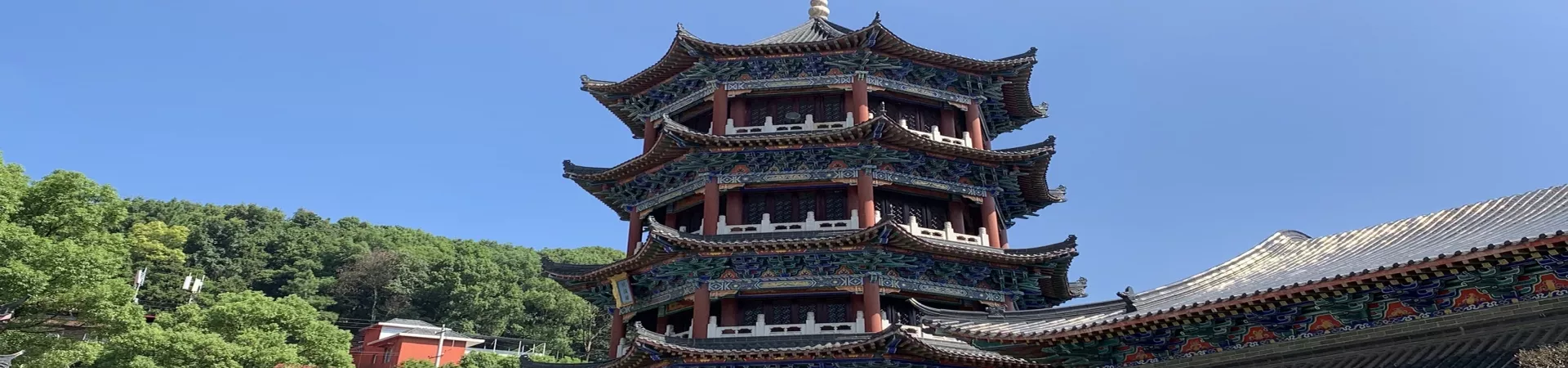
Subtitle: A Journey Through Time: Exploring Anyuan Film and Television City, Jiangxi's Cinematic Gem
Introduction: Where History Meets the Silver Screen
Nestled in the city of Pingxiang, Jiangxi Province, lies a unique portal to early 20th-century China: the Anyuan Film and Television City. Originally known as Anyuan Ancient City and now formally named Anyuan Jinxiu Cheng (Anyuan Brocade City), this expansive complex stands as the largest film and television production base in Jiangxi. It is the brainchild of Mr. Fan Jixin, a local Pingxiang entrepreneur, whose vision was to create not merely a set, but a living, breathing recreation of a bygone era. More than just a facility for filmmakers, it has evolved into a captivating cultural and historical destination, offering visitors an immersive experience that blends cinematic artistry with the profound historical narrative of the Anyuan region.
The Architectural Tapestry: Recreating the Old Anyuan Street
1. A Meticulous Recreation The primary ambition of Anyuan Film and Television City is to faithfully resurrect the architectural landscape and atmosphere of the old Anyuan town as it existed in the 1920s and 1930s. The first phase of this ambitious project involved the construction of over 40 individual buildings, covering a total floor area of 10,000 square meters. This is not a random collection of period-style facades, but a carefully planned microcosm of a historical community.
2. Key Structures and Their Stories Walking through its streets is akin to stepping onto a meticulously detailed open-air film set. The complex features more than fifty distinct scenic spots, each telling a part of the daily life and social fabric of the time. * Teahouses and Public Houses: These were the social hubs of the era, where people gathered, news was exchanged, and community life thrived. * Opium Dens: Serving as a stark reminder of the social challenges and historical context of the period, these structures add a layer of gritty realism to the environment. * Ancestral Halls: Representing the deep-rooted clan culture and traditional family values that were central to Chinese society. * The Workers' Club: Perhaps the most historically significant recreation, this building echoes the early labor movement in China, for which Anyuan holds a notable place in modern Chinese history. This structure serves as a powerful physical link to the region's "red" or revolutionary heritage.
Beyond the Set: A Multifaceted Cultural Experience
1. A Living Museum of Cinematic History The value of Anyuan Film and Television City extends beyond its static architecture. It actively functions as a museum dedicated to the cinematic history of the Pingxiang region. The site showcases: * Mine Shaft Replicas: Acknowledging Pingxiang's industrial past, particularly its coal mining history, which has often been a backdrop for films. * Prop Exhibitions: Collections of authentic and reproduced props used in various film and television productions offer a behind-the-scenes look at the art of filmmaking. * Production Stills and Memorabilia: Walls are adorned with photographs from movies and TV shows filmed on location, allowing visitors to recognize scenes and appreciate the transformation from set to screen. * Inscriptions by Celebrities: Commemorative plaques and calligraphy by famous actors, directors, and other personalities who have worked at the site add a touch of star-studded history.
2. The Dual Role: Production and Tourism The city serves a dual, synergistic purpose. Primarily, it provides an authentic, readily available backdrop for film and television crews producing period dramas, significantly reducing production costs and logistical challenges for projects set in early modern China. Secondly, and increasingly importantly, it has become a cornerstone for cultural tourism. * Boosting "Red Tourism": The site plays a crucial role in promoting the development of "red tourism" in Anyuan. By physically manifesting the settings of revolutionary history, it provides an accessible and engaging way for visitors, especially students and history enthusiasts, to connect with that pivotal era. The recreation of sites like the Workers' Club transforms historical facts into a tangible experience. * An Interactive Visitor Experience: Tourists are encouraged to wander the streets, enter the buildings, and photograph themselves within these historical settings. This interactivity fosters a deeper connection than a traditional museum might offer, making history feel immediate and personal.
Practical Information for the Visitor
Getting There: The Anyuan Film and Television City is conveniently accessible from Pingxiang's city center. The most straightforward public transportation route is to take Bus No. 19 from Pingxiang Railway Station. The bus journey provides a glimpse of the local area before arriving at this historical enclave.
Contact: For specific inquiries, particularly regarding group visits, special events, or filming permissions, the site can be contacted directly at 13907997352.
In essence, Anyuan Film and Television City is far more than a collection of movie sets. It is a dynamic cultural project where the lines between past and present, education and entertainment, history and storytelling beautifully blur. It stands as a testament to local initiative, a valuable resource for the Chinese film industry, and a compelling destination for anyone seeking to understand the architectural and social landscape of 1920s-1930s China and the significant revolutionary history of the Anyuan region. A visit here is not just a tour; it is an opportunity to walk through the pages of a history book and the frames of a classic film simultaneously.