Yangmei Ancient Town
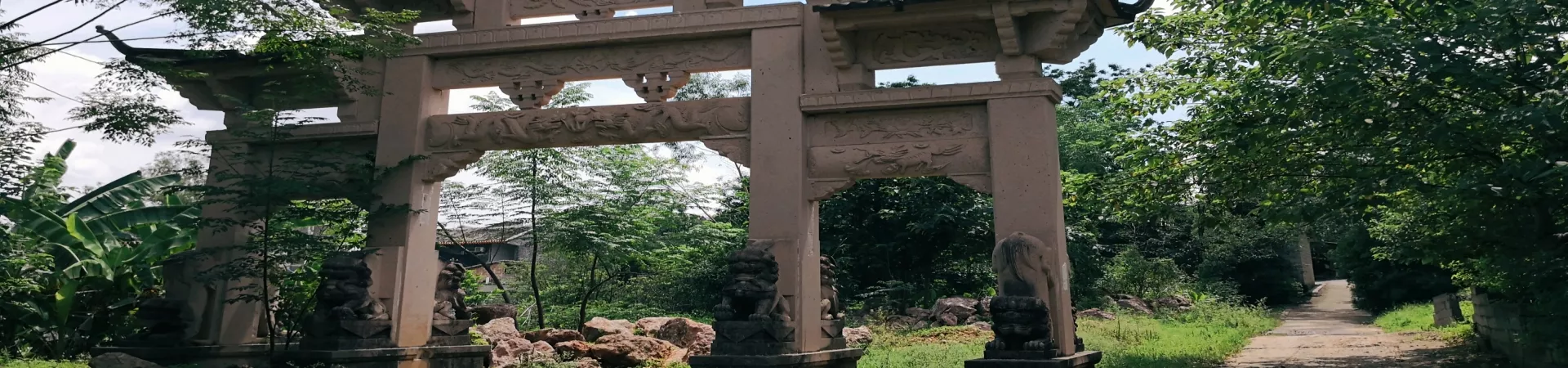
Subheading: A Journey Through Time in the Ancient Water Town of Yangmei
1. Introduction: A Hidden Gem on the Yong River
Nestled along the serene banks of the Yong River, approximately 30 kilometers southwest of Nanning's urban bustle, lies Yangmei Ancient Town. This is not a place of loud commercialism or hurried crowds. Instead, Yangmei offers a rare and tranquil portal into China's storied past. Founded during the Song Dynasty (960-1279 AD) and flourishing through the Ming (1368-1644) and Qing (1644-1912) dynasties, Yangmei stands today as one of the most well-preserved repositories of Ming and Qing-era architecture within the Nanning region. Its current state of quiet seclusion belies a history rich with mercantile activity, making it a perfect destination for travelers seeking authenticity, historical immersion, and a peaceful respite from the modern world.
2. A Storied Past: From Bustling Port to Quiet Retreat
2.1. The Riverine Hub Yangmei's history is inextricably linked to the Yong River. During its zenith, the town was a vital commercial hub, its prosperity flowing directly from the water. Numerous docks and wharves lined its banks, servicing a constant flow of merchant junks and cargo boats. For nearly a hundred kilometers, Yangmei functioned as a central collection and distribution point for goods, connecting the hinterlands with broader regional trade networks. The river brought wealth, ideas, and cultural exchange, shaping the town's architectural and social fabric.
2.2. The Shift to Seclusion The decline of traditional waterway transport and the rise of modern roads and railways gradually altered Yangmei's fate. The once-bustling ports fell silent, and the tide of commerce receded. This historical shift, while diminishing its economic prominence, had a preserving effect. Shielded from rapid development and intense commercialization, Yangmei entered a state of peaceful hibernation. The very "inaccessibility" that some might note is, in fact, its greatest cultural safeguard, allowing its ancient lanes and structures to survive with a remarkable lack of alteration.
3. Architectural Tapestry: Walking Among Centuries
3.1. A Dense Concentration of Heritage Stepping into Yangmei is akin to walking onto the set of a historical film. The compact town layout, designed in an era of foot traffic and river access, is astonishingly dense with heritage. Within its small footprint, it is estimated that over 700 structures from the Ming and Qing dynasties were built. These buildings rise shoulder-to-shoulder along narrow, winding flagstone streets, creating a mesmerizing streetscape where history feels palpable and immediate.
3.2. Key Architectural Features The residential and commercial architecture showcases classic Lingnan (Southern Chinese) styles adapted for the subtropical climate. Key features to observe include: * Horsehead Walls (Feng Huo Qiang): These iconic stepped gable walls, rising above the rooflines, served primarily as fire barriers but also added a distinctive rhythmic beauty to the skyline. * Exquisite Wood and Stone Carvings: Though time has worn some details, careful observation reveals remnants of intricate craftsmanship on door frames, window lattices, beam supports, and stone foundations, depicting auspicious symbols and folklore scenes. * Temple and Ancestral Hall Complexes: Scattered throughout the town are sites like the Eight Temples, the Three Temples, and ancient stage platforms, speaking to the spiritual and communal life of the past. It is important to acknowledge, as the record notes, that the passage of centuries has claimed some of these古迹 (historical sites); their absence is a silent part of the town's narrative.
4. The Visitor's Experience: Practical Immersion
4.1. Atmosphere and Ambiance The prevailing atmosphere in Yangmei is one of undisturbed tranquility. Without the pressure of heavy tourist crowds or aggressive vendors, visitors are free to wander at their own pace. You might encounter local elderly residents going about their daily lives, children playing in the alleys, or the occasional artisan working quietly. The pace is slow, inviting contemplation and detailed photography of architectural details, weathered doors, and the play of light on ancient walls.
4.2. Essential Practical Information * Admission: A modest fee of 10 RMB (Chinese Yuan) is required for entry into the town's core heritage preservation area. * Opening Hours: The town is accessible to visitors 24 hours a day, every day of the year. The experience varies dramatically between sunlit daytime exploration and the evocative, lantern-lit quiet of the evening. * Suggested Duration: A thorough exploration to appreciate the architecture, wander the back lanes, and soak in the atmosphere typically requires 2 to 3 hours. Those wishing to sketch, photograph extensively, or simply sit and absorb the peace may wish to allocate longer. * Contact: For specific inquiries, the town's management can be reached at +86 771 5555667. * Getting There: The journey is part of the adventure. Reaching Yangmei usually involves a combination of bus or private car travel from Nanning to the Jiangnan District ferry point, followed by a short, scenic boat ride across the Yong River to the town itself—a fitting approach for a historic water town.
Ultimately, a visit to Yangmei Ancient Town is not merely about checking off a list of sites. It is an experience of atmosphere and texture. It is the feeling of cool stone underfoot, the sight of lush greenery spilling over a grey brick wall, the sound of the river gently lapping against old stone steps, and the profound sense of connection to the countless lives and stories that have unfolded within these well-preserved lanes over hundreds of years. It is a place where history whispers, and those who listen are richly rewarded.
Information last updated: June 9, 2023. Credit and thanks to contributor 布布鱼的窝 from Mafengwo.