Presidential Palace of Nanjing
Subtitle: A Journey Through Six Centuries of Power, Politics, and Architectural Fusion
1. Introduction: A Palimpsest of Chinese History Nanjing's Presidential Palace complex is not merely a single building or a static museum; it is a vast, living palimpsest upon which pivotal chapters of China's modern history have been inscribed. Spanning over six centuries, its grounds have served as the seat of imperial provincial power, the heavenly capital of a rebellious kingdom, and the administrative heart of a nascent republic. Today, it stands as one of China's most significant historical and architectural sites, offering visitors a profound walk through time. The site masterfully integrates preserved historical relics, invaluable archival materials, and beautifully landscaped gardens into a cohesive narrative of transformation and cultural dialogue.
2. Architectural Layout and Historical Zones The expansive complex is strategically divided into three main sections, each representing different historical layers and functions.
2.1. Central Axis (Middle Zone): The Ceremonial Heart The central axis forms the traditional backbone of the complex, following classical Chinese architectural principles of symmetry and hierarchy. This zone best represents the site's origins as the office of the Viceroy of Liangjiang during the Ming and Qing dynasties, a position governing vital southeastern provinces. Later, it served as the grand ceremonial core for both the Taiping Heavenly Kingdom and the Nationalist Government (Kuomintang). Key halls along this axis, such as the Grand Hall and the Auditorium, witnessed state ceremonies, diplomatic receptions, and momentous political decisions.
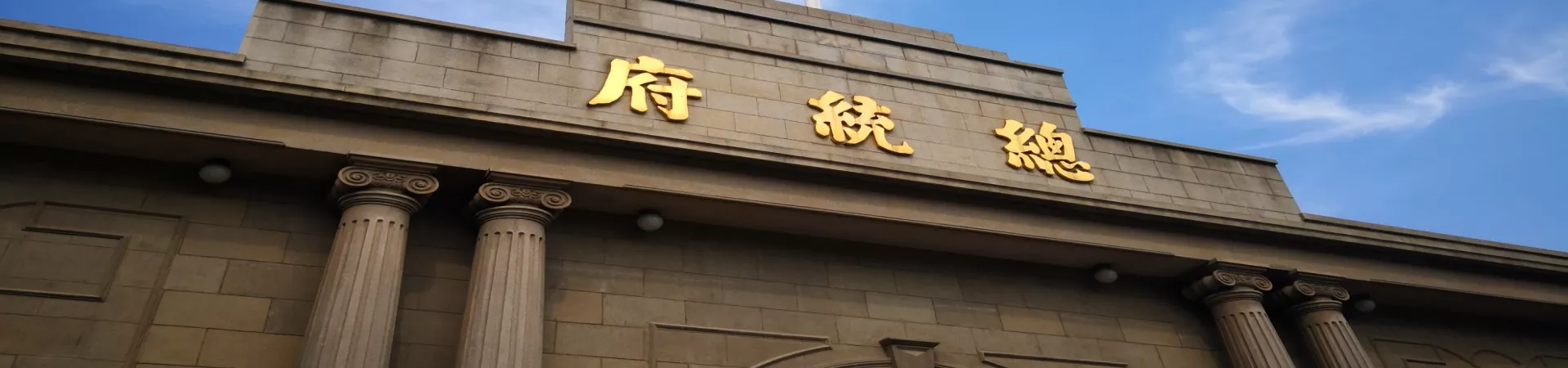
2.2. Western Zone: The Rise of Modern Administration In contrast to the traditional central axis, the Western Zone showcases the influence of Western architecture and modern governance. Developed significantly in the late 19th and early 20th centuries, this area features dignified Western-style office buildings, including the iconic "Zichao Tower" (the main executive building). These structures, with their colonnades and brick-and-stone facades, housed the executive offices of the Nationalist Government's various ministries and committees, symbolizing the period's push for modernization and engagement with the world.
2.3. Eastern Zone: Serenity and Strategic Planning The Eastern Zone provides a complementary narrative, focusing on living quarters, strategic planning, and tranquil retreats. It includes the residence of Sun Yat-sen, founding father of modern China, offering a glimpse into his modest lifestyle. This area also contains the "Yuanlin" (Garden of the Unsuccessful Politician), a masterpiece of Jiangnan classical garden design, seamlessly integrated into the larger complex.
3. A Tapestry of Gardens and Architecture Beyond its political significance, the Presidential Palace is celebrated for its exceptional aesthetic harmony, where diverse architectural styles coexist within a serene garden environment.
3.1. The Fusion of Chinese and Western Courtyards The site is a textbook example of early 20th-century Sino-Western fusion. Visitors can stroll from a Qing-style courtyard with grey-tiled roofs and ornate woodwork into a quadrangle surrounded by neoclassical arcades. This architectural dialogue reflects a nation at a crossroads, thoughtfully blending indigenous traditions with imported forms.
3.2. The Jiangnan Classical Gardens The gardens, particularly the Yuanlin in the Eastern Zone, are a highlight. They embody the refined artistry of Jiangnan landscape design, featuring meticulously arranged elements: pavilions, winding corridors, artificial hills, tranquil ponds, and delicate bridges. These gardens served as spaces for contemplation and leisure for the site's various inhabitants, from viceroys to presidents, and remain an oasis of calm amidst the historical weight of the surroundings.
4. Essential Visitor Information
4.1. Transportation and Location The Presidential Palace is centrally located and easily accessible. * By Metro: The most convenient option. Take Metro Line 2 or Line 3 to Daxinggong Station. Exit from Exit 5 and walk approximately 370 meters south to the main entrance. * By Bus: Multiple bus lines stop nearby. * Take bus 29, 304, 44, 65, or 95 to the "Zongtongfu" (Presidential Palace) Station and walk about 170 meters. * Take bus 31, 3, or 80 to the "Nanjing Library Station" and walk approximately 350 meters.
4.2. Ticketing Details * Standard Ticket: 35 RMB (valid year-round). * Concession Tickets (Half-price): Available for: * Minors under 18 without guardian accompaniment (with ID). * Full-time undergraduate students or below (with valid student ID, excluding adult education colleges). * Organized groups of primary/secondary school students (with school proof, except Tuesdays). * Seniors aged 60-69 (with ID/passport). * Nanjing residents receiving basic living allowances (with valid certificate). * Free Admission: Granted to: * Retired veteran cadres, active-duty and retired military personnel (with valid certificates). * Persons with disabilities (with disability certificate; one companion admitted free for blind, severely disabled, or mentally disabled visitors). * Minors under 18 accompanied by a guardian (max. 2 minors per guardian, with ID). * Seniors aged 70 and above (with ID/passport). * Important Note: All visitors must purchase tickets using their original, valid ID card or passport. Tickets are sold for same-day entry only and are valid for a single entry.
4.3. Opening Hours * Peak Season (March 1 - October 14): 8:30 - 18:00. Last ticket sold at 17:00; last entry at 17:10. Closed on Mondays, except national holidays. * Off-Peak Season (October 15 - February 28/29): 8:30 - 17:00. Last ticket sold at 16:00; last entry at 16:10. Closed on Mondays, except national holidays. * General Closure: The site is closed every Monday throughout the year (unless Monday is a national holiday) and on Chinese New Year's Eve. Special closures may occur for major events.