Ming Tomb
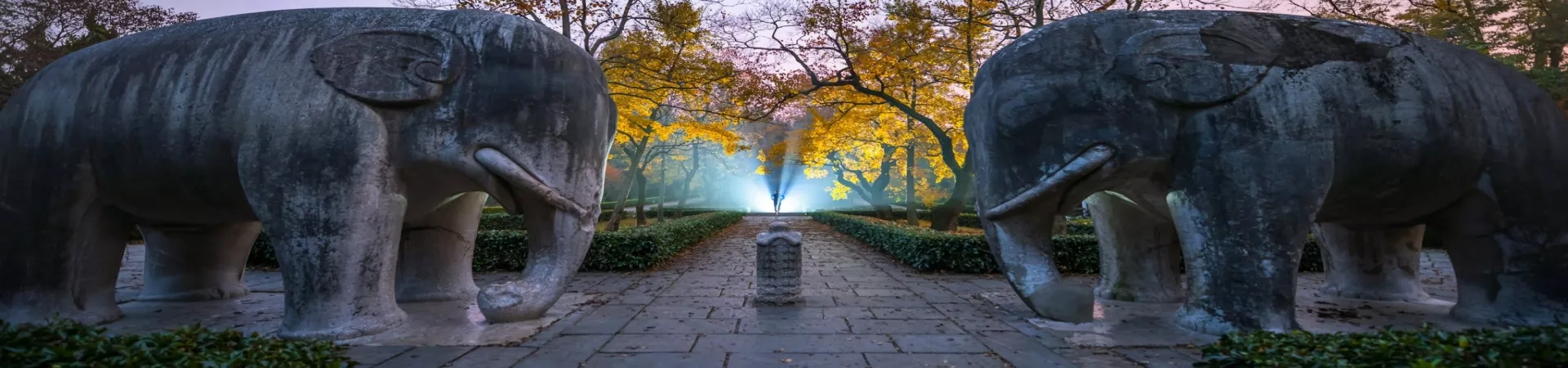
Subtitle: A Journey Through Time: Exploring the Mausoleum of Emperor Hongwu
1. An Imperial Legacy in Stone: Introduction to the Ming Xiaoling Mausoleum
Nestled within the verdant embrace of Nanjing’s Zhongshan Mountain Scenic Area lies a monument of profound historical significance and architectural grandeur: the Ming Xiaoling Mausoleum. This is the final resting place of Zhu Yuanzhang, the founding emperor of the Ming Dynasty (reigning as the Hongwu Emperor), and his empress, Ma. As one of the largest imperial mausoleums in all of Chinese history, it stands not merely as a tomb but as a powerful symbol of the dawn of a dynasty that would rule for nearly three centuries. Its design and scale represent a pinnacle of Ming-era architectural philosophy, seamlessly integrating monumental human artistry with the natural topography of the sacred mountain. A visit here is more than a sightseeing trip; it is a walk through the foundational rituals of imperial China, offering a tangible connection to the mind of an emperor who shaped the nation's destiny.
2. Architectural Mastery and Historical Significance
2.1 A Prototype Forged Over Decades The construction of the Ming Xiaoling Mausoleum was a colossal undertaking that spanned 38 years, beginning during the emperor’s lifetime and concluding during the reign of his successor. This lengthy period reflects the immense importance placed on the project. Its greatest legacy lies in its groundbreaking design, which established the standard layout for imperial mausoleums throughout the subsequent Ming and Qing dynasties. The complex you see today, while awe-inspiring, constitutes only the final section of the original, much larger necropolis. It serves as the blueprint from which the majestic tombs in Beijing's Ming Tombs complex were later derived.
2.2 The Sacred Path: The Spirit Way The genius of Ming Xiaoling’s design is perhaps most magnificently displayed in its Spirit Way (Shendao). Unlike the straight, formal avenues found in earlier tombs, this path is a deliberate, 2,400-meter-long journey that meanders in a graceful S-shape around the foothills of the mountain. This innovative design was both practical, following the natural contours of the land, and deeply symbolic, believed to ward off evil spirits that could only travel in straight lines. Flanking this winding path is a monumental stone sculpture gallery. Pairs of lions, xiezhi (mythical unicorns), camels, elephants, and mythical horses stand in solemn silence, followed by towering military and civil officials. The procession culminates in four pairs of imposing stone warriors and ministers, creating an atmosphere of solemn reverence and eternal guardianship that prepares visitors for the sacred space ahead.
3. A Guide to the Visitor Experience
3.1 The Recommended Route The traditional and most impactful way to experience Ming Xiaoling is to follow the intended ceremonial approach from south to north. Your journey begins at the Great Golden Gate (Dajinmen), entering the sacred precinct. You then traverse the entire, evocative length of the Spirit Way, allowing its narrative in stone to unfold. The path leads northwards through subsequent gates and courtyards, including the Stele Pavilion (Sifangcheng), which houses a giant tortoise-borne stele inscribed with the achievements of the emperor, and the Gate of Eminent Favor (Ling'en Men). The architectural procession culminates at the Soul Tower (Minglou) perched atop the Precious Dome (Baoding), the large, wooded tumulus that covers the underground palace itself. This linear progression allows you to physically feel the building anticipation and hierarchical ascent towards the emperor’s eternal abode.
3.2 Seasonal Splendor: The Plum Garden While the mausoleum is a year-round destination, it transforms into a scene of ethereal beauty during late winter and early spring. Near the Weixiu Pavilion, the Plum Garden bursts into life. Here, delicate white magnolia (yulan) and fragrant, blooming plum (meihua) trees create a stunning contrast against the deep blue of the Nanjing sky and the ancient, grey stone structures. This vibrant display of life amidst the solemnity of death adds a poignant and beautiful layer to the visit, reminding one of the cyclical nature of seasons and history.
4. Essential Practical Information for Your Visit
4.1 Admission Fees and Operating Hours The mausoleum is generally open daily from 8:30 AM to 5:00 PM. The standard adult entrance ticket is priced at 70 RMB. Discounted tickets at 35 RMB are available for: * Children between 6 and 18 years old, or those over 1.4 meters in height. * Full-time university students (excluding adult education and postgraduate students) aged 18 to 24, upon presentation of a valid student ID. * Seniors aged 60 to 69, upon presentation of valid identification. It is always advisable to check for any temporary changes in schedule or pricing before your visit.
4.2 Transportation and Time Allocation The most common public transportation route involves taking public bus number 20 or 315 and alighting at the Zhongshan Botanical Garden (中山植物园) stop. From there, a pleasant walk of approximately 730 meters will lead you to one of the main entrances of the mausoleum complex. Taxis and ride-hailing services are also readily available throughout Nanjing. To fully appreciate the scale, walk the entire Spirit Way, explore the main buildings, and enjoy the surrounding gardens at a comfortable pace, you should allocate a minimum of 3 hours for your visit. Wearing comfortable walking shoes is highly recommended due to the expansive and sometimes uneven terrain.
Information last updated: August 2023. Credit and thanks to contributing editors.