Jiming Temple
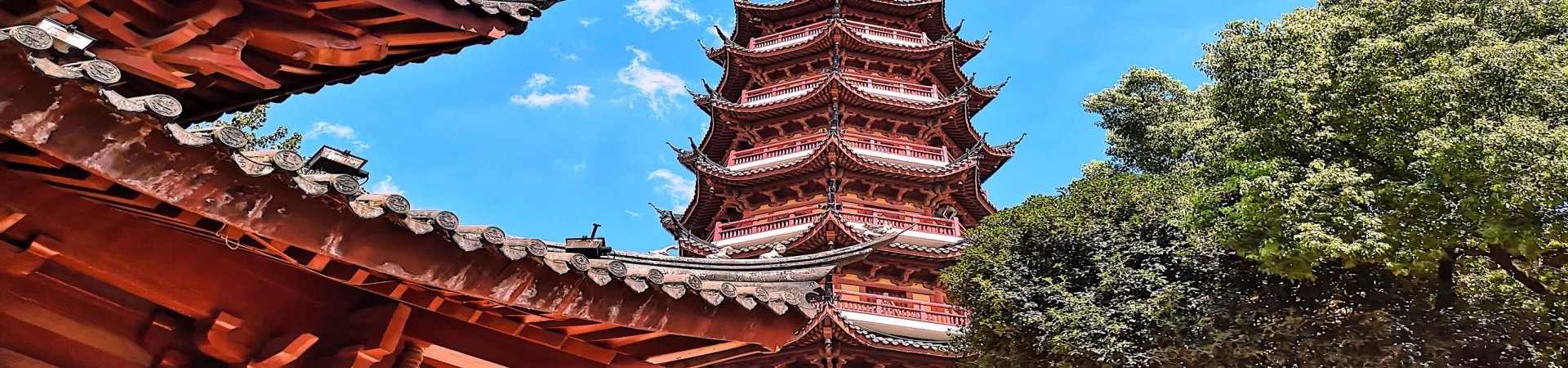
Subtitle: A Journey Through Time and Tranquility at Nanjing's Ancient Jiming Temple
1. The Path of Blossoms: An Enchanting Approach The journey to Jiming Temple begins not at its gates, but on the road that leads to it. This approach is famed throughout China, particularly in early April around the Qingming Festival, when the cherry trees lining both sides of the street erupt in a breathtaking spectacle. The avenue transforms into a delicate tunnel of pale pink and white blossoms, a fluttering sea of petals that draws visitors from far and wide. This natural canopy creates a serene and almost ethereal pathway, setting a tone of peaceful contemplation even before one enters the temple grounds. The fleeting beauty of the cherry blossoms serves as a poignant reminder of life's transient nature, a theme deeply resonant with the Buddhist philosophy awaiting within the temple walls.
2. Historical Heartbeat: From Western Jin to Today Stepping through the temple entrance is to step back through centuries. 2.1. Foundations in the Western Jin Dynasty Jiming Temple's history stretches back to the Western Jin Dynasty (265-316 AD), making it not only one of the oldest Buddhist temples in Nanjing but also a living chronicle of the city's spiritual and cultural evolution. For over 1,700 years, it has stood as a silent witness to the rise and fall of dynasties, surviving through periods of war and peace. This extraordinary longevity has cemented its status as one of Nanjing's most revered and active centers of Buddhist worship, where the scent of incense has rarely faded.
2.2. The Legend of the Rouge Well A tangible link to a dramatic chapter of Chinese history resides in the temple's northeastern corner. Here lies the famous Rouge Well. According to legend, during the chaotic fall of the Chen Dynasty in the late 6th century, the last emperor, Chen Shubao, attempted to hide from invading Sui dynasty forces in this well alongside his concubines, Zhang Lihua and Kong Guipin. The story goes that their makeup stained the well's stone walls, giving it its evocative name. This tale of imperial downfall adds a layer of poignant historical narrative to the site, attracting many visitors intrigued by this blend of romance, tragedy, and tangible history.
3. Architectural Serenity: A Layout for Worship The temple complex itself is a masterpiece of traditional Buddhist architecture, designed to foster an atmosphere of profound tranquility. The environment is notably elegant and hushed, perpetually veiled in the fragrant smoke from incense burners, creating a sense of detachment from the bustling city outside.
3.1. The Courtyard and Shishi Terrace Upon entering, visitors often first encounter the Shishi Terrace (施食台), or Almsgiving Terrace, located to the left. This space is used for ceremonial offerings, a practice meant to benefit all sentient beings.
3.2. The Hall of Maitreya Directly ahead from the terrace typically stands the Hall of Maitreya (弥勒殿), dedicated to the future Buddha, Maitreya, whose broad smile welcomes all. This hall symbolizes joy, openness, and the hopeful promise of enlightenment to come.
3.3. The Grand Hall and Guanyin Pavilion The architectural and spiritual climax of the temple is found further up. 3.3.1. The Grand Hall (Daxiong Baodian) The magnificent Great Hall, or Daxiong Baodian, is the principal building. It houses statues of the historical Buddha, Shakyamuni, often flanked by other important bodhisattvas. This hall is the central space for major ceremonies and chanting, its grand scale inspiring awe and reverence.
3.3.2. The Guanyin Pavilion Ascending further, one reaches the Guanyin Pavilion (观音楼), a structure dedicated to Guanyin, the Bodhisattva of Compassion. This elevated position offers not only a place for prayer but also often provides a tranquil vantage point overlooking parts of the temple complex and the city beyond, symbolizing the elevated perspective of compassion and wisdom.
4. Practical Information for Your Visit
4.1. Opening Hours The temple is generally open daily from 7:00 AM to 5:30 PM. It is important to note that on the first and fifteenth days of the lunar month, which are significant in Buddhist practice, the temple opens earlier at 5:30 AM to accommodate larger numbers of worshippers.
4.2. Admission Details Access to Jiming Temple requires a modest incense voucher, effectively an entrance ticket, priced at 10 RMB. The temple has a thoughtful free admission policy for several groups: individuals with a disability certificate or military officer certificate; Jiangsu Province residents who have received national honors for blood donation, hematopoietic stem cell donation, or lifelong volunteer service in blood donation; seniors aged 60 and over with valid ID; and children 1.3 meters tall and under. Visitors are advised that this information is subject to change, and checking the temple's official announcements on the day of visit is recommended.
4.3. Transportation Reaching Jiming Temple is straightforward via Nanjing's public bus system. Taking bus route 304 and alighting at the "Jiming Si" (鸡鸣寺) stop is the most direct method. From the bus stop, a short and pleasant walk of approximately 200 meters will lead you to the temple entrance, likely along the famous cherry blossom avenue depending on the season.
4.4. Suggested Duration To fully appreciate the temple's architecture, historical sites like the Rouge Well, and its peaceful ambiance, a visit of one to three hours is recommended. This allows time for quiet reflection, photography, and observing the rituals of worship without feeling rushed.