TENG WANG TOWER
A Visitor's Guide to the Pavilion of Prince Teng: Nanchang's Literary Jewel
Nestled on the eastern bank of the Gan River in Nanchang, Jiangxi Province, the Pavilion of Prince Teng (Tengwang Ge) stands as a majestic testament to Chinese classical architecture and literary history. More than just a scenic tower, it is a cultural icon, immortalized by the timeless prose of the Preface to the Pavilion of Prince Teng and revered as one of the "Three Great Towers of Southern China." For any visitor to Nanchang, a journey to this landmark is a journey into the heart of Chinese artistic and philosophical tradition.
An Architectural and Historical Overview The current structure is a magnificent modern reconstruction completed in 1989, faithfully built according to the architectural style of the Song Dynasty upon the original foundations. Its history, however, stretches back over 1,300 years. Originally built in 653 AD during the Tang Dynasty by Li Yuanying, the Prince of Teng (a son of Emperor Taizong), the pavilion has been destroyed and rebuilt some 29 times throughout history, each reconstruction symbolizing the enduring legacy of the culture it represents.
The pavilion complex is centered around the main tower, flanked by elegant northern and southern gardens. These landscaped spaces, with their winding paths, rockeries, and traditional pavilions, offer a serene prelude to the grandeur of the main tower itself. The primary activity for visitors is to ascend the pavilion, layer by layer, each floor offering a new perspective—both literally, in terms of the panoramic views, and figuratively, through historical and artistic exhibits.
Exploring the Pavilion's Interior: A Journey Through Floors The main tower rises nine stories high (with three exterior mezzanines), housing a wealth of cultural treasures. The ascent is a curated experience of Chinese art and history.
The Fifth Floor: The Heart of the Pavilion Widely considered the prime viewing level and the cultural core of the entire structure, the fifth floor is unmissable. Here, the panoramic vista of the modern city of Nanchang, the winding Gan River, and the distant bridges unfolds in a breathtaking tableau. This view directly connects visitors to the famous lines from Wang Bo's Preface: "While enjoying the view, one's spirit soars, and his heart is cheered." The centerpiece of this floor is a magnificent bronze plate engraved with the entire text of the Preface to the Pavilion of Prince Teng, reputedly based on the calligraphy of the legendary Song Dynasty poet and scholar, Su Shi. This artifact anchors the space in its literary significance.
The Sixth Floor: A Stage for History As the highest floor accessible to the general public, the sixth floor features a beautifully crafted ancient-style opera stage. Approximately every hour, short performances of classical Chinese dance, music, or opera in period costume are held here. These performances bring the past to life, offering a vivid sensory complement to the historical artifacts. The intricate wooden architecture of the ceiling and the stage itself are noteworthy examples of traditional craftsmanship.
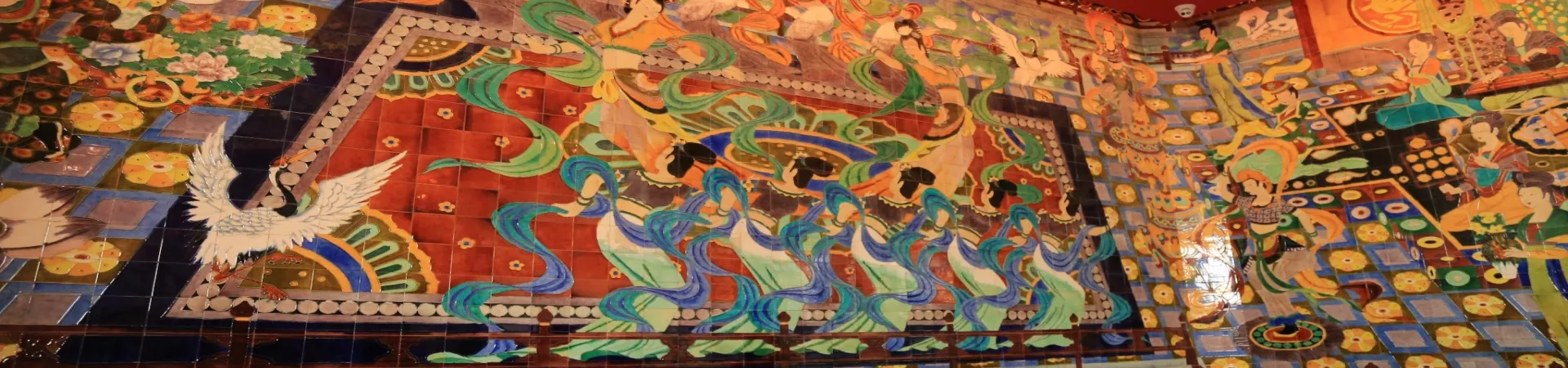
Other Significant Floors While the fifth and sixth floors are highlights, the other levels are equally engaging. They house extensive exhibitions detailing the pavilion's turbulent history through models, paintings, and artifacts from various dynastic reconstructions. Exhibits often include porcelain, furniture, and calligraphy, contextualizing the pavilion within Jiangxi's rich cultural heritage. The very top floors, though not always open, provide the most commanding aerial views of the surrounding landscape.
Essential Visitor Information
Location and Transportation The Pavilion of Prince Teng is located at No. 39, Yanjiang Road, Donghu District, Nanchang. The most convenient public transportation options are public buses. Visitors can take bus routes 12, 26, or 38 and alight at the "Rongmen Lukou" (Rongmen Intersection) bus stop. From there, it is a short and straightforward walk of approximately 160 meters to the main entrance.
Admission Fees The pavilion operates a two-tiered ticketing system based on the season.
- Peak Season (February 1 - November 30): The general adult ticket is 50 RMB. A discounted half-price ticket of 25 RMB is available for: residents of Nanchang (verified by ID), full-time undergraduate and lower-level students with a valid student ID, and minors aged 6 to 18 (inclusive).
- Off-Peak Season (December 1 - January 31): The general adult ticket is 45 RMB. The same half-price policy of 25 RMB applies to the groups listed above.
- Free Admission: The following visitors, upon presentation of valid official identification, are granted free entry: seniors aged 65 and over, children with a height of 1.2 meters or below or aged 6 and below, active-duty military personnel, individuals with disabilities, and accredited journalists.
- Note: Special promotions may occur. For instance, national policies sometimes allow free entry for students (including postgraduates and graduating students) with advance online reservation. It is always advisable to check the official "Yunyou Jiangxi" platform or confirm at the ticket office for the most current information.
Opening Hours Operating hours vary slightly throughout the year:
- November 1 - March 31: 08:00 - 18:00 (last entry at 17:15).
- April 1 - April 30 & May 1 - October 31: 08:00 - 18:30 (last entry at 17:45). The pavilion is open seven days a week. Visitors should plan to arrive well before the last entry time to allow for a thorough visit.
Suggested Duration A comprehensive visit, including exploring the gardens, ascending the pavilion at a leisurely pace to view all exhibits and performances, and enjoying the scenery, typically requires 1 to 3 hours.
Contact For any specific inquiries, visitors can contact the pavilion at: +86 791 8670 2036.
A trip to the Pavilion of Prince Teng is more than sightseeing; it is an immersive cultural encounter. Standing where ancient poets found inspiration, gazing upon the same river that has flowed for millennia, and witnessing the artistic achievements preserved within its walls, one gains a profound appreciation for the continuity and depth of Chinese civilization. It remains, as ever, a symbol of resilience, beauty, and literary genius.