Anyi Ancient Village
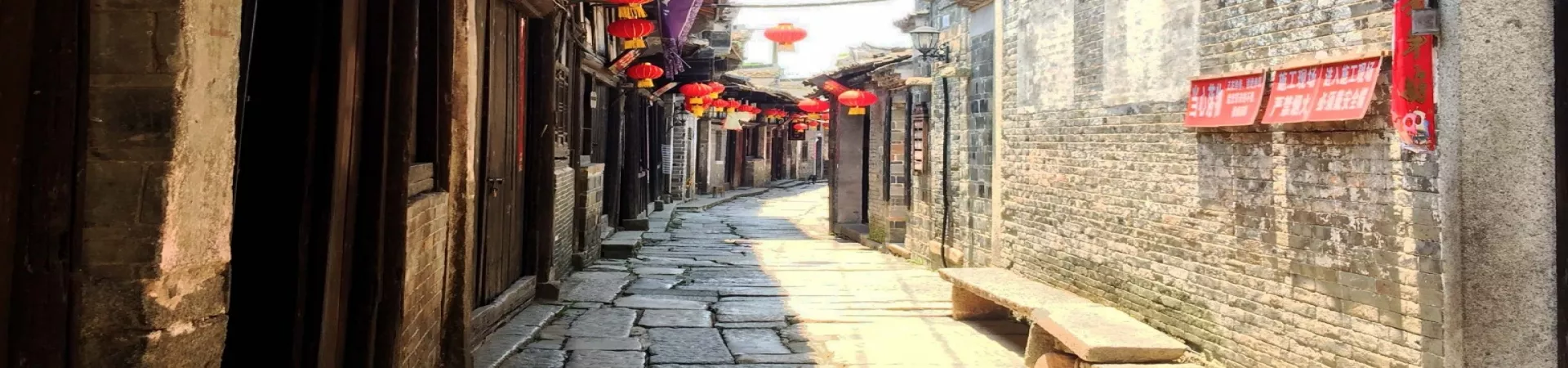
Subtitle: A Journey Through Millennia: Exploring the Timeless Villages of Anyi
Nestled in the countryside near Nanchang, the Anyi Ancient Village complex is not a single entity but a harmonious triangle formed by three distinct yet interconnected natural villages: Luotian, Shuinan, and Jingtai. Each village boasts a history stretching back over a thousand years, collectively preserving a profound cultural heritage and remarkably intact architectural ensembles from the Ming and Qing dynasties. Renowned for being the "most mysterious, most idyllic, most evocative of ancient charm, and most representative of traditional rural scenery," this "Four Bests" distinction has cemented Anyi's place among Jiangxi Province's top eco-cultural tourism destinations.
1. The Triangular Tapestry of History The spatial arrangement of these three villages is itself symbolic. Positioned in a triangular formation, they represent a stable, interconnected community that has weathered the centuries. While sharing the common threads of ancient Huizhou-style architecture, centered around clan culture and prosperous mercantile histories, each village possesses its own unique founding story, character, and architectural highlights. This structure invites visitors on a journey through time, exploring the subtle variations in life across different eras and lineages within the same cultural sphere.
2. Jingtai Village: A Cinematic Legacy of Dual Lineages 2.1. Foundations in the Tang Dynasty Jingtai Village, the oldest in the trio, traces its origins to the first year of the Wude era in the Tang Dynasty (618 AD). Its founders were brothers Liu Zongxu and Liu Zongshou, whose father, Liu Guangde, served as the governor of Yuzhang (modern-day Nanchang) during the Chen State of the Southern Dynasties. Following their father's death and amidst regional turmoil, the brothers migrated here to establish a new home.
2.2. A Harmonious Blend of Surnames The village's demographic tapestry became more complex in the early Ming Dynasty when the Li family from Wuning County was relocated to Jingtai by official decree. This integration resulted in a rare and long-standing harmonious coexistence between the Liu and Li clans. The village's extensive history is palpable in its abundance of ancient relics, well-preserved ancestral halls, ornate gateways, and residential compounds. This authentic historical ambiance has made Jingtai a favored location for period film and television productions.
3. Shuinan Village: A Showcase of Exquisite Craftsmanship 3.1. A Branch from Luotian Shuinan Village represents a later expansion of the local Huang clan lineage. It was established in the seventh year of the Hongwu era of the Ming Dynasty (1374 AD) by Huang Yineng, a 15th-generation descendant of the founding ancestor Huang Kechang from Luotian Village. With over 630 years of history, it is the "youngest" of the three, yet its preservation is exceptional.
3.2. Architectural Artistry The village is celebrated for the refined artistry of its approximately twenty surviving Ming and Qing buildings. Shuinan's structures are distinguished by their exceptionally intricate and well-preserved wood, brick, and stone carvings adorning door frames, window lattices, and beam brackets. Furthermore, the village is noted for its extensive collection of preserved folk artifacts and daily utensils, offering a vivid glimpse into the material culture and aesthetic sensibilities of its past inhabitants.
4. Luotian Ancient Village: The Progenitor Settlement 4.1. The Original Foundation As the progenitor of the trio, Luotian Village holds a foundational status. Its history began in the first year of the Guangming era of the Tang Dynasty (880 AD), giving it over 1,120 years of continuous habitation. The village was founded by Huang Kechang, a native of Luotian County in Qizhou, Hubei Province, who fled here to escape devastating warfare.
4.2. From Wilderness to Clan Heartland The founding story is one of resilience and hard work: Huang Kechang built stone houses, reclaimed land from the wilderness, started a family, and gradually established a thriving community. His descendants proliferated over generations, with some branching out to establish new Huang-surname villages elsewhere. This migration made the Luotian Huang lineage a significant and influential branch within the broader Huang clan network of Jiangxi. Today, Luotian is a large village supporting a community of around 2,000 people, its sprawling layout and grand ancestral halls silently narrating its history as a successful and populous settlement.
5. Practical Visitor Information 5.1. Ticket Information * Standard Ticket: 58 RMB (adults). * Concessions: Half-price tickets are available for minors between 1.2 and 1.4 meters in height with valid ID. * Free Admission: Granted to: 1) Children under 1.2 meters; 2) Seniors aged 65 and over with valid ID; 3) Active-duty military personnel and individuals with disabilities with valid ID. * Note: A special free admission policy for national primary, secondary, and tertiary students (including postgraduates and graduating students) was in effect from March 1, 2022, to February 28, 2023, requiring advance reservation. Visitors are advised to check for the latest policies before their visit.
5.2. Opening Hours The village complex is open daily from 08:30 to 17:30, with last admission at 17:30.
5.3. Transportation The most convenient public transport option is to take the Anyi Bus Line 2 (Inner Ring or Outer Ring) and alight at the "Anyi Gucun" (Anyi Ancient Village) bus stop. The site is within walking distance from the stop.
5.4. Contact For inquiries, you may contact: 0791-83373766.