Weihushan Film and Television City
Subtitle: A Journey into the Cinematic Wilderness of China's Northeast
1. Introduction and Historical Context Nestled within the majestic Weihu Mountain Scenic Area, at the 210-kilometer mark of National Highway 301, lies the Weihu Mountain Film and Television City. This unique destination is far more than a mere collection of sets; it is a living, breathing portal into a pivotal chapter of modern Chinese history and folklore. Its foundational inspiration is drawn directly from the iconic novel Tracks in the Snowy Forest (Lin Hai Xue Yuan), which chronicles the heroic exploits of the People's Liberation Army in combating bandits in the vast, snowy woodlands of Northeast China during the mid-20th century. The film city was meticulously constructed to authentically recreate the historical landscape and atmosphere described in the novel, vividly bringing to life the harsh yet beautiful environment and commemorating the光辉业绩 (glorious deeds) of that era. In doing so, it not only filled a void for a dedicated northern Chinese film studio but also established itself as a multifaceted resort. It successfully integrates sightseeing, vacationing, immersion in pristine nature, and爱国主义教育 (patriotic education) into a comprehensive destination offering the complete spectrum of "dining, accommodation, transportation, touring, and entertainment."
2. Architectural Layout and Key Zones Spanning an impressive 300,000 square meters with a built-up area of 18,000 square meters, the complex features 107 individual structures. The architecture collectively showcases the distinctive style of northern Chinese mountain towns from the late Qing Dynasty through the Republican period, up to the years preceding the founding of the People's Republic. The city is thoughtfully organized into several key zones, each offering a different facet of the experience.
2.1 The Grand Gate Tower The visit commences at the imposing main entrance, a仿古城门楼 (imitation ancient city gate tower). With a construction area of 1,500 square meters, this structure sets the tone immediately, evoking the feel of a fortified settlement from a bygone era and serving as a dramatic entry point into the cinematic world.
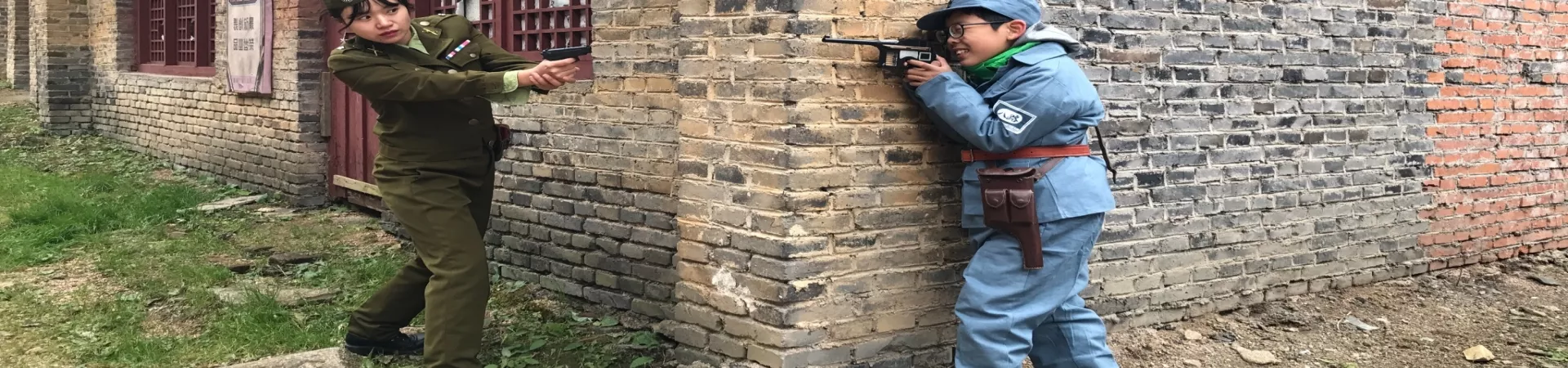
2.2 Linhai Town: The Heart of the Settlement The core of the film city is Linhai Town, a sprawling assemblage of 56 individual buildings. Constructed with青砖青瓦 (blue-grey bricks and tiles) and featuring板窗板门 (wooden plank windows and doors), every shopfront, residence, and alleyway exudes an authentic,古香古色 (antique) charm. Each structure possesses its own unique character, allowing visitors to wander and imagine the daily life, intrigues, and dramatic confrontations that might have unfolded here, both in history and on screen.
2.3 Shenhe Temple: The Spiritual Core Occupying a serene and strategically chosen location,背山向阳 (backed by hills and facing the sun), is the Shenhe Temple. Covering 400 square meters, this temple is often described as the spiritual heart or "慧根所在" (root of wisdom) of Weihu Mountain City. It provides a quiet counterpoint to the town's bustling streets and represents the cultural and spiritual life of the community it served.
3. Practical Visitor Information
3.1 Transportation and Access Reaching Weihu Mountain City requires some planning, as there is no direct, fixed-route public transportation. The standard approach involves first traveling to the nearby city of Mudanjiang, which is accessible by train or air. From Mudanjiang, visitors have two primary options: * Public Bus: Travel to Mudanjiang's Culture Square (文化广场) and board a bus bound for Hengdaohezi Town. This bus route has a designated stop at Weihu Mountain City, where you can disembark. * Private Hire: For greater flexibility and convenience, hiring a private vehicle (such as a minivan) in Mudanjiang for the round trip to Hengdaohezi is a popular choice. As per the provided information, this could cost around 200 RMB per day.
3.2 Admission Fees and Operating Hours * Admission Fees: Ticket pricing is structured as follows: 25 RMB per adult and 15 RMB per child. * Operating Hours: The film city operates on a seasonal schedule: * March 1 to May 31: Open from 08:15 to 17:00, with last entry at 17:00. * December 1 to February 28/29: Open from 07:30 to 16:30, with last entry at 16:00.
4. Local Cuisine and Culinary Delights A visit to the region is incomplete without sampling the local flavors. The nearby Hengdaohezi Town is renowned for its natural produce and specialties. Food enthusiasts should seek out the various wild mountain vegetables, such as蕨菜 (fernbrake),蘑菇 (mushrooms),山芹菜 (wild celery),山菠菜 (mountain spinach), and刺挠牙 (a type of local edible wild plant). Another must-try is the地方特色筋饼 (local-style springy pancakes), a savory delight. To complement a meal, consider tasting the locally produced果酒 (fruit wines), which offer a sweet and aromatic reflection of the area's natural bounty. These culinary experiences provide a delicious and authentic connection to the land that surrounds this remarkable historical and cinematic site.