Former Residence of Ye Jianying
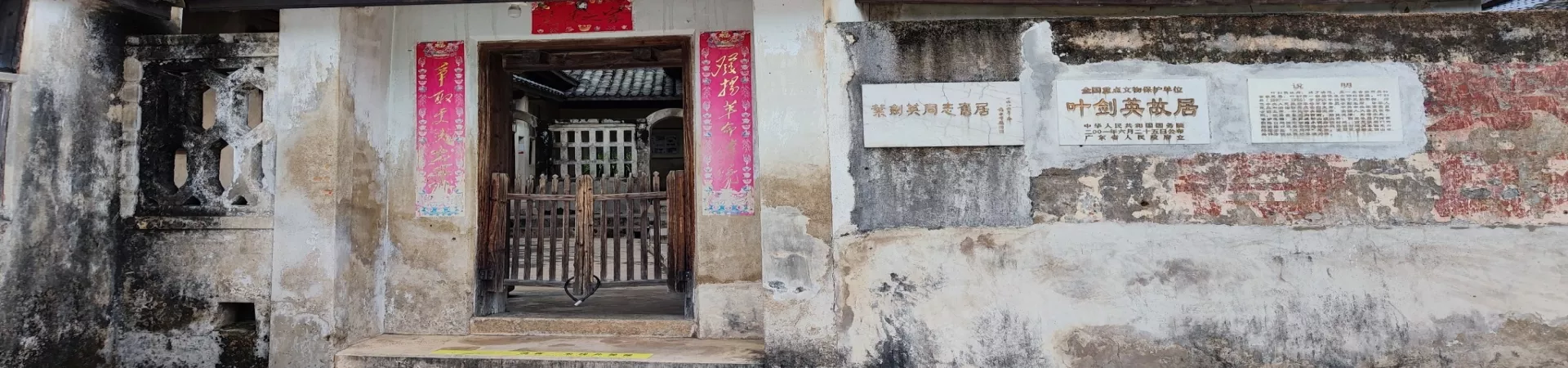
Subtitle: A Journey Through History: Exploring the Former Residence of Marshal Ye Jianying in Meizhou
1. Introduction: A Portal to a Revolutionary's Early Life
Nestled within the picturesque village of Huxing, Yanyang Town, in Meizhou's Meixian District of Guangdong Province, lies a site of profound historical significance: the Former Residence of Ye Jianying. This unassuming yet deeply evocative homestead serves as a tangible connection to the early years of one of China's most revered military leaders and statesmen. More than just a collection of buildings, it is a carefully preserved narrative, offering visitors a glimpse into the formative environment that shaped a key figure in modern Chinese history. The residence, coupled with the adjacent memorial hall, forms a comprehensive destination for those seeking to understand the personal roots of a national leader and the transformative period of history he helped to shape. A visit here is not merely a tourist excursion but an immersive educational experience, blending architectural appreciation, biographical study, and reflection on a pivotal century.
2. Historical Significance and Preservation Journey
2.1. Architectural Heritage and Early Life Constructed during the Qing Dynasty, the residence is oriented southwest, a traditional alignment in local architecture. The existing structure covers a floor area of approximately 350 square meters. Within these walls, Ye Jianying was born and spent his childhood and adolescent years. The simple, functional design of the house reflects the local Hakka architectural style and the modest rural life of the period. It was from this humble beginning in the Meizhou countryside that Ye embarked on his extraordinary journey.
2.2. The Leader's Return and Evolving Legacy Following the founding of the People's Republic of China, Marshal Ye Jianying maintained a deep connection to his ancestral home, returning on four documented occasions: in 1951, 1953, 1971, and 1980. These visits underscored the personal importance the site held for him. Recognizing its historical value, local and regional governments initiated partial renovations in the early 1970s. As part of this preservation effort, descendants of the Ye clan who were living in the residence were relocated to other accommodations to facilitate its conservation and future public role.
2.3. Path to National Recognition The official protection and development of the site gained momentum in the following decades. It was first listed as a County-Level Cultural Relics Protection Unit in 1987 and opened to the public. Its status was elevated in June 1989 when the Guangdong Provincial Government designated it as a Provincial-Level Cultural Relics Protection Unit. Later that year, in October, management of the residence was formally transferred to the memorial hall authority. To ensure its long-term preservation, the Meixian County Government officially demarcated the protection zone and surrounding construction control area in August 1992. The highest level of recognition came in June 2001, when the State Council declared it a National Key Cultural Relics Protection Unit (among the fifth batch), cementing its importance in China's national heritage.
3. The Memorial Hall and Visitor Experience
3.1. Establishment of the Marshal Ye Jianying Memorial Hall To provide a broader context for Ye Jianying's life and achievements, the Marshal Ye Jianying Memorial Hall was constructed to the right of the historic residence and opened in 1989. This modern facility serves as the central interpretive center for the site. Its exhibits systematically chronicle Ye's illustrious military and political career, his critical roles during the Chinese Revolution, the War of Resistance Against Japan, and the post-liberation era, including his contributions during the country's reform and opening-up period. The memorial hall's educational mission was nationally endorsed in June 2001 when it was named a National Patriotic Education Demonstration Base by the Central Propaganda Department.
3.2. Practical Information for Visitors The integrated site, encompassing both the historic residence and the memorial hall, is dedicated to public education and access. * Admission: Entry is free of charge for all visitors. * Operating Hours: The site is open daily from 09:00 to 17:00 throughout the year. * Contact: For inquiries, visitors can reach the management at 0753-2825206 or 0753-2827395.
4. Cultural and Educational Value
4.1. A Testament to Hakka Heritage The residence stands as a fine example of traditional Hakka vernacular architecture. Its design, construction materials, and layout offer insights into the living conditions and cultural practices of Hakka communities in northern Guangdong during the late imperial period. Preserving this structure helps maintain a physical link to the regional heritage that formed the backdrop of Ye Jianying's youth.
4.2. An Immersive Patriotic Education Base As a designated National Patriotic Education Demonstration Base, the site plays a vital role in educating younger generations and the public. It moves beyond textbook history, allowing visitors to walk the same paths, touch the same walls, and visualize the daily life of a historical figure. The combination of the authentic, personal space of the故居 (former residence) with the detailed historical narrative of the memorial hall creates a powerful and multi-sensory learning experience about dedication, sacrifice, and national service.
4.3. A Destination for Reflection and Understanding For domestic and international visitors alike, the Former Residence of Ye Jianying offers a quiet space for reflection on modern Chinese history. It contextualizes grand historical events within a personal, familial framework. The journey from a small village house to the halls of national leadership is powerfully illustrated here, providing a unique perspective on the interconnectedness of personal origin and public destiny in the shaping of 20th-century China. The site remains a respected destination for those wishing to pay their respects and gain a deeper, more grounded understanding of a pivotal era.