Five Finger Stone
Subtitle: A Journey into the Heart of Guangdong's Danxia: The Five-Finger Stone Peaks of Meizhou
1. Introduction to a Geological Marvel Nestled in the northeastern part of Guangdong Province, within the cultural heartland of Meizhou—a city renowned as the "Hometown of Overseas Chinese"—lies a spectacular natural monument known as Wuzhishi, or the Five-Finger Stone Scenic Area. This site is far more than a simple collection of rocks; it is a profound expression of geological artistry, where time, elements, and stone have conspired to create a landscape of breathtaking grandeur and serene beauty. Emerging from the core of a red-bed basin, the five distinct peaks rise with majestic authority, their silhouettes against the sky famously resembling the outstretched fingers of a giant's hand. This formation offers visitors a unique opportunity to explore one of South China's most iconic and accessible examples of Danxia landform, a terrain characterized by its striking red cliffs, peculiar shapes, and deep, winding crevices.
2. The Anatomy of the "Five Fingers": Peaks with Personality The central wonder of the area is, unequivocally, the quintet of colossal stone pillars that give the place its name. Each "finger" is not only distinct in its position but has been endowed with its own name and character through local lore and imagination.
2.1. Baoding Stone (The Thumb) Often considered the foundational pillar, the Baoding Stone (Treasure Tripod Stone) stands with a sturdy, resilient presence. Its shape is reminiscent of an ancient ceremonial vessel, symbolizing stability and auspiciousness, setting a solemn tone for the entire geological ensemble.
2.2. Luohan Stone (The Index Finger) The Luohan (Arhat) Stone points skyward like a stern, instructive finger. Named after the enlightened disciples of Buddha, this peak evokes a sense of wisdom and silent teaching, as if guiding visitors through the spiritual and natural history etched into the landscape.
2.3. Tianzhu Stone (The Middle Finger) As the tallest and most prominent of the five, the Tianzhu (Heavenly Pillar) Stone commands attention. It serves as the central axis of the formation, piercing the heavens and acting as a dramatic focal point that anchors the entire vista, embodying the sheer vertical power of the Danxia topography.
2.4. Xianglong Stone (The Ring Finger) The Xianglong (Subduing the Dragon) Stone carries a name steeped in mythic heroism. Its form and posture are said to resemble a mighty warrior pacifying a dragon, a narrative that adds a layer of dynamic legend and martial spirit to the serene natural surroundings.
2.5. Baogai Stone (The Little Finger) Completing the hand is the more slender yet elegant Baogai (Treasure Canopy) Stone. Like a delicate finial or a protective cover, it adds a note of refinement and balance to the group, demonstrating that grace can coexist with sheer geological strength.
3. The Forces of Creation: Geology and Ecology Intertwined The awe-inspiring sight of the Five-Finger Stones is the direct result of millions of years of relentless geological processes.
3.1. Formation of the Danxia Landscape The region is a classic example of a Cretaceous red-bed basin. The bedrock, composed of horizontally layered reddish sandstone and conglomerate, was initially deposited in ancient inland basins. The magic began with the uplift of the Earth's crust, exposing these layers to the elements. Two key forces then took over: well-developed vertical joints (fractures in the rock) provided pathways, while persistent water erosion and frequent gravity-driven collapses sculpted the stone. This relentless partnership carved out the steep cliffs, deep overhangs, secluded caves, and the countless narrow fissures that visitors can walk through today, creating the "steep, perforated, deep, and elegant" scenery definitive of Danxia.
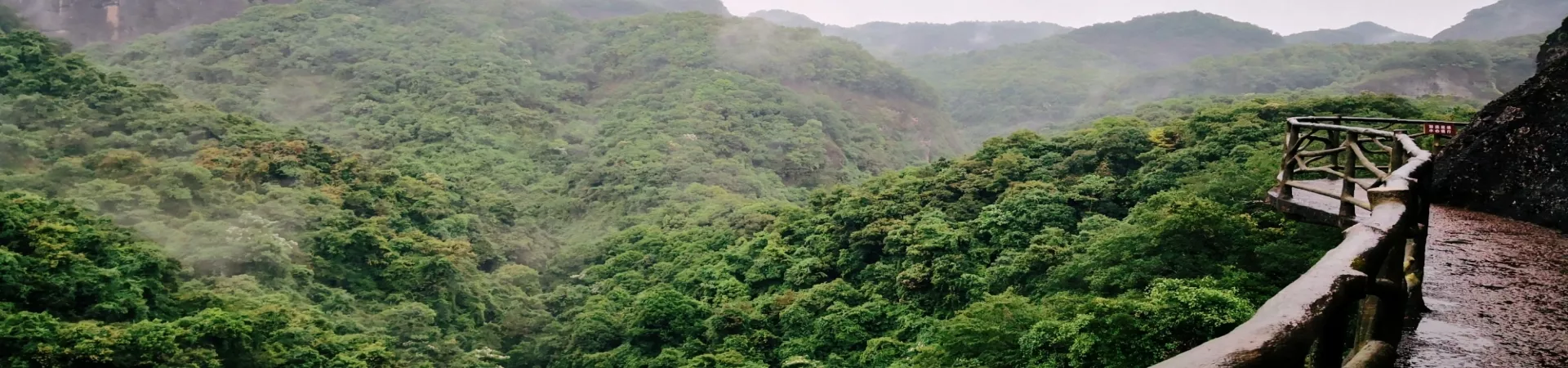
3.2. The Verdant Mantle: A Symphony of Green and Red What truly elevates Wuzhishi from impressive to sublime is its lush vegetative cover. The humid subtropical climate of Meizhou fosters a dense blanket of evergreen forests, shrubs, and mosses that cling tenaciously to the cliffs and flourish in every crevice. This vibrant ecology performs a visual alchemy: it softens the rugged, fiery-red contours of the sandstone, creating a stunning contrast that is often described as "majestic in outline yet delicate in detail." The greenery not only provides a habitat for diverse flora and fauna but also filters the air, fills the paths with the scent of earth and leaves, and ensures that every vista is a harmonious blend of formidable stone and gentle life.
4. Practical Information for the Visit To ensure a smooth and enriching experience at Meizhou Wuzhishi, the following practical details are essential for planning.
4.1. Admission and Fees * Entrance Ticket: The standard admission fee is 80 RMB per person. * Internal Transportation: For convenience, an electric shuttle bus (10 RMB) is available to transport visitors from the entrance to the core scenic area. To ascend the peaks and enjoy panoramic views, a cable car system is in operation. Fares are 50 RMB for a one-way trip (ascent or descent) and 90 RMB for a round trip.
4.2. Operating Hours The scenic area is open daily from 8:00 AM to 5:30 PM. The last admission is at 4:30 PM. It is advisable to arrive early to fully appreciate the site without rush, especially considering the time needed for hiking and exploration.
4.3. Suggested Duration A comprehensive visit to Wuzhishi, allowing time to appreciate the key viewpoints, traverse the famous "Thread the Sky" cliffside paths, explore caves, and possibly take the cable car, typically requires a full day. Visitors should wear sturdy, comfortable walking shoes and be prepared for some stair climbing and walking along narrow paths.
4.4. Contact Information For the most current information regarding weather conditions, special events, or any inquiries, the scenic area can be contacted directly at +86 753 8272828.