Calyx Building
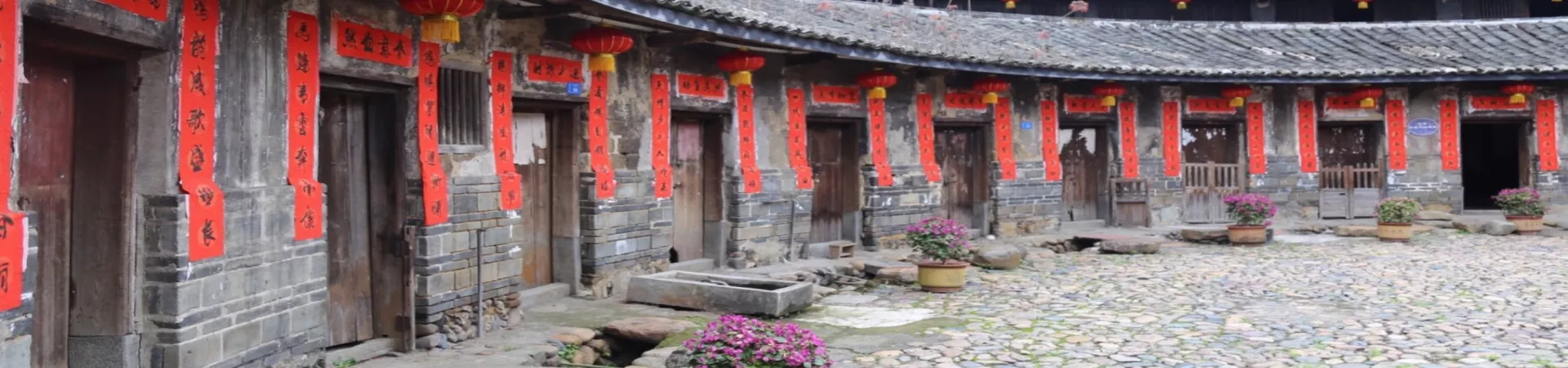
Subtitle: A Timeless Citadel of Hakka Culture and Architectural Ingenuity
1. Introduction: The Earthen Crown of Guangdong
Nestled within the village of Lianfeng in Dadong Town, Dapu County, Meizhou, stands the magnificent Hua'e Lou (Flower Calyx Building). This monumental structure, a provincial-level protected cultural relic, is a testament to the resilience, community spirit, and architectural brilliance of the Hakka people. Built in the 36th year of the Wanli era during the Ming Dynasty (1608 AD), its nearly 400-year history is etched into every inch of its rammed earth walls. As the largest, most exquisitely designed, and best-preserved traditional tulou (earthen building) in Guangdong province, Hua'e Lou is not merely a building; it is a microcosm of Hakka philosophy and a breathtaking wonder of global vernacular architecture.
2. Architectural Marvel: Design and Defensive Prowess
2.1 Structure and Layout Hua'e Lou is a colossal, circular fortress-like dwelling covering a total area of 2,300 square meters, with a built-up area of 2,286 square meters. Constructed from a wood and earth framework, it rises 11.9 meters high. Its unique layout consists of three concentric rings: the inner ring is a single story with 30 rooms, the middle ring is two stories with 60 rooms, and the imposing outer ring is three stories tall, containing 120 rooms, bringing the total to 210 rooms. The walls, masterfully crafted from rammed earth, are an impressive 2 meters thick at the base, tapering to 1.3 meters at the top, capped by a roof of wooden beams and grey tiles.
2.2 Strategic Defensive Features Every aspect of its design served a purpose, primarily defense. The ground floor has no windows whatsoever. The second and third floors feature small, triangular gun holes on the walls, narrow on the inside and widening outward, allowing inhabitants to fire upon attackers while minimizing exposure. The entire complex is accessible through only one main entrance. This gateway is fortified with thick, wide granite slabs for the frame, and the massive door itself is armored with sturdy iron plates. This singular, heavily defended entrance made the building virtually impregnable to bandits and invaders.
3. Life Within the Circle: Community and Symbolism
3.1 The Heart of the Building: The Central Courtyard At the center of Hua'e Lou lies a vast, circular courtyard spanning 283.4 square meters, paved with pebbles of varying sizes. The most striking feature here is a large, ancient coin pattern, three meters in diameter, embedded into the ground. This symbol expressed the residents' heartfelt wishes for abundant food, clothing, and prosperity. The courtyard functioned as the communal heart of the building—a place for gatherings, ceremonies, and daily social interaction, embodying the Hakka ideals of unity, equality, and collective living.
3.2 Sustainable Living Systems The building was a self-sufficient ecosystem. A centuries-old well located in one part of the courtyard provided essential water for both daily life and firefighting. Traditional household facilities like long (stone grain mills) and dui (foot-operated pestles for husking rice) were housed within, facilitating the processing of food. The circular design, with rooms facing the central atrium, ensured excellent ventilation and natural light, creating a living environment that was cool in the sweltering summer and warm in the chilly winter—a masterpiece of passive climate control. Remarkably, this historical treasure remains a living community, currently housing over ten families of the Lin clan.
4. Legends and Origins: The Gift of Guanyin
How was such an ambitious project funded and built? Local lore provides a magical explanation centered on the Lin family's fifth-generation ancestor, Lin Yuangong. The story recounts that Yuangong, an impoverished but kind-hearted man who made a living carrying salt and lime, often took shelter in a stone cave on nearby Lion Head Mountain. Despite his own poverty, he was known for his generosity, often aiding those even less fortunate.
One day, exhausted from work, he fell into a deep sleep and dreamt of Guanyin (the Goddess of Mercy) seated on a lotus, floating on auspicious clouds with three white horses. She smiled at him and vanished. Intrigued upon waking, he searched the cave and miraculously discovered three large vats filled with silver. Believing this to be a divine gift from Guanyin, he used the fortune to construct this colossal tulou. He invited all his homeless neighbors to live within its protective walls. The building was named "Flower Calyx" both for its resemblance to the calyx of a flower and to symbolize the fraternal love and harmony among its resident "petals"—the families. To this day, the Lin descendants honor this legend by worshipping a statue of Guanyin on her lotus throne in the original stone cave during festive seasons.
5. Cultural Significance and Modern Recognition
Hua'e Lou is far more than an ancient apartment complex. Its精巧 (exquisite) design and unique structure vividly display core Hakka life principles:圆满 (completeness/unity), 团结 (solidarity), 平均 (fairness), and 平等 (equality). Its cultural importance has attracted significant national attention. It has served as a filming location for numerous television programs, including CCTV's "Lantern Festival Celebration Across China" (1992), Guangzhou TV's documentary "The Hakka People" (1993), and the CCTV series "Sao Niang" (1999). In 2000, it hosted a grand "Hakka Tulou Thousand-Person Tea Ceremony."
The building's global value is increasingly acknowledged. Following an inspection by Guo Zhan, Secretary-General of China ICOMOS (International Council on Monuments and Sites), it was confirmed that Hua'e Lou meets the criteria for UNESCO World Heritage status. Dapu County is now actively preparing the nomination dossier to submit to UNESCO, seeking to inscribe this architectural and cultural marvel on the world stage.
6. Practical Visitor Information
6.1 Transportation Reaching Hua'e Lou requires some planning. The nearest major transit hub is Meizhou City, accessible by train, plane (via Meizhou Meixian Airport), or long-distance bus. From Meizhou, the building is located in Lianfeng Village, approximately 45 kilometers from Dapu county town. The final leg of the journey involves rural mountain roads that, while paved, are narrow, steep, and winding. The most convenient and recommended options are self-driving or hiring a private car/taxi for the trip.
6.2 Admission and Opening Hours * Ticket: A standard admission ticket is approximately 10 RMB. It is advisable to confirm the price on the day of your visit at the ticket office. * Opening Hours: The site is generally open from 08:00 to 18:59 daily, with last entry at 18:00. * Suggested Duration: A visit typically takes between 1 to 3 hours to fully appreciate the architecture and atmosphere.
(A historical note: The name "Hua'e Lou" also references a famous Tang Dynasty palace building in Chang'an, constructed by Emperor Xuanzong for fraternal harmony with his brothers. This namesake adds a layer of cultural resonance, connecting this Hakka citadel to ancient Chinese ideals of familial kinship.)