Mount Yuchan
Subtitle: A Journey to the Toad-Shaped Mountain: Unveiling the Natural and Cultural Splendors of Yuchan Mountain in Luzhou
1. Introduction: The "Pearl of Southern Sichuan" Nestled approximately 35 kilometers north of Luzhou's urban center, adjacent to Luxian County, lies Yuchan Mountain, a serene and culturally profound destination that has captivated visitors for centuries. Encompassing a lush forest area of over 5400 acres, the mountain derives its poetic name, "Jade Toad Mountain," from the distinctive shapes of its hills and boulders, which remarkably resemble toads. This unique geological character is just the beginning of its allure. Historically celebrated across southern Sichuan for its tranquil seclusion, peculiar rock formations, pristine waters, and abundant historical relics, Yuchan Mountain's reputation was eloquently encapsulated by General Zhang Aiping, who hailed it as the "Pearl of Southern Sichuan." This title speaks volumes about its integral role in the region's natural and cultural landscape, offering a perfect blend of scenic beauty and deep historical resonance for the discerning traveler.
2. Geological Marvels and Natural Landscape 2.1. The Iconic Toad Formations The most defining feature of Yuchan Mountain is, without doubt, its namesake toad-shaped rocks and hill contours. These natural sculptures, carved by millennia of wind and water erosion, present a whimsical and almost mystical sight. Scattered across the mountainside, these granite toads appear in various postures—some seem to be climbing, others resting—creating a silent, stone guardian army. This peculiar geology fuels local legends and provides a fascinating theme for exploration, inviting visitors to spot and interpret these natural artworks along the winding paths.
2.2. A Verdant Forest Canopy Beyond the rocks, the mountain is draped in a dense, vibrant forest covering more than 5400 acres. This extensive woodland is a haven of biodiversity, featuring a mix of native broadleaf trees, conifers, and bamboo groves. The forest trails are shaded and cool, even in summer, filled with the sounds of birdsong and the subtle fragrance of earth and foliage. The canopy changes splendidly with the seasons: fresh greens in spring, deep emerald in summer, a fiery palette in autumn, and a quiet, stark beauty in winter. This rich ecosystem not only provides a habitat for local wildlife but also ensures clean air and a profoundly peaceful hiking environment.
2.3. Streams, Pools, and Water Features Complementing the rocks and woods are the mountain's water elements, which add a dynamic and refreshing quality to the landscape. Clear streams trickle down from higher elevations, gathering into small, tranquil pools and ponds. The water, often remarkably clear, reflects the surrounding greenery and rocky outcrops. The sound of flowing water is a constant companion on many trails, enhancing the sense of serenity. These water features are not merely scenic; they are integral to the mountain's ecology and contribute significantly to the overall atmosphere of "water秀" (water elegance) for which the area is known.
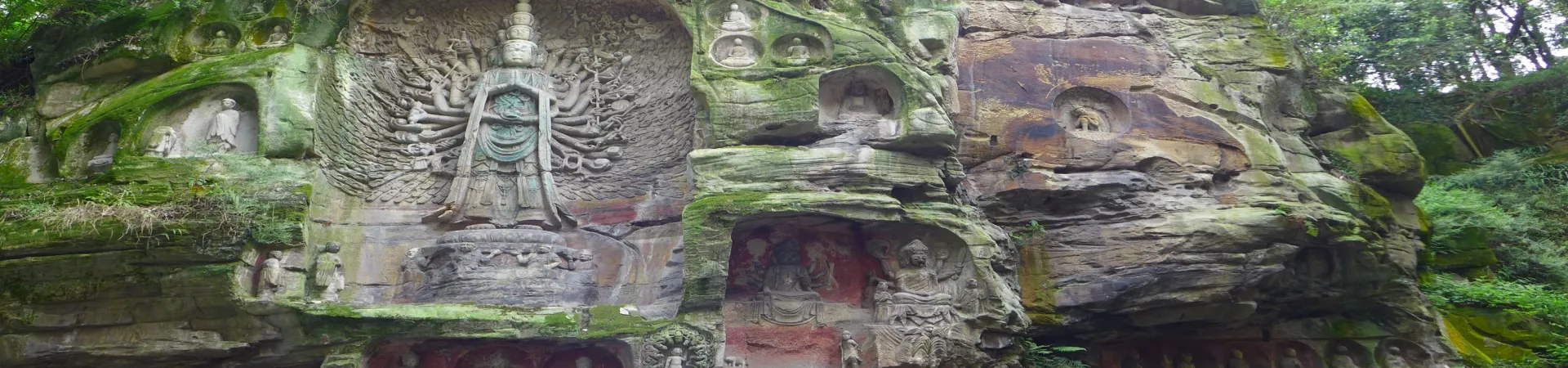
3. A Treasury of Cultural and Historical Relics 3.1. Ancient Cliff Carvings and Buddhist Heritage Yuchan Mountain's significance extends far beyond its natural beauty into the realm of cultural heritage. The site is renowned for its impressive collection of ancient cliff carvings, particularly Buddhist statues and inscriptions dating back to the Tang (618-907 AD) and Song (960-1279 AD) dynasties. These carvings are etched into the sandstone cliffs, depicting various Buddhas, Bodhisattvas, and divine figures with exquisite craftsmanship. The most notable among them is a large, serene statue of the Buddha, which has watched over the valley for centuries. These artifacts provide invaluable insights into the religious practices, artistic styles, and historical development of the region, making the mountain an open-air museum of religious art.
3.2. Historical Sites and Architectural Remains Interspersed along the routes are remnants of ancient temples, pavilions, and stone gateways. While some structures have been restored over time, their foundations and locations speak of the mountain's long history as a place of worship, contemplation, and scholarly retreat. Inscriptions on steles and rocks left by poets, officials, and travelers from different eras add a literary dimension to the visit. Each relic, whether a crumbling wall, a carved calligraphic masterpiece, or a rebuilt temple hall, tells a part of the mountain's story, connecting the present visitor with the countless footsteps of the past.
4. Practical Information for Visitors 4.1. Location and Accessibility Yuchan Mountain is conveniently located just north of Luzhou City in Sichuan Province, specifically about 35 km from the city center and close to Luxian County. It is accessible by road, with drive time typically under an hour from downtown Luzhou. Visitors can arrange taxis, use ride-hailing services, or take local buses heading towards Luxian, followed by a short local transfer to the mountain's entrance. The proximity to the county also means accommodation and dining options are readily available in the nearby town for those planning an extended stay.
4.2. Admission and Operating Hours The mountain park operates on a visitor-friendly schedule and fee system. The admission ticket is priced at 20 RMB per person, offering exceptional value given the extensive natural and cultural experiences available. The park is open daily from 8:00 AM to 6:00 PM throughout the year, from January 1st to December 31st. This schedule allows for full-day explorations, with the morning light being ideal for photography and the afternoon perfect for leisurely hikes. Visitors are advised to check for any seasonal variations or special notices, although the hours are consistently maintained.
4.3. Key Contacts and Planning Tips For inquiries or further information, visitors can contact the park management at 0830-8191389. To make the most of a visit, comfortable walking shoes are essential due to the mountainous terrain and stone steps. Bringing water and some snacks is recommended, although basic provisions might be available near the entrance. The trails are well-marked, but a map from the ticket office can be helpful. As with many natural and historical sites, preserving the environment is paramount; visitors are encouraged to carry out all trash and avoid touching or climbing on the ancient carvings. The best visiting seasons are spring and autumn when the weather is mild and the natural scenery is at its peak.