The Longmen Grottoes
A Visitor's Guide to the Longmen Grottoes: History, Art, and Practical Information
Subtitle: Exploring the Epitome of Chinese Buddhist Rock-Carving Art
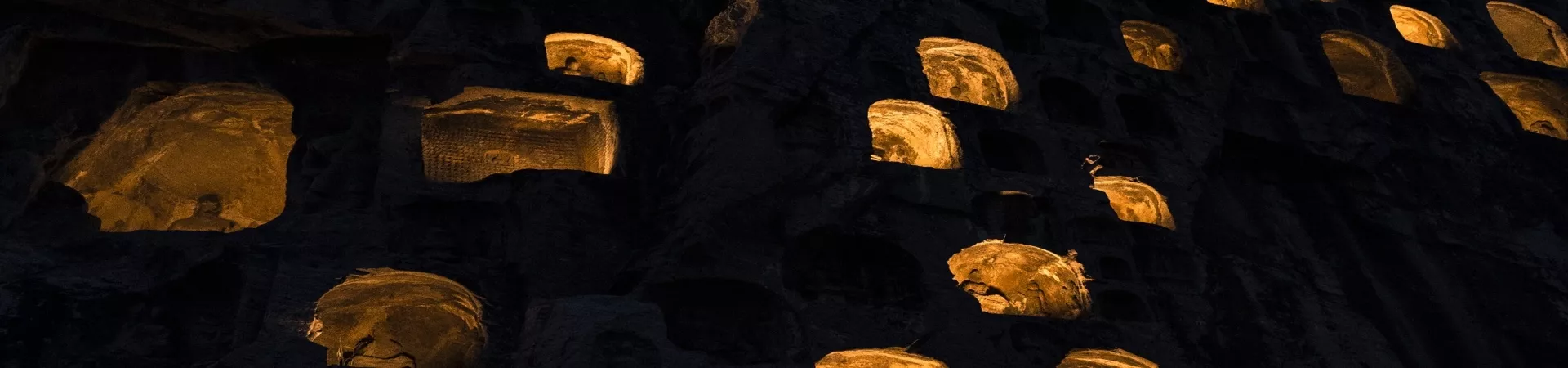
Nestled along the tranquil banks of the Yi River, approximately 12 kilometers south of Luoyang city in Henan Province, the Longmen Grottoes stand as a monumental testament to human devotion, artistic brilliance, and historical endurance. Recognized as one of the "Four Great Ancient Buddhist Cave Complexes" in China, alongside Mogao, Yungang, and Maijishan, Longmen was inscribed as a UNESCO World Heritage Site in 2000. Its creation spans over five centuries, from the Northern Wei Dynasty (around 493 AD) through the Tang Dynasty and into the Song, with the most intensive carving periods occurring during the Northern Wei and Tang. This prolonged endeavor resulted in one of the world's most spectacular and enduring galleries of Buddhist art, seamlessly integrated into a breathtaking natural landscape of two limestone cliffs—Xiangshan (East Hill) and Longmenshan (West Hill)—facing each other across the river.
1. A Journey Through Stone: Historical and Artistic Significance
The genesis of the Longmen Grottoes is intimately linked with the movement of the Northern Wei capital to Luoyang. The dynasty's patronage of Buddhism transformed the limestone cliffs into a sacred site, initiating a wave of artistic creation that would echo for generations. The grottoes are not a singular project but a cumulative masterpiece, reflecting evolving artistic styles, theological concepts, and imperial patronage across dynasties.
1.1. The Northern Wei Legacy: Elegance and Ethereality The caves from the Northern Wei period (493-534 AD) are characterized by their elegant, slender, and ethereal figures, embodying a transcendental spiritual aesthetic. Key representative caves from this era include: * Guyang Cave (古阳洞): The oldest and most richly inscribed cave at Longmen. It is a treasure trove of calligraphy, housing numerous votive inscriptions, including some of the famed "Twenty Calligraphic Exemplars from Longmen," which are seminal works for the study of Chinese epigraphy and stone carving art. * Binyang Central Cave (宾阳中洞): Commissioned by Emperor Xuanwu of Northern Wei in honor of his parents, this cave is renowned for its grand layout and exquisite bas-reliefs. The central Buddha, Sakyamuni, exhibits the typical Northern Wei style with a serene expression and graceful drapery. The detailed narrative reliefs, such as the "Empress Worship Procession," are masterpieces of storytelling in stone. * Lotus Flower Cave (莲花洞): Named for the magnificent, high-relief lotus flower carving on its ceiling, this cave features a central Buddha statue whose robe is carved with intricate, flowing patterns. The thousands of small Buddha niches on the walls create a mesmerizing, celestial atmosphere. * Shiku Temple (石窟寺): Known for its well-preserved carvings and historical inscriptions that provide valuable insights into the period's religious and social context.
1.2. The Tang Dynasty Zenith: Majesty and Realism The Tang Dynasty (7th to 9th centuries) marked the second and most glorious peak of construction at Longmen. The artistic style shifted towards robust, realistic, and majestically humanistic figures, mirroring the confidence and cosmopolitanism of the Tang Empire. * Fengxian Temple (奉先寺) - The Crown Jewel: This is the largest and most awe-inspiring niche at Longmen, representing the absolute pinnacle of Tang Buddhist art. It is an open-air cliff carving, not a cave. The central figure is the colossal Vairocana Buddha (卢舍那大佛), often interpreted as an embodiment of Empress Wu Zetian. At over 17 meters tall, the Buddha's serene, compassionate face with a subtle, knowing smile and gracefully downcast eyes is an unforgettable image that radiates divine majesty and profound wisdom. Flanking the Vairocana Buddha are a series of meticulously carved disciples, Bodhisattvas, heavenly kings, and guardians, each with distinct, vivid personalities and dynamic postures, forming a complete and harmonious celestial assembly.
2. The Immense Scale: A Universe in Stone
The Longmen Grottoes complex comprises over 2,300 caves and niches, housing more than 100,000 Buddhist statues, ranging from miniature 2-centimeter figures to the towering 17-meter Vairocana Buddha. Approximately 60 stupas and 2,800 inscribed tablets are scattered throughout the site. The West Hill (西山石窟) is the core and most concentrated area, containing the majority of the masterpieces, including Fengxian Temple and the caves housing the "Twenty Calligraphic Exemplars." The East Hill (东山石窟) also features significant Tang-era caves and offers the classic panoramic view of the West Hill cliffs. Across the river, Xiangshan Temple (香山寺) and Bai Juyi's Cemetery (白园), the final resting place of the renowned Tang poet, are integral parts of the scenic area, adding layers of cultural and historical context.
3. Practical Information for Visitors
3.1. Tickets and Opening Hours * Ticket Price: A standard adult ticket is 90 RMB. Concessionary tickets (half-price) are available for full-time students and teachers with valid ID. Free admission is granted to seniors over 60, children under 1.4 meters or under 12 years old (with ID), military personnel, disabled individuals, and other specified groups (with relevant certificates). Prices and policies are subject to change; please verify on the official website or at the ticket office. * Opening Hours: * Apr 1 - Oct 7: 08:00 - 18:30 (Last entry at 17:30) * Oct 8 - Nov 14: 08:00 - 18:00 (Last entry at 17:30) * Nov 15 - Jan 31: 08:00 - 17:00 (Last entry at 16:30) * Feb 1 - Mar 31: 08:00 - 18:00 (Last entry at 17:30)
3.2. Transportation: How to Get There and Get Around Getting to Longmen Grottoes: * By Train: Arrive at either Luoyang Railway Station or Luoyang Longmen Railway Station (high-speed rail). * From Luoyang Railway Station: Take public bus 81 directly to the "Longmen Grottoes" stop. * From Luoyang Longmen Railway Station: Walk to the nearby bus stop "Tongqu Road Houzaimen Jiekou East" and take bus 71 loop line to "Longmen Avenue Guanghua Road Intersection," then take a short taxi ride to the scenic area entrance. * By Public Bus: Several bus lines serve the grottoes, including 60 (from Gushuixi), 81 (from the main railway station), 53 (from Pingdeng Street), and the loop line 67 connecting Guanlin Temple, the high-speed rail station, and the grottoes.
Internal Transportation within the Scenic Area: * Electric Cart (Battery Car): These operate on fixed routes connecting key points like the Ticket Center, Main Statue Area (Fengxian Temple/Lifotai), East Hill Service Area, and Bai Juyi's Cemetery. Useful for saving time and energy between sites. * Boat: A scenic boat ride (approx. 15 minutes) is available between the Xishan Fengxian Temple Pier and the Dongshan Baiyuan Pier, offering a unique perspective of the grottoes from the water.
3.3. Suggested Visit Duration and Tips A thorough visit to the main grottoes on both hills, along with Xiangshan Temple and Bai Juyi's Cemetery, typically requires 3-4 hours. Comfortable walking shoes are essential as the tour involves considerable walking and some stairs. The best lighting for photography on the West Hill caves, especially Fengxian Temple, is often in the afternoon. It is highly recommended to consider hiring a licensed guide or using an audio guide to fully appreciate the profound historical and artistic narratives behind the stone carvings.