The Laojun Mountain
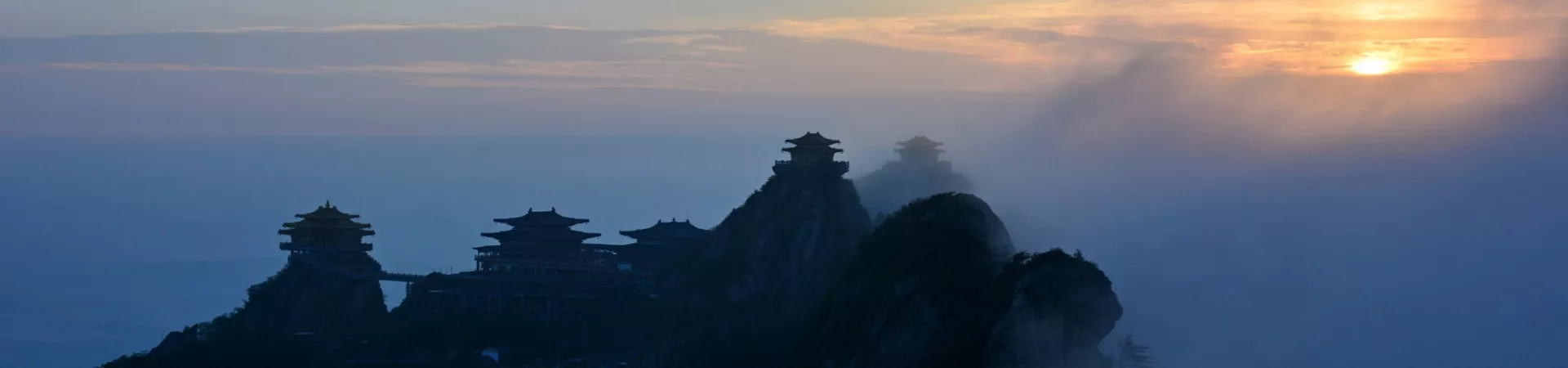
Subtitle: A Journey to the Daoist Heart of the Central Plains
1. Introduction: The Legendary Abode of Laozi Nestled within the majestic Funiu Mountain range in Luoyang, Henan Province, stands Laojun Mountain (Laojun Shan), a name that whispers of ancient philosophy and spiritual pursuit. Translated as "Old Lord Mountain," its identity is deeply intertwined with the legendary figure of Laozi, the revered founder of Daoism. According to enduring tradition, it was here, amidst these cloud-kissed peaks, that Laozi, the author of the seminal "Dao De Jing," chose to retreat from the world for contemplation and self-cultivation during the Eastern Zhou Dynasty. This profound historical and spiritual association elevates the mountain beyond mere scenic beauty, establishing it as one of the most sacred sites in Chinese Daoist culture. As the main peak of the Funiu range, with its summit soaring over 2,000 meters above sea level, Laojun Mountain has drawn pilgrims, scholars, and travelers for centuries, all seeking to walk the paths once trodden by the great sage.
2. Exploring the Mountain: Daoist Heritage and Natural Splendor 2.1. The Architectural Heart: Palaces and Temples The mountain's slopes are adorned with a serene and awe-inspiring complex of ancient palaces and temple halls, constructed across various dynasties. These structures are not merely architectural feats but active centers of Daoist worship and tradition. As you ascend, you will encounter halls like the Golden Hall (Jin Dian) at the summit, which houses sacred statues and offers breathtaking panoramic views. The entire complex, harmoniously integrated with the rugged landscape, stands as a testament to the mountain's historical role as a premier Daoist sanctuary. The intricate woodwork, traditional curved roofs, and the pervasive scent of incense create an atmosphere of profound tranquility and timeless reverence.
2.2. Iconic Landmarks and Local Culture Beyond the temples, several iconic monuments define the visual identity of Laojun Mountain. Most prominent are the statues honoring its legendary inhabitant. A majestic sculpture depicting Laozi Riding an Ox captures the philosopher's mythical departure to the west, while a towering Golden Statue of the Supreme Lord Lao (Tai Shang Lao Jun) serves as a dazzling focal point, gleaming against the sky. These landmarks provide powerful photo opportunities and moments for reflection. Additionally, throughout the scenic area, particularly near major entrances and temple plazas, you can find stalls and shops selling local specialties. These may include wild herbs, mountain teas, wooden carvings, and other handicrafts, allowing visitors to take a tangible piece of the mountain's culture home.
3. Essential Visitor Information 3.1. Tickets and Operating Hours Laojun Mountain Scenic Area is open 24 hours a day, all year round, allowing for flexibility in planning, including the possibility of witnessing spectacular sunrises or sunsets. The standard adult entrance ticket is priced at 100 RMB. However, the mountain offers extensive free admission to numerous groups, including children under 1.4 meters or 12 years old, seniors aged 60 and over (with ID), active and disabled military personnel (with valid certificates), disabled individuals (with a disability certificate), police officers, and active firefighters, among others. It is advisable to carry relevant identification for verification.
3.2. Cable Cars and Internal Transportation Given the mountain's significant altitude, a system of cable cars (ropeways) is available to facilitate the ascent and help visitors manage their time and energy effectively. There are three main cable car routes: * Zhongling Cable Car (Round Trip): 130 RMB * Yunjing Cable Car (Round Trip): 130 RMB * Fenglin Cable Car (Round Trip): 80 RMB These cable cars connect key sections of the mountain. It is common for visitors to take a cable car for part of the journey and then hike along the well-maintained paths to explore the temples and summit areas, which can take several hours.
3.3. Suggested Duration and Contact A comprehensive visit to Laojun Mountain, including cable car rides, temple exploration, hiking, and enjoying the vistas, typically requires 3 to 5 hours or more. For the latest information or specific inquiries, you can contact the scenic area at 0379-66838888.
4. Planning Your Visit: Transportation Guide Reaching Laojun Mountain from Luoyang city involves a journey into the surrounding countryside. * By Tourist Bus: The most common public transport method is to take a long-distance bus from Luoyang's Longmen Bus Center (located west of the Longmen Railway Station) to Luanchuan County. Inform the driver that you wish to alight at "Yangzikou," which is the stop closest to the Laojun Mountain scenic area entrance. This bus journey takes approximately 2 hours. * By Car (Self-Drive or Private Hire): Drive south from Luoyang city onto the "Luo-Luan Express Channel." Continue for about 140 km until you reach the town of Heyu on National Highway 311. Turn west onto Highway 311 and drive for roughly 10 km. You will see signage for the "Yangzigou" scenic area of Luanchuan County. Turn south here, and after 5 km, you will enter the Yangzigou area, from where the access road to Laojun Mountain begins. Note that the final approach to the main visitor center may involve parking and switching to scenic area shuttle buses. * Organized Tours: Many travel agencies in Luoyang offer day trips or overnight packages to Laojun Mountain, which handle all transportation and sometimes include guided explanations, simplifying logistics for visitors.