Jiucaiping
Subtitle: Ascending the Roof of Guizhou: A Journey to Jiucaiping's Wildflower-Carpeted Summit
Introduction: The Crown of the Plateau
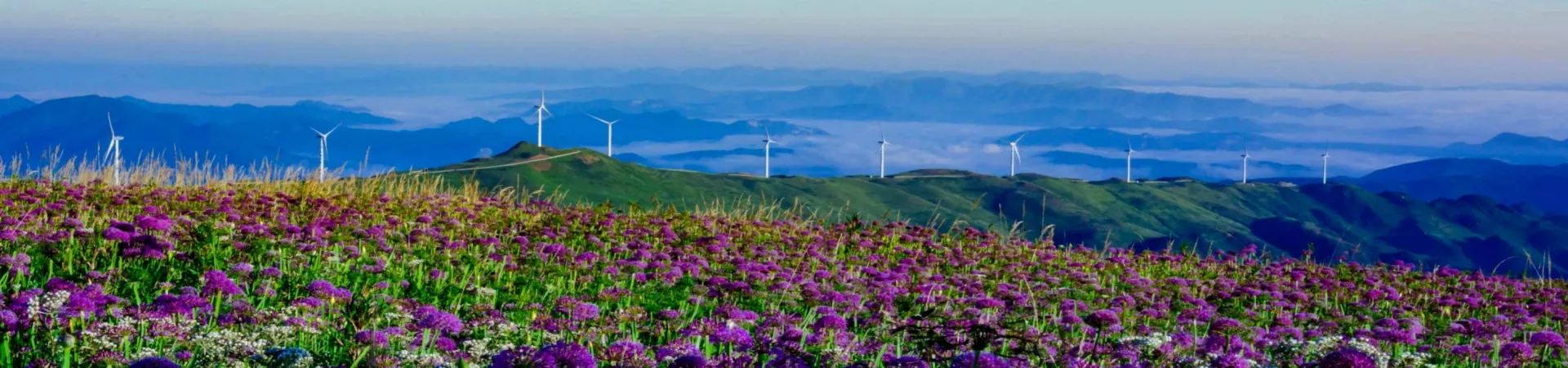
Rising with an air of silent majesty in the hinterlands of Liupanshui City, Guizhou Province, Jiucaiping (Leek Mountain) is far more than a mere geographical pinnacle. As the highest peak in Guizhou at 2,900.3 meters, earning it the venerable title "The Roof of Guizhou," it represents a threshold to a unique alpine world. Located approximately 90 kilometers northwest of Zhongshan District's city center, within the confines of Haijia Village, Dawan Town, this mountain is a dramatic uplift of limestone, its slopes and ridges sculpted into a series of surprisingly gentle, plateau-like terraces. The name "Jiucaiping" itself is a poetic homage to the wild leeks (韭菜, jiucai) that blanket its high-altitude meadows, their vibrant purple blossoms transforming the summit into a sea of color in late summer and autumn. This is a landscape where ridges stretch beyond ridges, and peaks are cradled by yet more peaks, offering a profound sense of solitude and grandeur atop the province.
I. The Lay of the Land: A Geological and Scenic Profile
Jiucaiping is not a solitary spire but a commanding ridge, its backbone running from northwest to southeast. This orientation dictates its distinct character.
A. The Two Faces of the Mountain The mountain presents a striking topographical contrast. Its southern slopes are elongated and gradual, allowing for a relatively steady, contemplative ascent through changing vegetation zones. In contrast, the northern face is notably steeper and shorter, a more dramatic escarpment that speaks to powerful geological forces. This duality offers different experiential perspectives for visitors, whether seeking a prolonged immersion or a view of its formidable cliffs.
B. A Realm Above the Clouds The primary allure of Jiucaiping lies in its vast, undulating summit plateau. Unlike the sharp peaks often imagined, the "ping" (坪) in its name means "flatland," and this is precisely what greets explorers at the top. These high-altitude karst meadows, dotted with rocky outcrops and resilient shrubs, create a surreal, almost tundra-like environment. Walking here, with panoramic views unfolding in every direction and the clouds often drifting below, one truly feels atop the roof of the world. The sensation is one of boundless space and serene elevation.
II. A Seasonal Tapestry: When to Visit
The mountain's personality shifts dramatically with the seasons, each offering a compelling reason for the journey.
A. The Purple Symphony (Late August to October) This is the most iconic and celebrated season. From late summer into mid-autumn, millions of wild Himalayan lilac asters (the "wild leeks") burst into bloom, covering the high meadows in a breathtaking carpet of violet and purple. The summit becomes a painter's palette, with the flowers swaying in the crisp wind against a backdrop of endless sky and distant, hazy mountain ranges. This natural spectacle draws photographers, nature lovers, and hikers alike.
B. The Icy Zenith (Winter) In winter, Jiucaiping transforms into a realm of stark, minimalist beauty. Temperatures plummet, and the mountain is frequently draped in frost and rime ice. When snow falls, the rolling plateaus turn into a pristine white desert, with the limestone formations wearing elegant caps of snow. It is a challenging but rewarding time for experienced visitors, offering ethereal landscapes and profound silence.
C. The Verdant Awakening (Spring and Summer) From spring through early summer, the meadows shed their winter cloak and turn a lush, vibrant green. This is a season of renewal, with fresh grasses, scattered wildflowers, and clear, dynamic skies. While lacking the dramatic purple hue, it presents a landscape of pure, alpine freshness, ideal for hiking and escaping the lowland heat.
III. Practical Guide for the Ascent
A. Access and Orientation The main gateway to Jiucaiping is via Dawan Town in Zhongshan District. The journey from Liupanshui city center involves a scenic drive into increasingly rural and elevated terrain. The final approach to the trailheads or cable car station is well-signposted. Visitors can typically choose between a cable car ascent, which provides stunning aerial views, or hiking up designated trails on the southern slopes for a more immersive experience.
B. Visitor Essentials * Admission Fee: A standard entrance fee is charged, approximately 45 RMB per person. It is always advisable to check for the latest official pricing before your visit, as rates and policies can be updated. * Operating Hours: The scenic area is officially open all day. However, practical access for hiking or cable car operation usually follows daylight hours. For sunrise or sunset viewings, which are spectacular, special arrangements or prior confirmation is essential. * Suggested Duration: A visit typically requires 1 to 3 hours, accounting for transport to the summit area, exploration of the plateau, and descent. Those planning extensive photography or longer hikes should allocate more time.
IV. Preparing for the High Altitude
A successful trip to Jiucai Ping hinges on preparation for its alpine environment.
A. Health and Acclimatization The nearly 3,000-meter altitude can cause shortness of breath and fatigue for some. Ascend at a moderate pace, stay hydrated, and avoid overexertion. Those with pre-existing cardiovascular or respiratory conditions should consult a doctor.
B. The Mountain Wardrobe Mountain weather is notoriously changeable. Even in summer, temperatures at the summit can be 15-20°C (27-36°F) cooler than in the valleys, and wind is constant. * Essential Gear: Layered clothing is crucial. A moisture-wicking base layer, a warm fleece or insulated jacket, and a windproof and waterproof outer shell are mandatory. Sturdy, broken-in hiking shoes with good grip are non-negotiable for the rocky, sometimes slippery terrain. * Sun Protection: The high-altitude sun is intense. A wide-brimmed hat, UV-blocking sunglasses, and high-SPF sunscreen are vital. * Supplies: Carry sufficient water and high-energy snacks. A walking pole can be helpful for stability on the trails.
Conclusion: An Invitation to the Summit
Jiucaiping is an encounter with the elemental forces that shaped Guizhou. It is a place where one can stand on gentle meadows that feel like the edge of the sky, trace the lines of endless mountain chains fading into the horizon, and witness a simple wildflower enact an annual spectacle of breathtaking scale. More than just checking off the highest point, a journey here is about absorbing the quiet power of the plateau, the clarity of the air, and the profound perspective that comes from standing on the roof of a province. It is a testament to the rugged, floral-crowned beauty that defines the heart of China's southwestern highlands.