Dinghu Peak
Subtitle: The Heart of Xiandu, a Pillar of Legend
Introduction Rising from the lush landscape of Xiandu Scenic Area in Lishui, Zhejiang Province, Dinghu Peak stands not merely as a geological formation but as the very soul and symbol of this renowned region. Its singular, awe-inspiring presence has captivated visitors, poets, and pilgrims for centuries, weaving natural grandeur with profound mythological significance. More than just a scenic stop, it is a journey into the bedrock of Chinese cultural heritage, offering a tangible connection to the nation's most ancient origins.
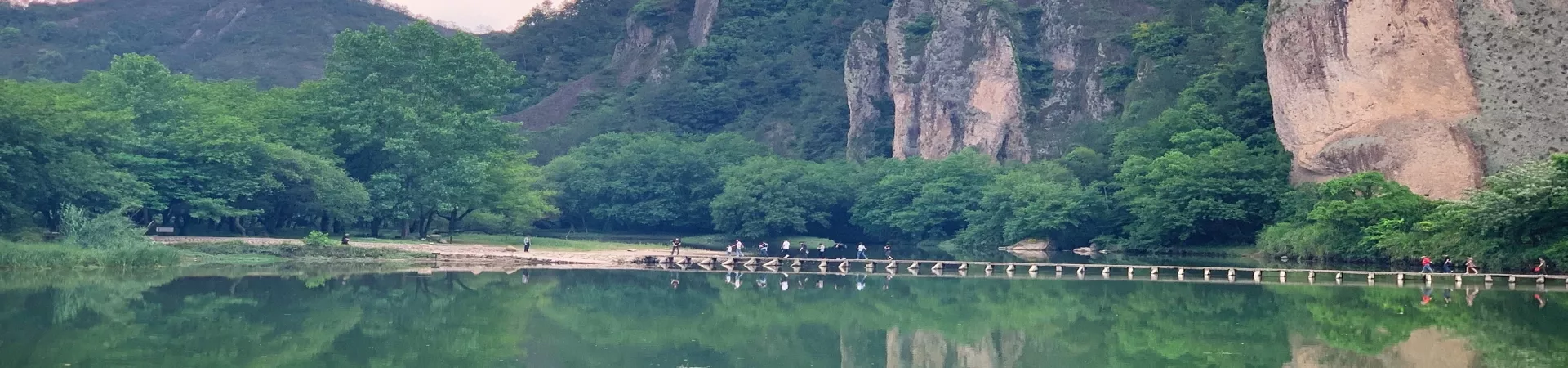
The Geological Marvel: "The First Peak Under Heaven" Visually, Dinghu Peak is an unforgettable spectacle. It erupts vertically from the ground like a colossal bamboo shoot piercing the heavens, a monolithic stone pillar of staggering simplicity and power. This sheer, solitary column, composed of rhyolite tuff, soars approximately 170.8 meters (about 560 feet) into the sky. Its clean, sharp lines and majestic isolation have earned it the venerable titles of "The Number One Peak Under Heaven" and "The Number One Bamboo Shoot Under Heaven." The peak is a masterpiece of Danxia landform, a testament to millions of years of geological uplift and erosion. Its presence dominates the surrounding valley, creating a dramatic focal point against the backdrop of the Hao Creek and distant, mist-shrouded mountains. The play of light and shadow across its face at different times of day—from the soft glow of dawn to the golden hues of sunset—transforms its appearance, offering photographers and contemplative visitors endlessly shifting perspectives.
The Legendary Crucible: Birthplace of a Civilization The profound importance of Dinghu Peak transcends its physical beauty, rooted deeply in the foundational myths of Chinese civilization. According to legendary texts such as the "Records of the Grand Historian," this is the sacred site where the Yellow Emperor (Huangdi), the mythical ancestor of the Chinese people, achieved immortality. It is believed that here, atop this very peak, the Yellow Emperor cast a sacred tripod cauldron (Ding) and refined the elixir of life. Upon successfully completing his alchemical endeavors, he is said to have ascended to the heavens on the back of a crimson dragon from the peak. This momentous event left an indelible mark, giving the peak its name: "Dinghu" (鼎湖), which translates to "Cauldron Lake Peak."
The legend manifests in a fascinating natural feature at the summit. Nestled among hardy, windswept pines and cypresses is a small, perennial pool of water. This "lake" is said to be the remnant of the waters used in the Yellow Emperor's alchemical rites or perhaps a miraculous creation from his ascent. This pool, which never dries up throughout the four seasons, serves as a permanent, mystical testament to the legend, bridging the gap between myth and the tangible world.
Cultural Echoes: Poetry and Pilgrimage The peak's powerful aura has inspired generations of scholars and artists. The most famous literary tribute comes from the great Tang Dynasty poet Bai Juyi. In his poem, he captured its enduring, solitary majesty and the ethereal atmosphere surrounding it: "The Yellow Emperor’s banners went, never to return, Leaving this lone rock, towering amid drifting clouds. Sometimes the wind lashes waves on Dinghu Lake, Scattering into raindrops that fall from the clear sky."
Bai Juyi's verses perfectly encapsulate the feeling of timelessness and the subtle, magical phenomena—like the mist from the nearby river catching the wind and sprinkling like rain—that visitors can still experience today. For centuries, the site has attracted not only tourists but also those on a cultural pilgrimage, seeking to stand where the threads of history, mythology, and natural wonder are intricately intertwined.
Practical Information for Visitors
Getting There Dinghu Peak is located within the Xiandu Scenic Area. The most convenient access is via the dedicated Xiandu Scenic Area shuttle bus line. Visitors should disembark at the "Dinghu Feng (Dinghu Peak Bus Stop)" station. From the bus stop, the entrance to the peak viewing area is within a short and scenic walking distance.
Admission Details Access to the Dinghu Peak viewing area is included within the general admission ticket for the Xiandu Scenic Area. There is no separate ticket required solely for the peak. It is important to purchase the comprehensive park ticket at the main Xiandu entrance or official channels, which grants access to Dinghu Peak and other key sites like the Zhu Xi Academy (Old Temple of the Prime Emperor).
Opening Hours The scenic area operates daily from 8:00 AM to 5:00 PM. These hours are consistent throughout the year, from January 1st to December 31st. It is advisable to arrive with sufficient time to fully appreciate the site, especially if planning to explore the surrounding paths, bridges, and pavilions that offer different vantages of the peak.
Suggested Duration To fully absorb the majesty of Dinghu Peak, explore the adjacent temple dedicated to the Yellow Emperor, stroll along the picturesque Hao Creek with its iconic stepping stones, and visit the nearby viewing pavilions, a visit of at least 3 hours is recommended. This allows for a leisurely pace to photograph the peak from various angles, reflect on its legends, and immerse oneself in the serene landscape.
Visitor Tips The best photographic opportunities are often from the far side of Hao Creek, where the peak is reflected in the calm waters. Early mornings on clear days may offer the chance to see the peak emerging from river mist, recreating the classic "fairyland" atmosphere Xiandu is famous for. Comfortable walking shoes are essential for exploring the paved paths and stone steps in the area. Given the site's cultural significance, reading about the Yellow Emperor legend beforehand will greatly enrich the visit.