Cao Zhi's Tomb
Subtitle: A Journey to the Resting Place of a Literary Luminary: Exploring the Cao Zhi Tomb in Liaocheng
Introduction: The Poet-Prince and His Enduring Legacy
Nestled within the tranquil landscapes of Dong'e County in Liaocheng City, Shandong Province, lies a site of profound historical and cultural resonance—the Tomb of Cao Zhi. More than just an ancient burial mound, this location serves as a poignant testament to one of the most brilliant yet tragic figures of the Three Kingdoms period and the Jian'an era of Chinese literature. Cao Zhi, the third son of the formidable warlord Cao Cao, was a child prodigy whose poetic genius earned him widespread acclaim. His life, however, was a complex tapestry of literary triumph and political disappointment, marked by a fierce rivalry with his elder brother, Cao Pi, who eventually became the first emperor of the Cao Wei state. This rivalry cast a long shadow over Cao Zhi's later years, leading to a life of surveillance, displacement, and unfulfilled ambition. His final resting place in Dong'e, therefore, is not merely a geographical point but a symbol of his poignant legacy, attracting scholars, poetry enthusiasts, and history buffs who seek to connect with the spirit of this "Poet-Prince."
Site Overview: Layout and Key Features
The tomb complex, now a protected cultural heritage site, has been carefully maintained and developed into a contemplative memorial park. The central focus is, of course, the tomb itself.
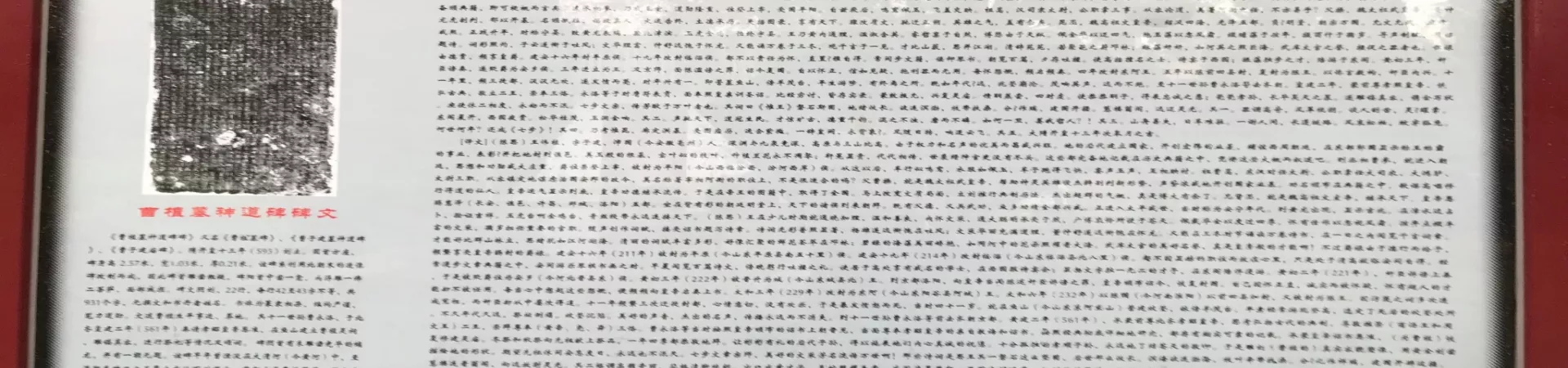
The Main Tomb Structure The tomb mound is an earthen construction, presenting a solemn and dignified appearance. A stone stele stands guard before it, inscribed with the characters "Tomb of Prince Chen Si of Wei" (曹魏陈思王墓), his posthumous title. The simplicity of the mound is striking, encouraging visitors to reflect on the contrast between the grandeur of his literary output and the relative modesty of his physical memorial. The surrounding area is landscaped with traditional Chinese gardens, featuring ancient cypress and pine trees that have witnessed centuries of history. Their enduring presence adds a layer of timelessness to the atmosphere, creating a serene environment conducive to quiet reflection on Cao Zhi's life and works.
The Memorial Hall and Exhibitions Adjacent to the tomb, a memorial hall houses exhibitions dedicated to Cao Zhi's life and literary achievements. Here, visitors can delve deeper into his story through informative panels, replicas of historical artifacts, and excerpts from his most famous poems. The exhibitions often highlight his mastery of the five-character poem (五言诗) and his significant role in shaping the emotional depth and artistic style of Jian'an literature. Key works, such as "The Luo River Goddess" (《洛神赋》), a masterpiece of rhapsodic prose-poetry expressing longing and ideal beauty, are prominently featured. These displays provide crucial context, transforming the visit from a simple sightseeing trip into an immersive educational experience, bridging the gap between the ancient stone and the vibrant intellectual world Cao Zhi inhabited.
Cultural and Historical Significance
The importance of the Cao Zhi Tomb extends far beyond its function as a gravesite. It is a vital cultural landmark that anchors the regional identity of Liaocheng to a golden age of Chinese poetry.
A Pillar of Jian'an Literary Culture Cao Zhi is celebrated as one of the "Seven Masters of the Jian'an period." His poetry, characterized by its technical brilliance, emotional intensity, and often a tone of melancholy and unfulfilled desire, captured the spirit of an era marked by both turmoil and cultural flourishing. Visiting his tomb is akin to paying homage to the very source of a significant literary tradition. The site serves as a physical touchstone for understanding the personal struggles that often underpinned the creative outpouring of the time. Scholars regard the preservation of this tomb as essential for ongoing research into the socio-political dynamics of the Cao Wei court and their influence on artistic expression.
A Symbol of Artistic Spirit Versus Political Reality The narrative of Cao Zhi's life—his early favor, his poetic rivalry with his brother, and his subsequent political marginalization—has become an archetypal story in Chinese culture. It represents the timeless conflict between pure artistic talent and the harsh realities of political power and familial intrigue. His tomb, situated away from the central power bases of his time, physically embodies this theme of exile and melancholy. For centuries, later poets and officials who found themselves in similar situations of disillusionment or exile have drawn inspiration and solace from Cao Zhi's story and his poetry, making this site a perennial symbol of the resilient artistic spirit.
Visitor Information and Practical Details
For those planning a visit to the Cao Zhi Tomb, the following practical information will assist in arranging a meaningful and smooth experience.
Location and Accessibility The Cao Zhi Tomb is located in the north of Yushan (Fish Hill) in Dong'e County, Liaocheng City, Shandong Province. It is approximately 20 kilometers from the central urban area of Liaocheng. Visitors can reach Dong'e County via bus or taxi from Liaocheng's main long-distance bus station. While public transportation to the specific site may be limited, taxis are readily available for hire for the final leg of the journey. The surrounding area of Dong'e is also known for its historical association with traditional Chinese medicine, particularly donkey-hide gelatin (Ejiao 阿胶), offering potential for a broader cultural itinerary.
Admission and Opening Hours The site operates with standard visiting hours. It is open to the public from 8:30 AM to 5:00 PM daily throughout the year. The last admission is at 5:00 PM. It is advisable to plan your visit to allow sufficient time to explore the tomb grounds, the memorial hall, and the gardens at a leisurely pace. The standard admission fee is set at 20 RMB per person. Please note that operating hours and fees are subject to change, and it is always recommended to verify this information locally before your visit, especially during public holidays or for large group tours.
Contact Information For inquiries regarding special visits, group bookings, or to confirm current opening details, the site management can be contacted directly. The relevant telephone number for the Cao Zhi Tomb is 0635-3558172.