Taohuajian in Lianyungang
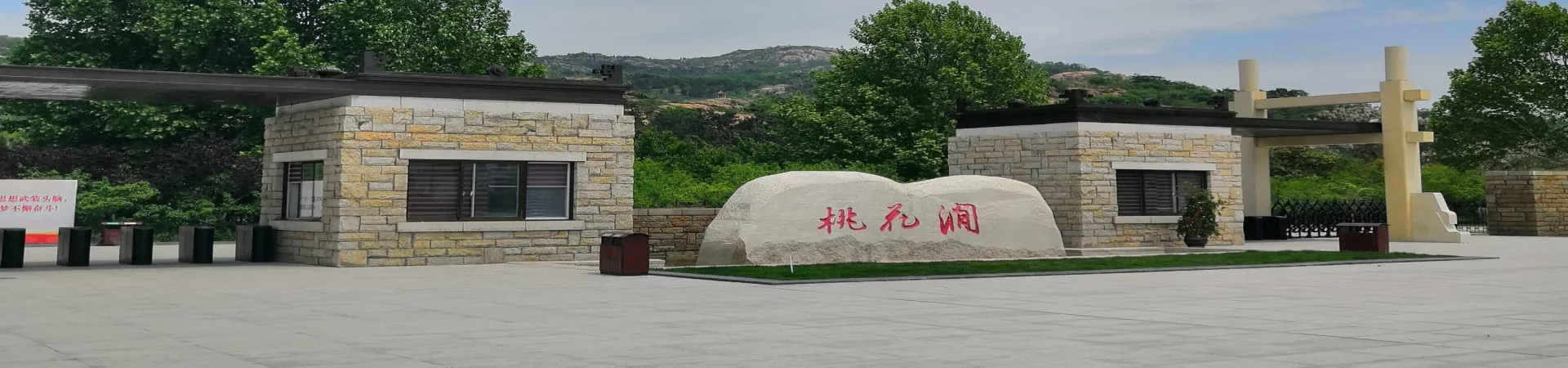
Subtitle: A Journey Through Time and Nature: Exploring Lianyungang's Peach Blossom Gully
Introduction: Where Scenic Beauty Meets Ancient History
Nestled within the Jinping Mountain range of Lianyungang, Jiangsu Province, the Peach Blossom Gully (Tao Hua Jian) presents a captivating blend of natural artistry and profound historical significance. More than just the largest and longest mountain stream in Jinping, it is a living tapestry where poetic landscapes intertwine with echoes from humanity's distant past. The gully offers a serene escape, inviting visitors to wander along its paths, where the gentle murmur of water complements the silent stories told by ancient stones and archaeological treasures. It is a destination that appeals equally to the nature enthusiast, the history buff, and the cultural explorer, promising a multifaceted experience far beyond a simple scenic walk.
Section 1: The Natural Canvas of Peach Blossom Gully
1.1 A Poetic Landscape The essence of the gully's beauty is perfectly captured by the classical Chinese poetic line, "两岸桃花夹古津" (liǎng'àn táohuā jiā gǔ jīn), which evokes an image of an ancient ferry crossing embraced by blooming peach trees on both banks. This idyllic scene comes to life here, especially in spring when the flora awakens. The journey of the water itself is a central theme. Originating from countless delicate streams that meander down the Ma'er Peak, these waters converge into a clear, flowing brook. It then winds its way gracefully through dense groves of tall, upright trees and past exposed, rugged mountain ridges and rock formations. This dynamic contrast between the soft, flowing water and the hard, majestic rocks creates a landscape reminiscent of a traditional Chinese ink painting—a harmonious balance of strength and gentleness, ultimately cascading down the southern slopes of the mountain.
1.2 A Gallery of Sculpted Stone The gully's natural architecture is further adorned with an impressive array of anthropomorphic and zoomorphic rock formations, shaped by millennia of erosion. These stones are not merely geological features; they are characters in the landscape, each with a name and story bestowed by imaginative observers. The most famous among them is the "Jade Rabbit Gazing at the Moon," a rock strikingly resembling a rabbit and considered the premier curious stone of the scenic area. On the southern cliff, a colossal formation mimics the distinct profile of an ape-man, complete with discernible facial features, earning it the dramatic title "Ape-man Howling at the Gorge." Further down, a majestic boulder takes the form of "Guanyin Expounding Buddhist Law," adding a spiritual dimension to the natural scenery.
Section 2: A Portal to Prehistory: The Archaeological Significance
2.1 A Key Paleolithic Site Beneath its picturesque surface, Peach Blossom Gully guards secrets of immense importance to human history. The Peach Blossom Gully Paleolithic Site is a archaeological landmark of national significance. It stands as the only site discovered to date in China's eastern coastal regions to contain a microlithic bladelet industry. This specific type of stone tool technology provides critical evidence for understanding the technological capabilities, daily lives, and migration patterns of ancient human populations in this region. The site acts as a crucial piece in the puzzle of East Asian paleoanthropology, offering insights into how ancient cultures developed and interacted across vast distances.
2.2 Ancient Rituals and Enigmatic Carvings The area's historical layers extend beyond the Paleolithic era. The presence of an ancient sacrificial platform near the "Guanyin" rock points to ritual practices from later periods. At its center stands a stone phallus, known as a "Shi Zu" (Stone Ancestor) or locally as "Shi Gan Da," representing a form of primordial stone worship. Intriguingly, the Peach Blossom Gully area exhibits evidence of both stone phallus (male ancestor) and stone mother (female ancestor) worship, a rare dualistic feature seldom found together elsewhere. Additional historical depth is provided by sites like the Purple Bamboo Nunnery (Zi Zhu An) and the Colored Cloud Inkstone (Cai Yun Yan), along with several ancient stone inscriptions found in the northeastern section. These carvings, depicting motifs like seedlings, human figures, and earth deities, are characterized by a primitive, archaic style and an enigmatic, almost mystical aura, hinting at long-forgotten beliefs and ceremonies.
Section 3: Practical Visitor Information
3.1 Location and Access Peach Blossom Gully is situated within the Jinping Mountain area. The most straightforward public transportation option from Lianyungang city is to take Bus No. 24, which goes directly to the mountain gate square (its final stop), providing convenient access to the entrance of the scenic area.
3.2 Admission and Operating Hours The general admission ticket is priced at 30 RMB. The scenic area offers several discounts: children with a height between 1.2 meters and 1.5 meters qualify for a half-price ticket, while those under 1.2 meters enter for free. Full-time students can also enjoy a 50% discount upon presenting a valid student ID. Additionally, visitors aged 70 and above are granted free admission. The site is open daily from 08:00 to 17:20, with the last entry permitted at 17:20. It is advisable to allocate a minimum of three hours for a thorough visit to fully appreciate both the natural trails and the historical sites.
3.3 Contact Information For any inquiries prior to your visit, you can contact the scenic area at 0518-85307669.
Information last updated: August 3, 2023.