Haizhou Ancient City
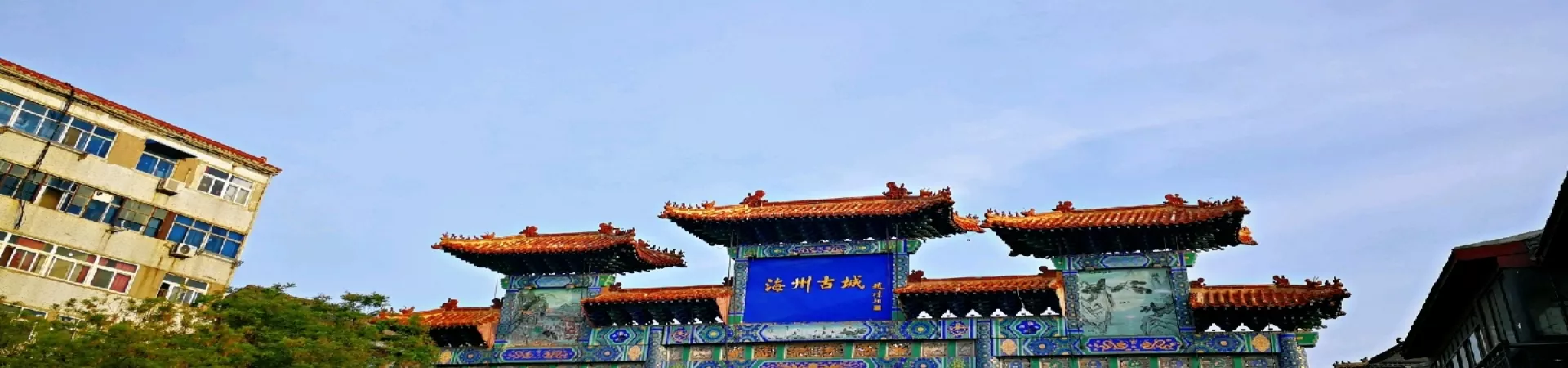
Subtitle: A Journey Through Millennia: Unveiling the Timeless Charm of Haizhou Ancient City
Introduction: Where History Whispers from Every Stone
Nestled within the modern landscape of Lianyungang City in Jiangsu Province lies a portal to a profound past: Haizhou Ancient City. More than just a historical site, Haizhou is the very progenitor of Lianyungang, a living chronicle etched in stone and memory spanning over two millennia. Its story is not one of silent ruins but of continuous evolution, from a pivotal imperial gateway to a flourishing commercial hub, now reimagined for the contemporary visitor. A visit here is a walk through layers of time, where the ambitions of China's first emperor, the bustle of ancient merchants, and the serene devotion of centuries converge in a uniquely preserved atmosphere often hailed as the "Confucius Temple of Northern Jiangsu."
1. The Cradle of an Empire's Reach: Haizhou's Founding Epoch
The city's significance is indelibly linked to the dawn of a unified China. Following the momentous unification under Qin Shi Huang, the First Emperor, in 212 BC, the administrative county of Qu was established precisely here, at Haizhou. To mark the eastern extremity of his vast empire and assert his authority, the emperor ordered the erection of a monumental stone gate known as the "Qin Eastern Gate" (秦东门, Qin Dongmen). This was not merely a symbolic gesture; it was a declaration of Haizhou's role as the empire's primary maritime gateway to the outside world. The emperor's personal attention underscored this status—historical records indicate that during his five famed eastern tours, Qin Shi Huang passed through Haizhou on three separate occasions, solidifying its position as the sole state-sanctioned portal for foreign contact and trade during the Qin and subsequent Han dynasties.
1.1. From Imperial Gateway to Thriving Port This royal endorsement catalyzed Haizhou's transformation into a prosperous open port. During the Han Dynasty, its natural harbors were capable of berthing dozens of merchant vessels simultaneously. It became a vibrant nexus of commerce and cultural exchange, where goods, ideas, and people from across China and beyond met. The legacy of the Qin Eastern Gate, whose imposing presence still marks the city's entrance today, serves as a powerful physical testament to this era of inaugural openness and strategic importance, laying the foundational narrative for the city's next two thousand years.
2. Architectural Tapestry and Spiritual Harmony
While the ancient city you see today has been thoughtfully planned and reconstructed on its original site, it meticulously captures the architectural spirit and urban fabric of its glorious past. Strolling through its streets is an immersive visual feast.
2.1. The "Confucius Temple of Northern Jiangsu" The city's layout is a charming labyrinth where streetside pavilions and buildings rise and fall in picturesque disarray. Each structure is a canvas of traditional craftsmanship, featuring exquisitely painted beams, intricately carved pillars, and a dazzling array of colors. This vibrant, bustling aesthetic, alive with shops, teahouses, and cultural exhibits, has rightfully earned Haizhou its affectionate nickname among travelers. The atmosphere is one of lively cultural continuity rather than static preservation.
2.2. Sanctuaries of Serenity Amidst the lively streets, Haizhou offers pockets of profound tranquility. Buddhist sites like the Baizi Nunnery (白子庵) have been centers of faith for centuries. Within these compounds, the air is thick with the scent of incense, and the perpetually thriving incense fires attest to an unbroken lineage of devotion and spiritual practice. These peaceful havens provide a contemplative counterpoint to the bustling lanes, showcasing the harmonious coexistence of secular joy and spiritual pursuit that defines the city's character.
3. Practical Information for the Modern Visitor
To fully embrace the experience of Haizhou Ancient City, here are the essential details for planning your visit.
3.1. Admission and Opening Hours * Admission Fee: A modest fee of 15 RMB per person is required for entry into the main historic district. * Operating Schedule: The ancient city is accessible 24 hours a day, every day of the year. This round-the-clock access allows for flexibility in planning, whether you prefer the energetic buzz of daylight exploration or the mysteriously beautiful ambiance of the ancient streets under evening illumination.
3.2. Transportation and Access Reaching Haizhou Ancient City is straightforward via Lianyungang's public transport network. The most convenient and recommended route is to take the public bus route 27, which has stops conveniently located near the city entrance. For visitors staying in central Lianyungang or arriving at major transport hubs, taxis or ride-hailing services also offer a direct and efficient option to the site.
4. The Enduring Legacy: A Bridge Across Time
Haizhou's narrative is uniquely interwoven with China's more recent industrial history. It was from this very historic ground that the monumental construction of the Longhai Railway—a vital east-west artery in China's railway network—commenced in the early 20th century. This fact symbolizes Haizhou's enduring role as a starting point, a place of origins and connections, from ancient maritime routes to modern railways. Today, the city stands not as a mere relic but as a dynamic bridge. It connects the awe-inspiring imperial decrees of the Qin dynasty with the commercial pulse of the Han, the devout whispers of countless pilgrims with the curious footsteps of modern-day explorers, all within the framework of a beautifully reconstructed urban space that honors its monumental past while welcoming the present.