Control Dike
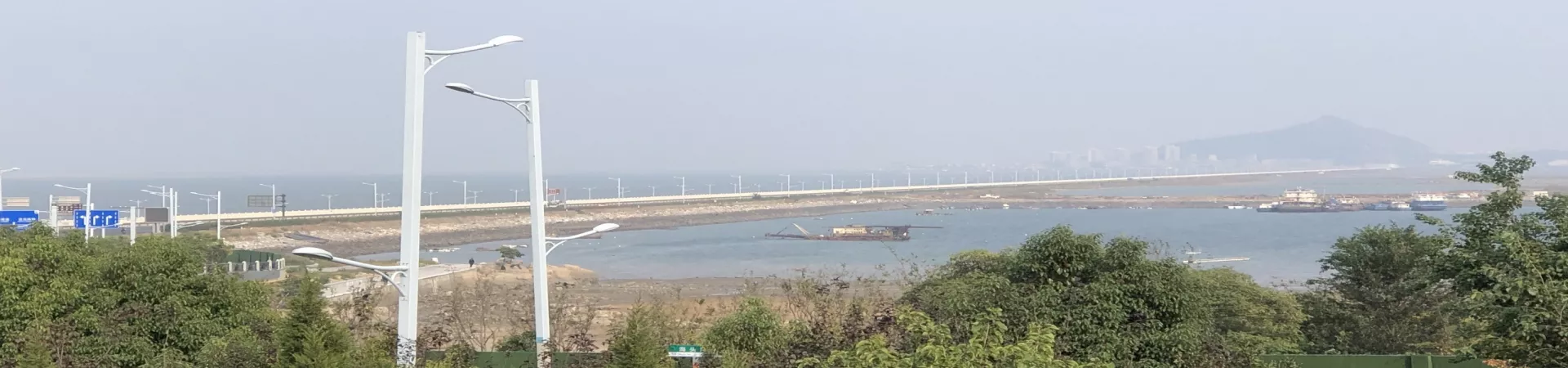
Subtitle: A Marvel of Engineering: Lianyun Port's Seawall and Its Connection to Lian Island
Introduction: Bridging Land and Sea
Stretching across the waters of Lianyun Port in Lianyungang, Jiangsu Province, lies an imposing feat of modern engineering known as the Lanhai Dadi, or the Seawall. This colossal structure, often hailed as the "First Divine Embankment of China," serves as a vital 6.7-kilometer link between the mainland and Jiangsu's largest offshore island, Lian Island. More than just a roadway, the Seawall stands as a testament to decades of scientific ambition and a pivotal project in the development of Eastern China's maritime infrastructure.
Section 1: Conception and Construction of a Colossus
1.1 The Vision Behind the Wall The genesis of the Seawall was not born from tourism but from strategic economic and logistical necessity. In the latter half of the 20th century, the goal was to solidify Lianyun Port's status as a premier "Eastern Great Port." To achieve this, enhancing port construction and facilitating the development of the resource-rich Lian Island were paramount. The most effective solution was a permanent, storm-resistant connection to the mainland. This vision culminated after nearly 20 years of intensive scientific research, site surveys, and engineering trials conducted by numerous experts and scholars, finally receiving official approval from the State Council.
1.2 From Blueprint to Reality Construction commenced on March 10, 1985, embarking on an eight-year battle against the formidable forces of the Yellow Sea. The project reached its most critical milestone on December 8, 1993, with the successful "closure" or joining of the two ends of the embankment—a momentous event known as "Helong." The final structure is a masterpiece of maritime engineering. With a top width of 12 meters and a clear road width of 10 meters, it provides a sturdy causeway. Its design incorporates a 7-meter-high embankment body, with a top elevation of 9 meters above sea level. Most impressively, a towering 7.8-meter-high arc-shaped wave-breaker wall crowns the seaward side, designed to deflect and dissipate the energy of powerful waves and storms, earning the structure its evocative nickname, the "Great Wall on the Sea."
Section 2: Architectural and Functional Profile
2.1 Engineering Specifications and Design The Seawall's dimensions are a direct response to its challenging environment. The 10-meter-wide asphalt-paved roadway allows for two-way vehicular traffic, while the additional width accommodates safety margins and infrastructure. The primary embankment's robust construction ensures stability, but it is the soaring curved wave-breaker that defines its silhouette. This reinforced concrete wall is not merely a barrier; its弧形 (arc-shaped) design is calculated to redirect crashing waves, protecting the structural integrity of the causeway itself and ensuring traffic can proceed safely even in adverse weather conditions.
2.2 Primary Purpose and Economic Impact While it is a tourist attraction today, the Seawall's core function remains logistical and economic. It serves as the critical supply artery for Lian Island, transporting goods, materials, and residents reliably without dependence on ferries. For Lianyun Port, it acts as a protective mole, helping to calm waters within its embrace and facilitating larger port operations. This direct link was instrumental in unlocking Lian Island's potential, transforming it from a relatively isolated outpost into an accessible zone for comprehensive development.
Section 3: The Seawall as a Tourist Gateway
3.1 The Journey Across the Water For visitors, traversing the Seawall is an experience in itself. The drive or walk across this 6.7-kilometer promenade offers panoramic, 360-degree views of the open Yellow Sea on one side and the bustling port activity or calmer inland waters on the other. The sheer scale of the engineering becomes palpable, with the endless horizon meeting the man-made marvel. It is a moving vantage point to appreciate the power of the sea and the human ingenuity that confronts it.
3.2 Gateway to Lian Island's Attractions The Seawall culminates at Lian Island, directly enabling its growth as a Lian Island Beach and Seaside Resort. It provides effortless access to the island's main attractions, most notably its sandy bathing beaches and the comprehensive seaside tourism度假区 (holiday zone). What was once a journey requiring a boat is now a simple, scenic drive, directly delivering visitors to the heart of the island's leisure facilities, including resorts, seafood restaurants, and recreational activities.
Section 4: Practical Visitor Information
4.1 Location and Accessibility The Seawall is located within the Lianyun District of Lianyungang City. Its starting point on the mainland is at Huangshizui, Beigu Mountain, and it extends to Jiangjiazui on Lian Island. It is approximately 30 kilometers southeast of central Lianyungang and is accessible by public bus, taxi, or tour coach.
4.2 Visiting Details * Opening Hours: The Seawall roadway is accessible 24 hours a day, every day of the year. Pedestrian access may be subject to weather conditions for safety reasons. * Admission: There is typically no charge to drive or walk across the Seawall itself. However, specific attractions on Lian Island, such as the formal beach浴场 (bathing area) or parts of the resort, may have separate entrance fees. It is advisable to check with the respective景区 (scenic area) on Lian Island for the latest pricing and details. * Suggested Duration: A visit can be tailored to your interest. A straightforward round-trip drive across the Seawall to enjoy the views can take about 30-60 minutes. Allocating 1-3 hours is recommended if you plan to stop for photographs, take a leisurely walk along designated sections, or make a brief initial foray onto Lian Island to explore the immediate beachfront area. A full exploration of Lian Island's resorts and beaches would, of course, require a half or full day.