Mount Emei - Puxian Pagoda
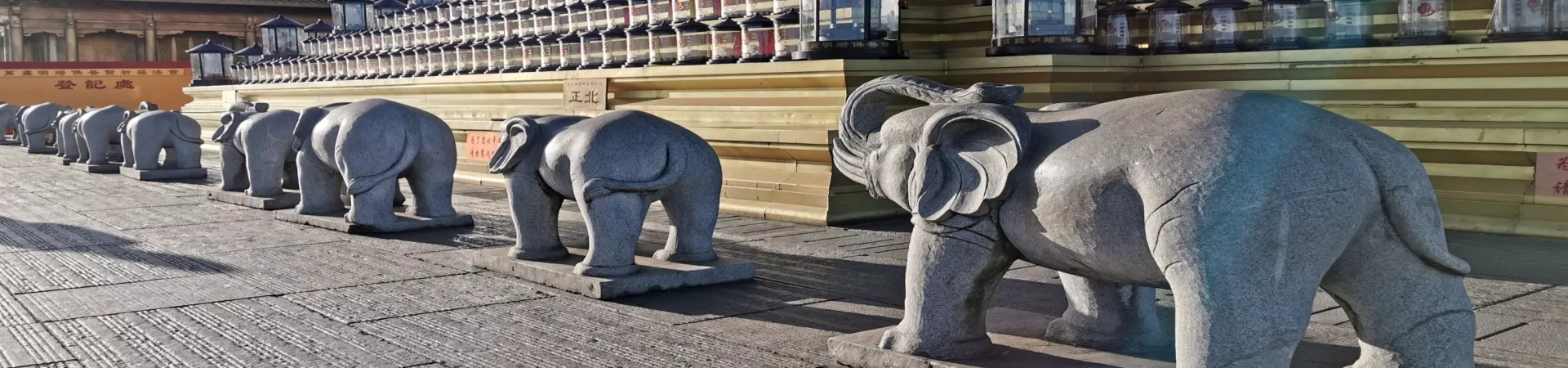
Subtitle: A Visitor's Guide to the Golden Summit and the Ten Directions Samantabhadra Statue
1. Introduction to the Golden Summit and the Statue Rising majestically at an altitude of 3,077 meters on the Golden Summit (Jinding) of Mount Emei, the Ten Directions Samantabhadra Statue (Shifang Puxian Shengxiang) is not merely a landmark; it is the spiritual and visual apex of the entire mountain, a UNESCO World Heritage Site. This awe-inspiring monument represents the Bodhisattva Samantabhadra (Puxian), revered for his great vows and practice. For visitors, the journey to this sacred site is as much about the breathtaking ascent as it is about witnessing one of the most significant and engineeringly remarkable Buddhist statues in the world. The statue, set against a backdrop of often dramatic sea of clouds, creates a scene of profound tranquility and grandeur that defines the Mount Emei experience.
2. Artistic and Symbolic Significance of the Statue 2.1 Design and Dimensions The statue is a masterpiece of traditional Chinese bronze casting and gilding techniques. It stands at a total height of 48 meters, with the statue itself measuring 42 meters and the Sumeru pedestal adding another 6 meters. Its total weight is an astounding 660 tonnes. This colossal scale ensures its dominance over the Golden Summit plateau, visible from miles away on clear days. The statue faces the ten directions, a key aspect of its symbolic meaning.
2.2 Architectural Composition and Symbolism The structure consists of two main parts: the ornate base and the statue of Samantabhadra seated upon his six-tusked elephant mount. The most distinctive feature is the arrangement of Samantabhadra's heads. Ten heads are stacked in three tiers (four-three-three configuration), each representing a different aspect of the human mind and the Bodhisattva's wisdom. This complex design symbolizes the Bodhisattva's all-encompassing compassion and his ability to observe and aid all sentient beings in every corner of the universe.
The term "Ten Directions" (Shifang) carries a dual meaning. Primarily, it refers to Samantabhadra's Ten Great Vows, which are core ethical and devotional practices in Mahayana Buddhism. Secondly, it signifies that his boundless vows and practices are capable of benefiting all beings and Buddhas across the ten directions (the eight compass points plus up and down) and the three periods of time (past, present, and future).
2.3 The Inner Shrine Hollow inside, the statue houses a sacred space known as the "Buddha Hall Within the Buddha." This 484-square-meter chamber is a serene sanctuary accessible to visitors. It enshrines a bronze statue of Amitabha Buddha (the Buddha of Infinite Light), surrounded by exquisitely carved white jade (Han白玉) statues of other Buddhist figures. This inner chamber adds a layer of intimate spiritual exploration to the monumental external viewing.
3. Practical Visitor Information 3.1 Location and Access The Ten Directions Samantabhadra Statue is located directly on the Golden Summit platform. * External Transport to Mount Emei: Visitors typically arrive via high-speed train to Emeishan Station, by bus to the Emeishan Tourist Center, or by flight to Chengdu followed by ground transport. * Internal Transport within the Scenic Area: Reaching the Golden Summit involves a multi-stage journey. From the main tourist bus terminal at Leidongping, visitors must walk approximately 1.5 kilometers to the Jieyin Hall (接引殿). From there, the final ascent is made either: * By Cable Car: Taking the Golden Summit Cable Car is the most common and efficient option, offering spectacular aerial views. * By Hiking: A steep and strenuous stone-step path leads from Jieyin Hall to the summit, covering about 6 kilometers and requiring significant time and physical fitness. This route is for experienced hikers seeking a more immersive challenge.
3.2 Tickets and Opening Hours * Entrance Fee: Access to the statue is included in the overall Mount Emei Scenic Area entrance ticket. A separate ticket is not required. * Golden Summit Cable Car: This requires a separate fare. * Peak Season (approx. Jan 16 - Dec 14): Upward: 65 RMB/person; Downward: 55 RMB/person. * Low Season (approx. Dec 15 - Jan 15): Upward: 30 RMB/person; Downward: 20 RMB/person. * Opening Hours: The Golden Summit area, including access to the statue, is generally open from 07:00 to 16:00 daily, year-round. These hours can be subject to change due to weather or management decisions.
3.3 Essential Tips for Your Visit * Altitude and Climate: The Golden Summit is over 3,000 meters high. Weather is highly unpredictable and can change rapidly. It is consistently colder and windier than the mountain base, even in summer. * Clothing Advice: It is crucial to bring a warm jacket, windbreaker, or fleece regardless of the season. While July and August are warmer relative to other months, temperatures at the summit can still be cool, especially in the early morning, evening, or during cloudy/windy conditions. The previous advice that renting heavy military coats is unnecessary in summer is generally accurate for most visitors with proper preparation, but always prioritize your own comfort and check the real-time forecast. * Suggested Duration: Allocating 1 to 3 hours on the Golden Summit is recommended. This allows sufficient time to admire the statue from various angles, visit the inner shrine, explore the adjacent Huazang Temple, absorb the panoramic views, and account for potential crowds. * Contact Information: For the latest information, you can contact the Mount Emei Scenic Area. General inquiry numbers include 400-8196-333 and 0833-5090114.
4. The Holistic Experience A visit to the Ten Directions Samantabhadra Statue transcends simple sightseeing. The journey itself—whether by modern cable car or ancient pilgrimage path—is a transition into a realm of natural and spiritual majesty. Upon arrival, the sheer scale and golden glow of the statue under the high-altitude sun (or emerging from the mist) create a powerful first impression. The intricate symbolism invites contemplation, while the act of circumambulating the statue or praying in the inner hall connects visitors to a millennia-old tradition. Combined with the possibility of witnessing the famous "Sea of Clouds," "Buddha's Halo" (glory), or sunrise from the summit, the experience at the Ten Directions Samantabhadra Statue often becomes the most profound and memorable part of any pilgrimage or tour to Mount Emei. It stands as a powerful testament to Buddhist art, faith, and the harmonious integration of human creation within one of China's most sacred landscapes.