Yellow River Mother Statue
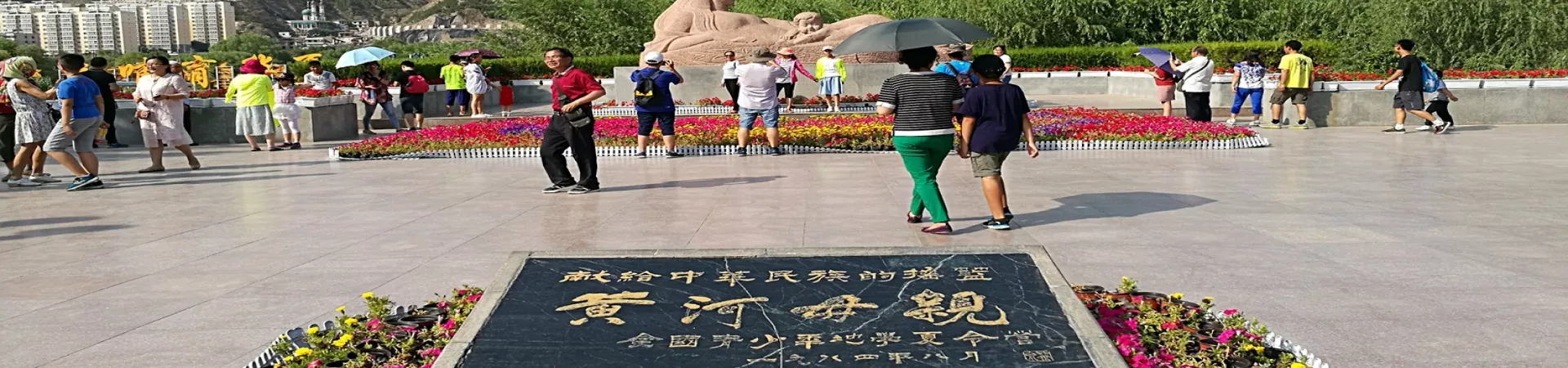
Subtitle: A Timeless Symbol of Nurturing Love: Exploring Lanzhou's "Mother of the Yellow River" Sculpture
1. Introduction and Location
Nestled along the vibrant cityscape of Lanzhou, the capital of Gansu Province, rests a sculpture of profound cultural and emotional significance. The "Mother of the Yellow River" statue is situated on the central section of Binhe Road, which traces the southern bank of the mighty Yellow River. Its specific location is just north of the Small West Lake Park (Xiaoxihu Gongyuan), a popular urban green space. This strategic placement ensures the sculpture is both a focal point for tourists exploring the riverfront and a serene landmark integrated into the daily life of the city. The area offers a picturesque setting, allowing visitors to contemplate the artwork against the backdrop of the flowing river and the urban panorama of Lanzhou.
2. Artistic Significance and Symbolism
2.1. A Masterpiece Among Peers Widely acclaimed by art critics and cultural scholars, this sculpture is not merely a local monument but is considered the most artistically valuable among the numerous statues across China created to personify the concept of a "Mother River." Its preeminence lies in the elegant simplicity of its form, the deep emotional resonance it evokes, and the powerful clarity of its symbolism. It transcends mere representation to become a universal icon.
2.2. Deconstructing the Composition The sculpture's composition is elegantly straightforward yet deeply meaningful. It consists of two central figures: * The Mother: A graceful, reclining female figure with a gentle, kind expression. Her flowing hair and classical attire suggest a timeless, nurturing presence. She gazes serenely forward, embodying both strength and tender care. * The Infant: A plump, cheerful baby boy, playfully nestled against the mother's side. His posture is one of innocent contentment and secure dependence.
2.3. Layers of Meaning This intimate duo is rich with layered symbolism: * The Mother as the Yellow River: The maternal figure directly represents the Yellow River (Huang He), historically known as the "Cradle of Chinese Civilization." The river's role in nurturing early agricultural settlements, providing sustenance, and facilitating transport is metaphorically captured in the mother's nurturing pose. * The Infant as the Chinese People: The baby boy symbolizes the generations of Chinese people, the sons and daughters of the Huaxia civilization, who have thrived along the river's basin for millennia. His secure and happy demeanor illustrates the dependence and deep connection between the civilization and its geographic life source. * A Unified Allegory: Together, they form a complete allegory: the Yellow River, as a life-giving mother, has lovingly nurtured the growth and prosperity of the Chinese nation. The sculpture is thus a stone poem, a visual representation of the inseparable bond between a land, its people, and their shared history.
3. Practical Information for Visitors
3.1. Visiting Details * Admission Fee: There is no cost to visit the sculpture. It is a public artwork accessible to all throughout the day and night. * Recommended Duration: A visit typically requires under one hour. This allows sufficient time to appreciate the sculpture from different angles, take photographs, read any informational plaques, and enjoy the surrounding riverside atmosphere. * Opening Hours: The site is accessible 24 hours a day. Daylight hours offer the best conditions for viewing the details of the sculpture, while evening visits present the statue under atmospheric lighting against the city's night sky.
3.2. Transportation Guide Reaching the "Mother of the Yellow River" statue is convenient via Lanzhou's public bus system. Several routes have stops nearby: * Most Direct Route: Take Bus 25 or 142 and alight at the dedicated "Yellow River Mother (Huanghe Muqin)" bus stop. The sculpture is a very short walk from this stop. * Alternative Routes: Buses 56, 58, 103, 106, and 107 stop at "West Lake Park (Xihu Gongyuan)" station. From there, a brief walk north towards the riverbank will lead you to the sculpture.
4. The Sculpture's Role in Lanzhou's Identity
The "Mother of the Yellow River" has far exceeded its original purpose as a piece of public art. It has been seamlessly woven into the cultural fabric of Lanzhou and has become the city's most recognizable and iconic symbol. It features prominently on postcards, tourist literature, and official city promotions. For residents, it is a source of local pride, a beloved meeting point, and a constant reminder of their deep historical roots tied to the Yellow River. For domestic and international visitors, encountering the statue is synonymous with experiencing Lanzhou itself. It stands as a silent yet powerful ambassador, eloquently telling the story of the city's geographical heart and its ancient connection to one of the world's great civilizations. The sculpture is not just an object to view but an experience that connects the visitor to the enduring narrative of China's relationship with its most historic river.
Information last updated: April 12, 2023.