Lanzhou Yellow River Iron Bridge
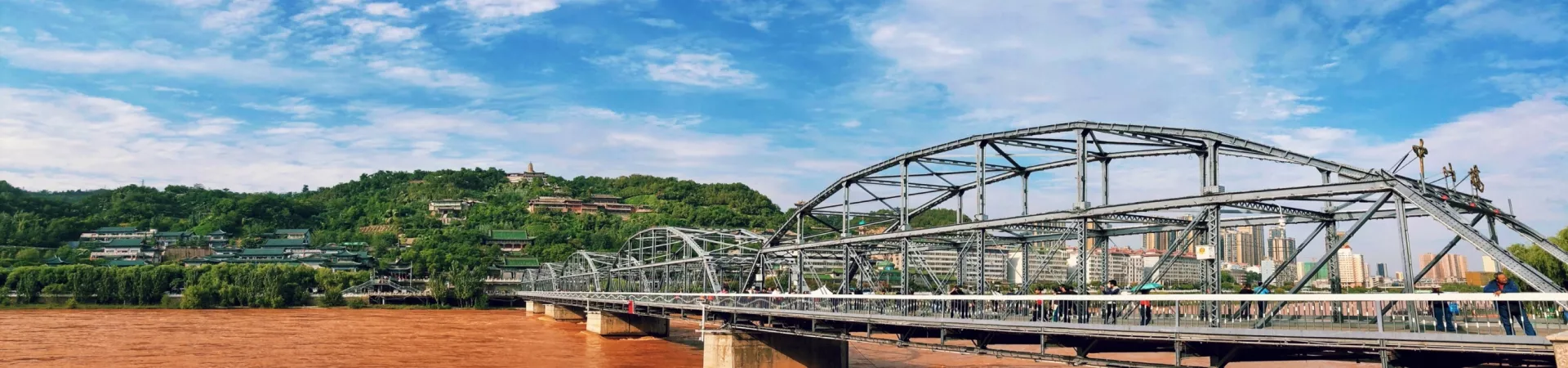
Subtitle: A Timeless Sentinel Over the Yellow River: Unveiling Lanzhou's Zhongshan Iron Bridge
1. Introduction: The Gateway to Lanzhou's Soul Nestled at the foot of the verdant Baita (White Pagoda) Mountain and standing guard before the ancient Jincheng Pass, the Zhongshan Iron Bridge is far more than a mere river crossing. It is the enduring symbol of Lanzhou, a city carved by the Yellow River's relentless flow. For over a century, this elegant structure has served as the primary witness to the transformation of a remote frontier town into a modern provincial capital. For any visitor, a journey to Lanzhou is profoundly incomplete without a leisurely walk across this historic bridge, feeling the gentle vibrations of history underfoot while absorbing the panoramic vista where the mighty river meets the urban landscape, with the iconic White Pagoda piercing the clouds in the distance.
2. A Bridge of Pioneering Firsts: Historical Significance and Construction 2.1 The "First Bridge Over the Yellow River" The Zhongshan Bridge holds an unparalleled position in Chinese engineering history. Prior to its completion, the Yellow River, often called "China's Sorrow" for its treacherous currents, presented a formidable natural barrier at Lanzhou. The bridge earned its monumental title as "the first true bridge over the Yellow River." Its construction marked a pivotal turn, ending millennia of reliance on ferries and floating bridges, and irrevocably linking the north and south banks, thus catalyzing the economic and cultural development of the entire region.
2.2 An International Endeavor in the Early 20th Century The story of its construction is a fascinating chapter of early globalization. Built between 1907 and 1909, the bridge was a collaborative international project conceived during the late Qing Dynasty. The design was primarily the work of American engineer C. D. (Clarence) McComb (often historically referenced in Chinese sources as "Man Baoben") and German engineer A. G. (August) Droege (德罗). The project was executed with meticulous precision, with key construction and supervision handled by skilled German craftsmen. Crucially, all steel components, including girders, cement, and even the rivets, were manufactured in Germany, shipped over 12,000 miles by sea to Tianjin, and then arduously transported overland by cart and camel to Lanzhou. This fusion of foreign expertise and material stands as a testament to a unique moment in China's industrial history.
3. The Visitor Experience: Practical Information and Preservation 3.1 Access, Opening Hours, and Fees Today, the bridge is dedicated entirely to pedestrians, offering a safe and unhurried experience. It is open to the public 24 hours a day, 365 days a year, allowing for visits at any time. Whether under the brilliant blue sky, during the magical golden hour of sunset, or when illuminated against the night sky, the bridge presents a different yet equally captivating face. A significant aspect of its accessibility is that admission is completely free, making it a democratic space for all to enjoy.
3.2 Traffic Regulations and Preservation Measures To ensure the safety of the millions of visitors and to protect this invaluable cultural relic for future generations, the bridge is strictly prohibited to all motorized vehicles. This preservation measure allows the iron structure, which has withstood the elements for over a hundred years, to remain stable. The rhythmic footsteps of pedestrians have replaced the rumble of traffic, creating a serene atmosphere for contemplation and photography.
4. Planning Your Visit: Logistics and Tips 4.1 Transportation and Location The bridge is centrally located and easily accessible. The most convenient way to reach it is by public bus. Visitors can take bus routes 4, 6, 9, 37, 74, 105, or 137 and alight at the "Zhongshan Bridge" station. From there, it is a short and pleasant walk of approximately 300 meters to the bridge itself. The surrounding area, including Baita Mountain Park and the riverside walkways, is perfect for exploration on foot.
4.2 Suggested Duration and Surrounding Attractions While crossing the bridge itself may only take 15-20 minutes, it is highly recommended to allocate at least one hour for the full experience. This allows time to read the historical plaques, capture photographs from various angles, and simply linger to observe the powerful currents of the Yellow River below. The visit can be seamlessly combined with an ascent to the Baita Mountain Park via the nearby cable car or walking paths for a breathtaking elevated view of the bridge snaking across the river. The Yellow River Mother Sculpture and other riverside parks are also within walking distance along the scenic bank.
4.3 Additional Tips for an Enhanced Visit For the most striking photographs, the hours around dawn and dusk provide exceptional lighting. The bridge's illumination after dark is particularly spectacular, reflecting on the river's surface. Although the bridge is robust, visitors are reminded to be mindful of their steps on the iron grid decking. As operational details for ancillary services can change, it is always advisable to check with local tourist information for the latest updates on facilities in the vicinity. Ultimately, the Zhongshan Bridge is not just a sight to see but a historical experience to feel—a place where the pulse of modern Lanzhou beats in harmony with the enduring spirit of its past.