Dunhuang Research Institute (Branch)
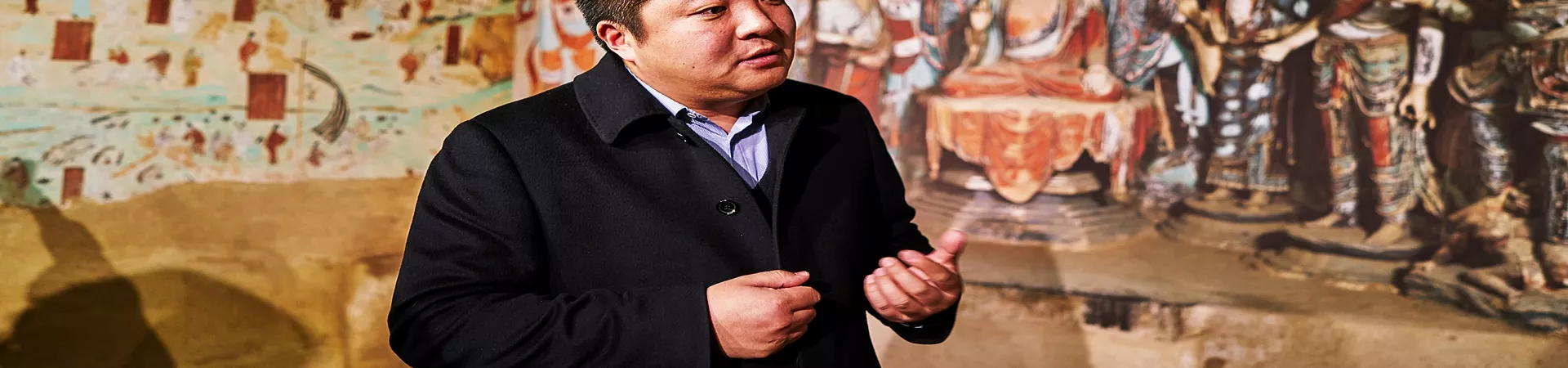
Subtitle: A Center for Preservation, Research, and Cultural Engagement
1. Introduction: A Legacy Carved in Time
Nestled at 522 South Binhe East Road in Lanzhou's Chengguan District, the Dunhuang Academy stands as a monumental institution in the world of cultural heritage. Its story is one of evolving dedication, beginning its journey in 1944 as the National Dunhuang Art Research Institute. This foundational body was transformed into the Dunhuang Cultural Relics Research Institute in 1950, marking a pivotal shift towards comprehensive conservation. Its mission and scope expanded significantly in 1984, leading to its establishment as the Dunhuang Academy. Today, it is far more than a simple museum or gallery; it is the world's premier interdisciplinary hub for the study and safeguarding of the Dunhuang caves and their priceless contents. The Academy seamlessly integrates rigorous academic research, state-of-the-art conservation science, public education, and cultural tourism, serving as the primary guardian of one of humanity's most spectacular artistic and spiritual treasures.
2. The Multifaceted Mission of the Academy
The Dunhuang Academy's responsibilities are as vast and layered as the grottoes it protects. Its work can be understood through several key pillars:
2.1. Premier Research Institution for Dunhuang Studies The Academy is the global epicenter for "Dunhuangology," a specialized field of scholarship encompassing the archaeology, art history, religion, sociology, and linguistics related to the Dunhuang site and the Silk Road. Its researchers pore over ancient manuscripts, analyze mural pigments, and study architectural forms, continuously unlocking new insights into the cultural exchanges between East and West that flourished for over a millennium. The Academy publishes authoritative studies, hosts international academic conferences, and manages vast digital archives, making it an indispensable resource for scholars worldwide.
2.2. Guardian of the Grottoes The Academy's most sacred duty is the physical preservation of the caves themselves. This extends beyond the world-famous Mogao Caves to include the equally significant Yulin Caves, the Western Thousand Buddha Caves, and the North Grotto Temple. Its team of conservators, scientists, and engineers employs cutting-edge technology to combat the threats of environmental erosion, sand encroachment, and the natural aging of pigments and plaster. Their work involves meticulous monitoring, climate control, structural reinforcement, and painstaking restoration of the intricate wall paintings and sculptures, ensuring these masterpieces endure for future generations.
2.3. Museum and Cultural Repository Beyond the grottoes, the Academy functions as a major museum institution, responsible for the curation, preservation, and study of a vast collection of movable cultural relics unearthed from the Dunhuang region. This includes textiles, documents on paper and silk, wooden tablets, and other artifacts that provide a tangible connection to daily life along the Silk Road. Through exhibitions, both on-site and touring internationally, the Academy brings the story of Dunhuang to a global audience.
2.4. Education and Public Engagement The Academy is formally recognized as a national Patriotism Education Base, underscoring its role in fostering cultural pride and historical awareness. It actively engages students, scholars, and the general public through tailored educational programs, lectures, workshops, and immersive digital experiences. As a key tourism reception unit, it strives to balance public access with preservation needs, offering guided tours that emphasize both the artistic grandeur and the fragility of the site, cultivating a sense of shared responsibility among visitors.
3. Practical Information for Visitors
For those planning a visit to the Dunhuang Academy's facility in Lanzhou, which serves as its administrative and research headquarters and often hosts introductory exhibitions, the following details are essential.
3.1. Location and Contact The Academy is located at 522 South Binhe East Road (Nan Binhe Dong Lu), Chengguan District, Lanzhou. For direct inquiries, you may contact them via telephone at 0931-8866015.
3.2. Opening Hours The facility is open to visitors from 9:00 AM to 4:00 PM, Tuesday through Sunday, throughout the year. It is typically closed on Mondays, unless that day coincides with a national public holiday. It is always advisable to confirm the schedule ahead of your visit, as hours may be subject to change for special events or maintenance.
3.3. Admission and Fees As the Lanzhou facility may host rotating exhibitions or have varying access policies, detailed and current information regarding admission tickets is not fixed here. Visitors are strongly encouraged to consult directly with the Academy via the provided contact number or official channels for the most accurate and up-to-date information on ticketing, potential fees for special exhibitions, and available discounts.
3.4. Transportation and Access Reaching the Academy is convenient via Lanzhou's public bus system. Several bus routes, including numbers 20, 25, and 135, have stops near the Academy. Alight at the "Green Park" (Lüse Gongyuan) bus stop. From there, it is a short and pleasant walk of approximately five minutes to the Academy's entrance.
3.5. Suggested Duration of Visit To comfortably explore the exhibitions, view any multimedia presentations, and absorb the information presented at the Lanzhou facility, a visit of 1 to 3 hours is generally recommended. This allows for a thorough introduction to the work of the Dunhuang Academy and the history it protects, which serves as an excellent primer for an eventual visit to the grotto sites themselves in Dunhuang city.