Xiangguo Temple of Kaifeng China
A Visitor's Guide to Daxiangguo Temple, Kaifeng: History, Architecture, and Practical Information
Nestled in the heart of Kaifeng City, Henan Province, Daxiangguo Temple stands as a profound testament to Chinese Buddhist history and cultural heritage. Originally named the Jianguo Temple, its fame is twofold: it served as a principal imperial temple during the illustrious Northern Song Dynasty when Kaifeng was the thriving capital, and it achieved legendary status through its depiction in the classic Chinese novel Water Margin (Shuihu Zhuan). It is within these grounds that the fictional hero, Lu Zhishen, famously uprooted a willow tree with his bare hands, a tale that continues to captivate visitors. While much of the present-day complex has been reconstructed in recent decades, the temple remains an active center of culture and a fascinating window into China's past, seamlessly blending historical significance with contemporary artistic life.
Historical Significance and Modern Role The temple's origins date back to 555 AD during the Northern Qi dynasty, but its golden age was undoubtedly the Song Dynasty. As the state-protected imperial temple, it was a focal point for national Buddhist ceremonies and enjoyed immense prestige. The temple complex was vast, housing thousands of monks and serving as a major center for Buddhist translation and study. The modern visitor will find that the current structures, though reconstructions, are carefully built on the historic foundations and in the traditional style. The main hall, the Daxiong Baodian (Great Hero Hall), no longer contains traditional Buddhist statues but has been repurposed as a dynamic space for rotating exhibitions of cultural relics, historical artifacts, and contemporary art, making each visit potentially unique.
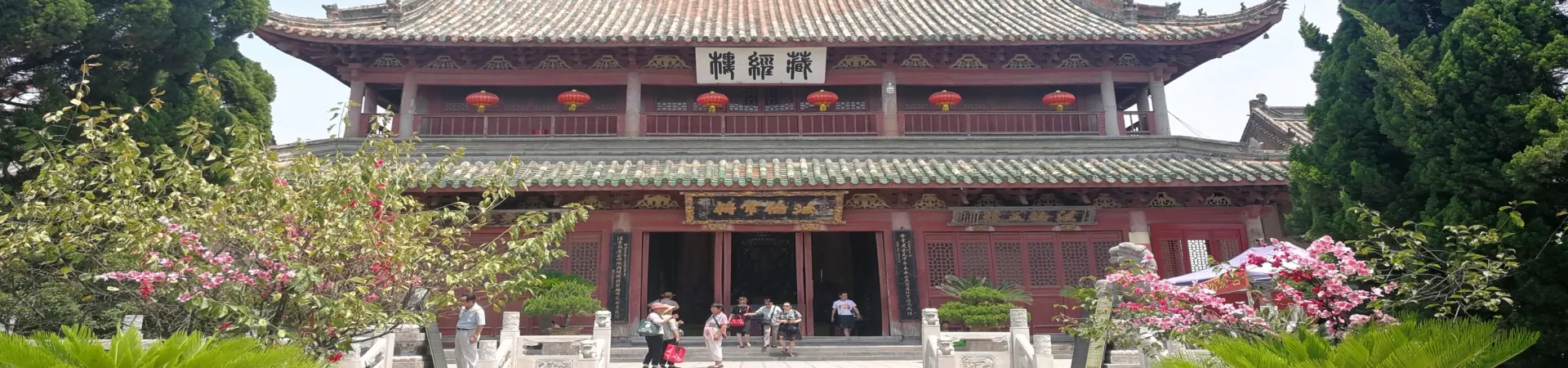
Architectural Highlights and Artistic Treasures The architectural layout of Daxiangguo Temple is characteristic of classic Chinese Buddhist monastery design, with key halls arranged along a central north-south axis. The most architecturally distinctive structure is the Luohan Dian (Arhat Hall), commonly known as the "Octagonal Glazed Hall." * The Octagonal Glazed Hall: This unique pavilion features a central octagonal shrine surrounded by a circular cloister, creating a captivating spatial experience. Its name derives from the resplendent glazed tiles that adorn its roof. The hall's unparalleled treasure is a magnificent four-sided, thousand-handed, thousand-eyed Guanyin (Avalokitesvara) wooden statue, carved from a single gingko tree trunk during the reign of Emperor Qianlong of the Qing Dynasty. This exquisitely detailed statue, with its numerous arms and eyes symbolizing the Bodhisattva's boundless capacity to see and aid all suffering beings, is a masterpiece of religious sculpture and the undeniable centerpiece of the temple. * The Scripture Library (Cangjing Lou): Situated at the rear of the complex, this two-story building now serves as the activity center for the Kaifeng Painting and Calligraphy Academy. It functions as a vibrant gallery where visitors can admire and purchase works by local artists, ranging from traditional Chinese brush paintings to classical and modern calligraphy. This repurposing continues the temple's historical role as a patron of the arts. * The Bronze Bell: Housed in a pavilion at the eastern corner of the temple grounds hangs a massive copper bell, a cherished historical artifact. While its resonant toll may no longer mark the hours for the city, it stands as a silent witness to centuries of history.
Essential Visitor Information
Planning Your Visit * Suggested Duration: Allocate approximately 1 to 3 hours for a thorough visit, allowing time to appreciate the architecture, view the exhibitions and the Guanyin statue, and explore the calligraphy displays. * Best Time to Visit: The temple is a year-round destination. Spring (March-May) and autumn (September-November) offer the most pleasant weather in Kaifeng.
Admission and Operating Hours * Ticket Price: * General Admission: 40 RMB. * Concession Ticket (Half-price): Available for children over 1.2 meters tall and over 6 years old, full-time students (with valid student ID, excluding postgraduate students), and seniors aged 60-69 (with valid ID). * Free Admission: Granted to children under 6 or under 1.2 meters in height, seniors aged 70 and above, persons with disabilities and one accompanying caregiver, active military personnel, and Buddhist clergy (with valid certification). * Opening Hours: * March 1st to May 31st: 8:00 AM - 6:30 PM, with last entry at 6:00 PM. * December 1st to February 28/29th: 8:00 AM - 6:00 PM, with last entry at 5:30 PM. * Hours for the summer and autumn periods (June-November) are typically similar to the spring schedule; it is advisable to confirm locally.
Getting There and Contact Details * Location: Central Kaifeng, within the old city area. * Public Transportation: The most convenient and economical way to reach the temple is by bus. Take Bus No. 2, 5, or 29 and alight at the "Xiangguo Si" (相国寺) stop. The temple entrance is a short walk from the bus station. * Contact Telephone: For verification of opening times or other inquiries, you may call 0371-25665290 or 0371-25978502.
A trip to Daxiangguo Temple offers more than just sightseeing; it is an immersion into a layered historical narrative. From its royal Song Dynasty roots and legendary literary connections to its stunning Qing Dynasty sculpture and its present-day life as a cultural hub, the temple provides a compelling and multifaceted glimpse into the enduring spirit of Chinese civilization.