Kaifeng Baogong Temple
A Visitor's Guide to Kaifeng's Lord Bao Memorial Temple
Subtitle: Stepping into the Legacy of China's Most Revered Upright Official
Nestled on the western shore of the serene Lord Bao Lake in Kaifeng, Henan Province, stands the Lord Bao Memorial Temple (Bao Gong Ci). This site is a meticulous reconstruction dedicated to commemorating Bao Zheng (999-1062 AD), a legendary figure from the Northern Song Dynasty who remains the paramount symbol of justice, integrity, and clean governance in Chinese history. More than just a politician, Bao Zheng was a fearless reformer whose name became synonymous with impartial judgment and moral fortitude. As a pivotal attraction within the Central Plains Tourism District developed by China's national tourism authorities, the temple offers visitors a profound journey into the life, ethos, and enduring cultural impact of this extraordinary historical personality.
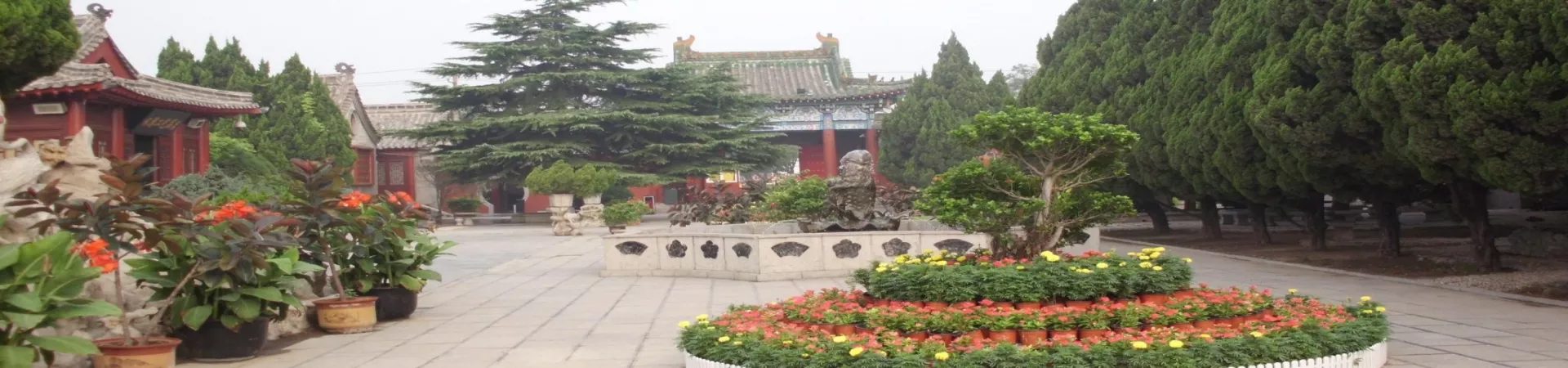
Architectural Layout and Atmosphere The temple complex is designed in a traditional architectural style that exudes solemnity and dignified elegance, mirroring the upright character of the man it honors. The layout is symmetrical and orderly, primarily consisting of several key structures: * The Main Hall (Da Dian): The central and most imposing structure, setting the respectful tone for the entire memorial. * The Second Hall (Er Dian): Serves as a complementary space to the Main Hall, often housing significant exhibits. * East and West Side Halls (Dong Xi Pei Dian): Flank the central axis and contain various thematic displays related to Bao Zheng's life and work. * Half-Walled Corridor (Ban Bi Lang): Connects parts of the complex, adorned with steles and inscriptions. * Stele Pavilion (Bei Ting): A pavilion sheltering important stone tablets commemorating Bao Zheng.
To the east of the main temple compound lies the Ling Shi Yuan (Spirit Stone Garden), a contrasting space of tranquility and artistic beauty. This garden, composed of exquisite stone sculptures and graceful waterside pavilions, provides a peaceful retreat for contemplation and reflects the classical Chinese aesthetic that values harmony between architecture and nature.
Core Exhibits and Historical Artifacts The true essence of the Lord Bao Memorial Temple is revealed within its halls through a rich collection of artifacts and detailed exhibitions that bring history to life. Key highlights include:
The Iconic Symbols of Justice * The Bronze Statue of Lord Bao: A dignified central statue depicting Bao Zheng in his official court attire, capturing his authoritative and righteous demeanor. * The Legendary Bronze Guillotines (Long, Hu, Gou Zhá): Perhaps the most famous artifacts associated with Bao Zheng. These three ceremonial blades—decorated with dragon, tiger, and dog heads—symbolized the different levels of justice he administered. According to folklore and popular drama, they were used to execute criminals regardless of their social rank, cementing his reputation for fairness.
Historical Narratives and Personal Insights * Waxwork Dioramas of Court Sessions: Vivid scenes depicting Bao Zheng presiding over famous court cases, allowing visitors to visualize his legendary interrogations and unwavering pursuit of truth. * The "Kaifeng Government Office Name Register Stele" (Kaifeng Fu Ti Ming Ji Bei): An incredibly valuable historical document. This stone tablet lists all prefects (chief officials) of Kaifeng. Notably, the section bearing Bao Zheng's name has been worn smooth by centuries of visitors touching it in reverence, a powerful testament to his enduring popularity. * Chronicles of Bao Zheng's Life and Legacy: Exhibits featuring official historical records, popular folk stories, and novels that detail his career, his reforms, and the evolution of his mythos. * Personal Writings: Displays of Bao Zheng's own poetry, particularly verses written as he assumed official posts, revealing his personal ideals and commitment to public service. His family instructions (Jia Xun), calligraphy, and epitaph offer rare, intimate glimpses into his character, principles, and the values he wished to impart to his descendants.
Practical Visitor Information
Location and Contact The temple is situated at No. 1, Zhaobi Lane, Baogong West Lake Road, Kaifeng City, Henan Province. For inquiries, you may contact: +86 371 2393 1595.
Admission Fees * Standard Ticket: 30 RMB per person. * Note: Fees are subject to change. It is always advisable to check for any updates regarding ticket prices or discounted categories (e.g., students, seniors) before your visit.
Opening Hours The temple's operating hours vary seasonally: * Winter (December 1 - February 28/29): 07:30 - 18:00. Last admission is at 17:00. * Spring (March 1 - May 31): 07:00 - 19:00. Last admission is at 18:30. * Summer & Autumn (June 1 - November 30): 07:00 - 19:00. Last admission is at 18:30.
Suggested Duration of Visit To fully appreciate the architecture, explore the exhibits in detail, and stroll through the Spirit Stone Garden, a visit typically takes between 1.5 to 3 hours.
A trip to the Lord Bao Memorial Temple is more than a sightseeing stop; it is an immersion into a foundational Chinese cultural narrative about law, morality, and leadership. Walking through its quiet halls and gardens, one gains a deeper understanding of why Bao Zheng transcended his historical era to become an eternal folk hero—a beacon of justice whose story continues to resonate powerfully centuries later.