Fanta
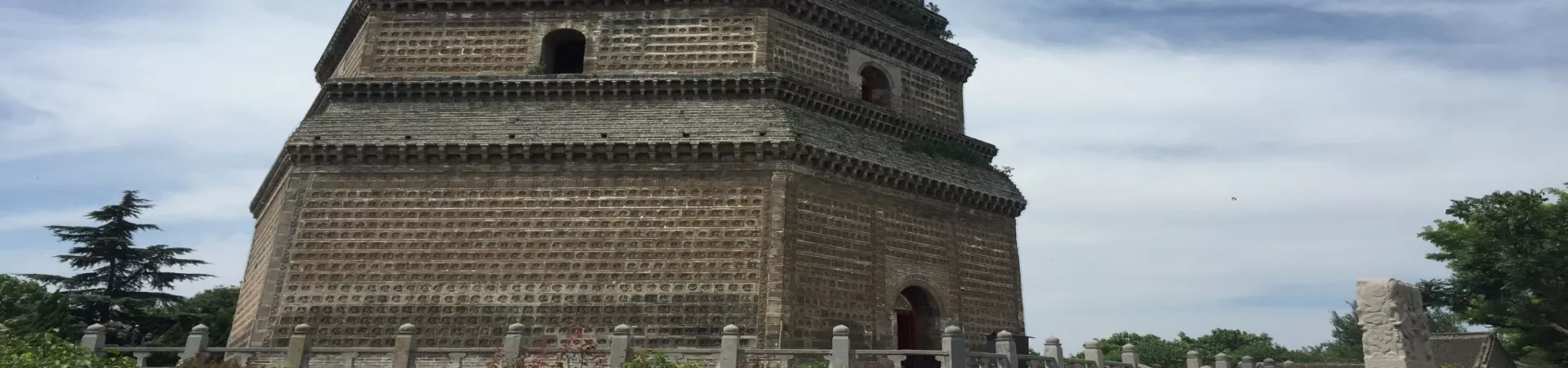
Subtitle: A Journey Through Time: Exploring Kaifeng's Ancient Fan Pagoda
Introduction: A Silent Sentinel of Bianjing
Nestled in the southeastern part of modern-day Kaifeng, the Fan Pagoda stands not as the city's tallest structure, but arguably as its most historically resonant. This unique brick pagoda, with its truncated form and intricate exterior, is a tangible chronicle of the Northern Song Dynasty's zenith, its subsequent turmoil, and the layers of folklore that have accumulated over a millennium. Unlike the more famous but reconstructed Iron Pagoda, the Fan Pagoda is an authentic, weathered original, offering visitors a direct, unmediated connection to the ancient capital of Bianjing. Its very appearance tells a story of imperial grandeur, political intrigue, and artistic devotion, making it an essential stop for anyone seeking to understand the soul of Kaifeng.
I. Historical Roots and Nomenclature
A. The Original Glory: Tianqing Temple and the Xingci Pagoda The pagoda's story begins in 974 AD, during the culturally flourishing Northern Song Dynasty. It was constructed within the grounds of the prestigious Tianqing Temple, one of the four great royal monasteries of the era. Originally named the Xingci Pagoda (兴慈塔), meaning "Promoting Compassion Pagoda," its primary purpose was as a sacred Buddhist reliquary. Its location was specifically chosen on the elevated Fan Terrace (繁台), a natural rise that was once a popular scenic spot adorned with lush gardens.
B. The Evolution of a Name: From Fan Terrace to Fan Pagoda It is from this terrace that the structure derives its most common name, the Fan Pagoda (繁塔, pronounced pó tǎ). The name "Fan" is an ancient local toponym, unrelated to the modern Chinese word for "complicated." Historically, it was also widely known as the Tianqing Temple Pagoda. This multiplicity of names reflects its deep integration into both the religious and social landscapes of its time.
II. Architectural Splendor and a Royal Decree
A. The Lost Profile: "Fan Terrace Spring Scenery" Contemporary descriptions and historical records suggest the original pagoda was a majestic, towering structure, possibly reaching nine stories in height. Each spring, the Fan Terrace would burst into a riot of colorful blossoms, attracting crowds from the capital for outings. They would admire the flowers, offer incense at the temple, compose poetry, and enjoy wine picnics with the magnificent pagoda as their backdrop. This idyllic scene, celebrated as "Fan Terrace Spring Scenery" (繁塔春色), was officially ranked among the Eight Famous Sceneries of Kaifeng.
B. The "Severing of Royal Aura": An Act of Imperial Prerogative The pagoda's iconic silhouette changed dramatically in the early 15th century. According to enduring local legend, the Yongle Emperor of the Ming Dynasty, Zhu Di, perceived an excessive "royal aura" or wangqi emanating from the structure. Believing such potent energy from a previous dynasty's monument could threaten his own mandate, he issued an imperial order to "dull" this aura. The method was literal and drastic: the top several tiers of the pagoda were dismantled. This event, passed down through generations as the story of "Chipping Away the Royal Aura" (铲王气), is the reason for the pagoda's distinctively flat-topped appearance today.
III. The Contemporary Pagoda: An Artistic Marvel
A. Dimensions and Structure The current pagoda stands at 36.68 meters tall, a fraction of its original height. What remains is a robust, hexagonal-shaped base and three complete stories, capped by a small, later-added hexagonal pavilion on its truncated summit, creating a uniquely squat yet powerful profile.
B. A Masterpiece of Brick Carving: "One Brick, One Buddha" The pagoda's exterior is its most breathtaking feature. It is entirely clad in grey bricks, nearly every one of which is individually carved with a niche containing a seated Buddha image. Over ten thousand of these exquisitely detailed, identical Buddhas adorn the surface, arranged in orderly rows. The effect is that of a colossal suit of armor for a warrior, a scale-like pattern of serene divine figures that shimmer in the sunlight. This astonishing "one brick, one Buddha" design is rare in Chinese pagoda architecture and represents the pinnacle of Northern Song brick-carving artistry. The interior walls are further embellished with priceless stone tablets inscribed with Buddhist sutras, adding to the site's spiritual and artistic wealth.
IV. Practical Visitor Information
A. Location and Transportation The Fan Pagoda is located in the southeastern section of Kaifeng city. The most straightforward public transportation option is to take city bus No. 8 and alight at the Yaowangchang Stop. From there, walk approximately 400 meters north to reach the site.
B. Admission and Opening Hours * Admission Fee: 15 RMB per person. * Opening Hours: * October 1st - April 30th: 8:30 - 17:30 (last entry at 17:30). * May 1st - September 30th: 8:00 - 18:00 (last entry at 18:00). * The pagoda is open daily throughout the week.
C. Suggested Visit Duration and Tips A thorough visit typically requires about one hour. This allows sufficient time to appreciate the exterior carvings from all angles, explore the interior chambers, and contemplate the site's history. Visitors should note that children can enter free of charge but must be accompanied by a paying adult. As with any historical monument, respectful behavior is expected.
Information last verified: February 2023.