Drum Tower
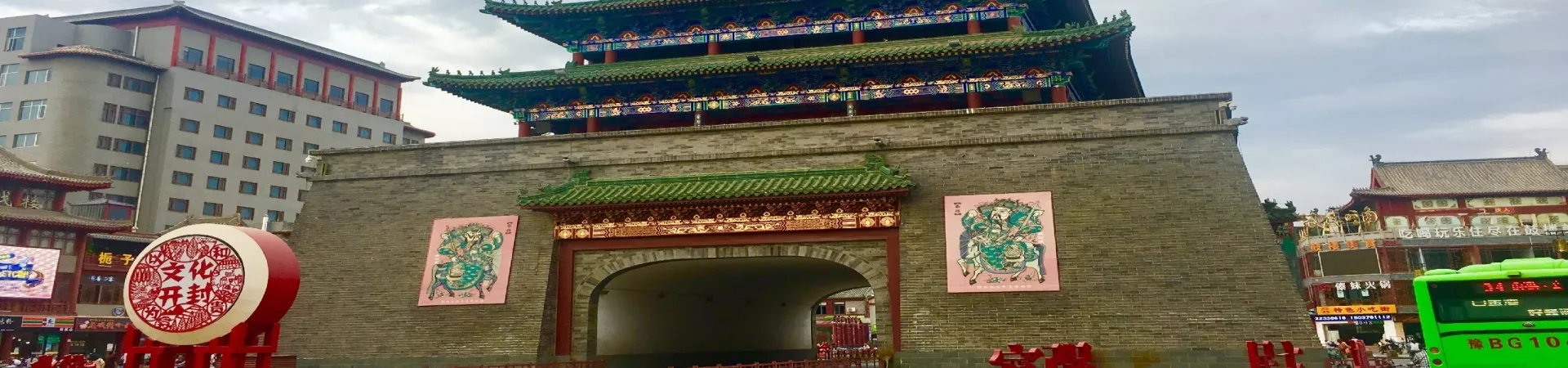
Subtitle: The Heartbeat of Kaifeng: A Journey Through Time at the Drum Tower
1. Introduction: The Everlasting Symbol Rising from the bustling center of modern Kaifeng, the Drum Tower (Gulou) stands not merely as a reconstructed monument, but as a profound symbol of the city's resilience and enduring spirit. While the structure visitors see today dates to 2013, its story is woven through centuries of Kaifeng's history, from its Ming Dynasty zenith to wartime destruction and vibrant rebirth. More than an architectural site, the Drum Tower and its sprawling square represent the living, breathing core of the city—a place where history whispers from ancient foundations by day, and the exhilarating pulse of local life thrums by night. It is an essential destination for any traveler seeking to understand the soul of this ancient capital.
2. Historical Legacy: From Ming Glory to Modern Resurrection 2.1 Foundation and Original Purpose Constructed in 1379 during the twelfth year of the reign of the Hongwu Emperor in the Ming Dynasty, the original Drum Tower was strategically built in what was then Kaifeng's commercial and cultural heart. Its design embodied imperial order and authority: a massive, symmetrical structure aligned perfectly on an east-west axis, presenting an image of formidable dignity and precision. In traditional Chinese city planning, the drum was used to mark the time and signal important moments throughout the day and night, making the tower a functional and civic centerpiece.
2.2 A Curious Twist of Fate and Feng Shui In a fascinating historical anecdote from the late Ming period, a provincial governor of Henan came to believe that the positions of the city's Bell Tower (Zhonglou) and Drum Tower were inauspicious, negatively affecting the feng shui of his government office. In a remarkable decree, he ordered the symbolic functions of the two towers to be swapped. The bell was moved to the Drum Tower, and the drum to the Bell Tower, effectively causing the two structures to exchange their names and roles. This unique event highlights the deep cultural significance placed on geomancy and cosmic harmony in ancient Chinese administration.
2.3 Destruction, Loss, and Rebirth Having survived the transition from Ming to Qing and into the modern era, the Drum Tower's physical form met a tragic end during the civil war. In 1948, during the battle to liberate Kaifeng, the centuries-old structure was destroyed by fire, leaving only its massive stone base platform as a silent reminder of its past grandeur. This remnant endured until 1976, when even the foundational platform was dismantled. For decades, the site remained a historical void in the cityscape until a major restoration project culminated in the complete reconstruction of the tower in 2013. The current edifice, therefore, is a meticulous modern homage to its illustrious predecessor.
3. Practical Information for Visitors 3.1 Location and Accessibility The Drum Tower is situated in the absolute center of Kaifeng, dominating the famous Drum Tower Square (Gulou Guangchang). Access is straightforward via public transportation. Multiple bus routes, including numbers 7, 10, 13, and 14, have stops at "Gulou Guangchang" (Drum Tower Square). From these stops, the tower is immediately visible and accessible on foot.
3.2 Admission and Opening Hours Admission to ascend the Drum Tower itself requires a ticket, though the surrounding square is freely accessible to all. Visitors should verify current pricing on-site. The tower is open to the public daily from 9:00 AM to 6:00 PM, with the last admission typically at 6:00 PM. It is advisable to allocate at least 45 minutes to an hour to explore the tower's interior exhibitions and enjoy the panoramic views from its top.
4. The Drum Tower Square: Kaifeng's Nocturnal Epicenter 4.1 Transformation at Dusk If the Drum Tower itself represents Kaifeng's historical memory, then the square at its feet unquestionably embodies its vibrant present. As daylight fades, the area undergoes a spectacular metamorphosis. The broad plaza transforms into the largest and most famous night market in Kaifeng, a magnet not only for tourists but for locals themselves. The air begins to fill with enticing aromas and the lively hum of gathering crowds.
4.2 A Culinary Paradise The night market is an exercise in delightful chaos and organization. Along both sides of the square, fleets of uniform, clean food carts line up in orderly rows within designated dining zones. Each cart is a portal to the rich flavors of Henan and Chinese street food. Here, visitors can embark on a gastronomic adventure, sampling local specialties such as steaming bowls of huimian (stewed noodles), savory shaguo (clay pot dishes), crispy jiangmi tuan (glutinous rice balls), and the ubiquitous, flavorful kaofu (wheat gluten). The experience is immersive, engaging all the senses.
4.3 The Unmissable Experience No visit to Kaifeng is considered complete without an evening spent at the Drum Tower Square. It is where the city's past and present converge most dramatically. One can stand in the shadow of the illuminated, ancient-style tower—a symbol of restored heritage—while being swept up in the dynamic, joyful energy of contemporary street life. It offers a perfect, unforgettable blend of cultural insight and pure, unadulterated local enjoyment, making it the indispensable climax to any exploration of this historic city.