Meilu
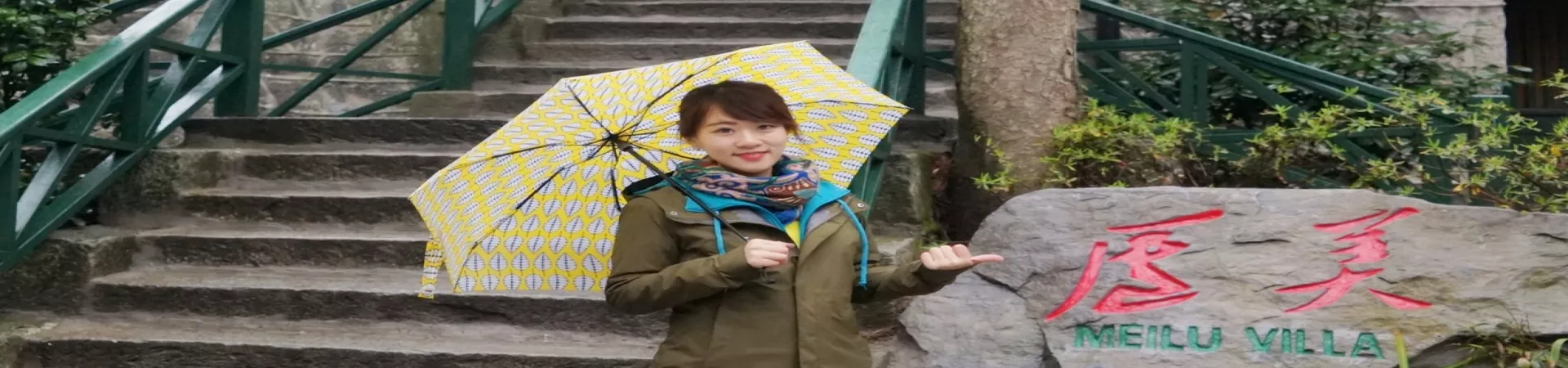
Subtitle: A Journey Through History: Unveiling the Secrets of Meilu Villa
Introduction: A Hidden Gem in the Lush Heart of Lushan
Nestled deep within a serene canopy of verdant greenery on Lushan Mountain, Meilu Villa stands as a captivating architectural and historical landmark. Far more than just a building, it is a unique cultural artifact of Lushan, a silent witness to a pivotal era in modern Chinese history. This British-style country house, with its distinctive arched corridors, presents a striking yet harmonious contrast to its natural mountainous surroundings. Its story transforms it from a beautiful structure into a poignant narrative of power, personal life, and political upheaval, offering visitors a rare glimpse into a once-forbidden world.
1. Historical Significance: From Summer Capital to National Memorial
1.1. The "Forbidden Garden" of the Republic of China Era Meilu's primary historical importance stems from its role as the summer residence and official mountain retreat for Chiang Kai-shek, the leader of the Republic of China, and his wife, Soong Mei-ling. During the 1930s and 1940s, the villa served as the de facto summer capital of the Republic of China. This period earned it the aura of a "forbidden garden" or "restricted enclave," a place where critical political strategies were contemplated and high-profile diplomatic engagements unfolded, away from the heat and bustle of Nanjing. It was here, amidst the cooling mountain air, that the couple spent their summers, blending state affairs with private life.
1.2. The Legacy of the "First Lady" and a Changing Regime Soong Mei-ling, often referred to as the "First Lady," left an indelible mark on Meilu. Renowned for her elegance, political acumen, and Western education, her taste and influence are deeply embedded in the villa's ambiance and decor. The residence thus symbolizes not only political power but also the sophisticated, internationally-connected lifestyle of its most famous inhabitants. The narrative of Meilu took a dramatic turn in 1949 with the change in regime. Its subsequent preservation and opening to the public add another layer to its history, representing a conscious effort to memorialize and contextualize a complex chapter of the nation's past.
2. Architectural Layout and Design: A Fusion of Styles
2.1. Overall Structure: Main Building and Annex The villa complex is thoughtfully composed of two primary structures: the Main Building and a single-story Annex. This layout provided functional separation between formal activities, private living quarters, and service areas. The two-story Main Building is the heart of the estate, housing the most significant living and working spaces, while the Annex likely supported the household's daily operations.
2.2. A Tour of the Main Building: Where East Meets West Stepping inside the Main Building reveals an exquisite blend of Chinese and Western decorative elements, a physical manifestation of the transitional era and the occupants' cosmopolitan tastes.
2.2.1. The First Floor: Reception and Private Quarters The ground floor features an elegantly decorated, Sino-Western fusion living room. This space was designed to receive and impress guests, hosting everything from intimate gatherings to important political meetings. Adjacent to this public area is Soong Mei-ling's bedroom, a private sanctuary that reflects her personal style and affinities.
2.2.2. The Second Floor: The Center of Power and Rest Ascending to the second floor, visitors enter the domain of Chiang Kai-shek. This level housed his office, private sitting room, and bedroom. While the configuration of his bedroom mirrors that of his wife's in its essential furnishings, a notable addition is a reclining sofa. This piece of furniture offers a subtle, humanizing detail—a hint of the personal habits and moments of repose taken by the man who bore the weight of national leadership during tumultuous times.
3. Practical Visitor Information
3.1. Admission and Fees Access to Meilu Villa is free of charge. However, it is crucial to note that entry is included within the overall Lushan Scenic Area entrance ticket. Visitors must purchase the main Lushan ticket to gain access to the mountain and its numerous sites, including Meilu.
3.2. Opening Hours and Best Time to Visit The villa is generally open to the public from 9:00 AM to 4:00 PM, daily. A key scheduling detail to remember is that the villa is closed on the first and third Wednesday of every month for maintenance. It is highly advisable to plan your visit around these closures and to arrive earlier in the day to avoid potential crowds and ensure a more contemplative experience.
3.3. Suggested Duration and Experience A visit to Meilu typically requires under one hour to explore the interior spaces thoroughly. However, this timeframe can easily extend for those who wish to absorb the historical atmosphere, examine the photographic and artifact exhibitions often displayed within, and stroll through the surrounding tranquil gardens. The site is more than a quick stop; it is an opportunity for reflection. As you walk through the quiet rooms and shaded paths, you are encouraged to ponder the profound decisions made within these walls and the private lives that unfolded here against the backdrop of a nation in transformation. The villa stands not as a monument to individuals, but as a preserved stage where history was performed, making it an essential, thought-provoking destination within the natural splendor of Lushan.