Taihui Temple
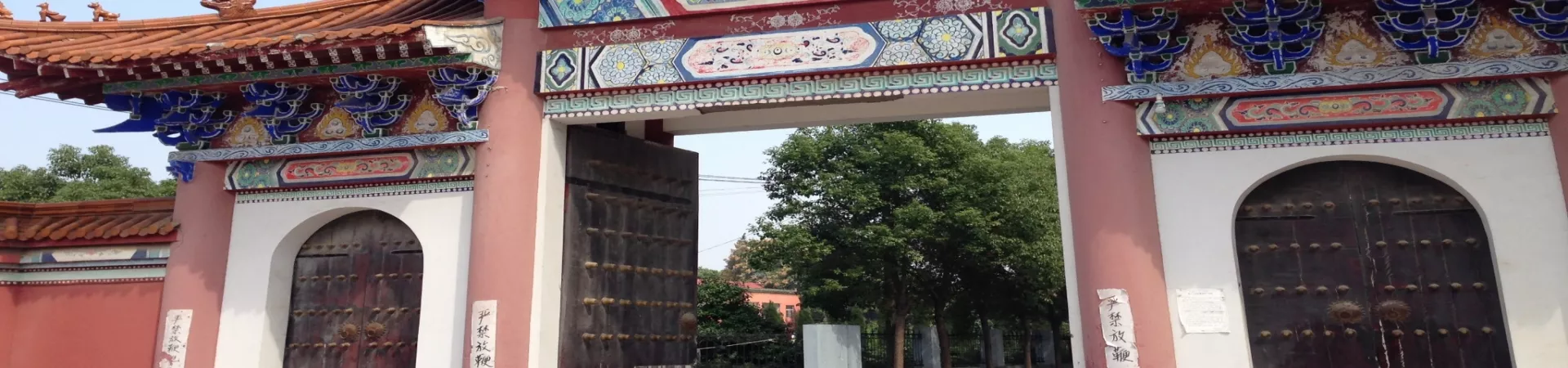
Subtitle: A Journey Through Time: Exploring the Architectural Grandeur and Spiritual Legacy of Taohui Temple in Jingzhou
Introduction: A Glimpse into Imperial Patronage and Religious Harmony
Nestled on the western outskirts of the historic city of Jingzhou in Hubei Province, China, stands the Taohui Temple (太晖观, Tàihuī Guàn), a Taoist temple complex whose very stones whisper tales of Ming Dynasty grandeur, imperial intrigue, and a unique fusion of spiritual ideologies. More than just a place of worship, Taohui Temple is an architectural marvel and a cultural palimpsest, offering visitors a profound insight into a pivotal era of Chinese history where political ambition and religious devotion were intricately intertwined. Its story begins not with a monk, but with a prince, setting it apart from many other religious sites and marking it as a monument of singular historical significance.
1. Historical Origins: The Prince and His "Golden Palace"
1.1 The Ambition of Prince Jing of Liao The temple's origins are inextricably linked to Zhu Zhanjun (朱瞻垠), the twelfth son of the Ming Emperor Yongle and the younger brother of Emperor Xuande. Enfeoffed as the Prince of Jing of Liao (辽靖王), he arrived in Jiangling (modern-day Jingzhou) with aspirations that extended beyond governance. Around the year 1393, he initiated the construction of a princely mansion on this very site. However, his ambitions soon soared higher, and he petitioned the imperial court for permission to expand his residence into a grand palace befitting an emperor, complete with the coveted yellow-glazed tiles reserved for the Son of Heaven.
1.2 From Forbidden Palace to Sacred Temple His request for imperial trappings was ultimately denied by the court, a refusal that carried significant political risk. In a strategic and perhaps spiritually motivated pivot, Prince Jing transformed the project. He converted the partially built palace complex into a Taoist temple, naming it "Taohui Guan" (太晖观). This clever transformation served multiple purposes: it diffused potential accusations of usurpation, demonstrated piety, and allowed the core architectural splendor to be preserved. The main hall, in particular, was so lavishly constructed that it earned the enduring nickname "The Golden Palace" (金銮殿) among the local populace, a testament to its forbidden imperial aesthetic.
2. Architectural Splendor: A Symphony in Wood and Stone
2.1 The Majestic Main Hall The crown jewel of Taohui Temple is undoubtedly its Main Hall, also known as the Hall of the Great Emperor (大殿). It stands as one of the most magnificent surviving examples of Ming-era religious architecture in southern China.
2.1.1 Structural Grandeur The hall is monumental in scale, featuring a double-eaved, hip-and-gable roof that soars with majestic elegance. The original yellow glazed tiles, a rare concession or perhaps a remnant of its princely origins, would have glittered in the sunlight like scales of a golden dragon. Supported by 12 towering wooden pillars carved from giant namu (楠木, a rare and durable cedar) and surrounded by a covered corridor with 28 subsidiary pillars, the structure exudes both power and grace.
2.1.2 Artistic Details Every element speaks of exquisite craftsmanship. The roof ridges are adorned with vibrant ceramic figurines depicting dragons, phoenixes, and celestial beings. The bracketing systems (dougong) under the eaves are complex and beautifully painted. While the original interior statues of Taoist deities are mostly lost, the architectural framework itself creates an atmosphere of awe and reverence.
2.2 The Encirclement of Scripture Walls A unique and defining feature of the temple complex is its "Scripture Walls" (经墙). These are not mere boundary walls but a continuous covered corridor that forms a rectangular enclosure around the main ceremonial axis. Within this corridor, one could historically find niches or spaces intended for the display or storage of Taoist scriptures and stele. This architectural design is relatively rare, creating a solemn, processional space that physically and symbolically contains the spiritual heart of the temple, separating the sacred inner precinct from the outer world.
3. Cultural Synthesis and Legacy
3.1 A Tapestry of Beliefs While established as a Taoist temple, Taohui Temple's history reflects the syncretic nature of Chinese spiritual life. Throughout the Ming and Qing dynasties, the temple grounds also housed significant Buddhist elements and was sometimes referred to as a "temple" (寺). This coexistence highlights the practical harmony between different religious traditions in ancient Chinese society, where a single site could serve the diverse spiritual needs of the community under the umbrella of imperial patronage.
3.2 Endurance Through Adversity The temple has weathered centuries of turbulence, including wars, fires, and the erosion of time. Significant damage occurred during military conflicts in the late Ming period and subsequent years. While the complete glory of its 500-building zenith could not be fully preserved, the core structures, most importantly the Main Hall and the Scripture Walls, have survived. Ongoing restoration and conservation efforts by cultural heritage authorities aim to stabilize and protect this irreplaceable monument, ensuring that its architectural narrative continues to be told.
4. The Visitor Experience: Connecting with History
4.1 Navigating the Complex Today, visitors approach the temple through a serene landscape. The path leads to the mountain gate, opening into the spacious front courtyard. The visual climax is the gradual reveal of the majestic Main Hall, sitting elevated on a stone podium at the north end. Walking through the covered Scripture Walls corridor allows one to appreciate the temple's unique layout and imagine the solemn rituals of the past.
4.2 A Living Historical Document A visit to Taohui Temple is not merely an aesthetic appreciation of old buildings. It is an engagement with a layered story of power, faith, and artistic achievement. One stands where a prince walked, touches pillars he commissioned, and contemplates the political wisdom of converting a palace into a sanctuary. The site serves as a powerful physical document, illustrating the interplay between imperial authority and religious institution, and the remarkable architectural ingenuity of the Ming Dynasty.
The temple remains an active site for cultural and occasional religious activities, a bridge connecting its storied past with the present. For travelers seeking to understand the depth of Jingzhou's history beyond its famous city walls, Taohui Temple offers an essential, profound, and visually stunning chapter in the grand narrative of Chinese civilization.