Qujiawan Revolutionary Memorial Site
Subtitle: A Journey Through Revolutionary History in the Heart of Jianghan Plain
Introduction: The "Little Moscow" of the Honghu Lakeshore
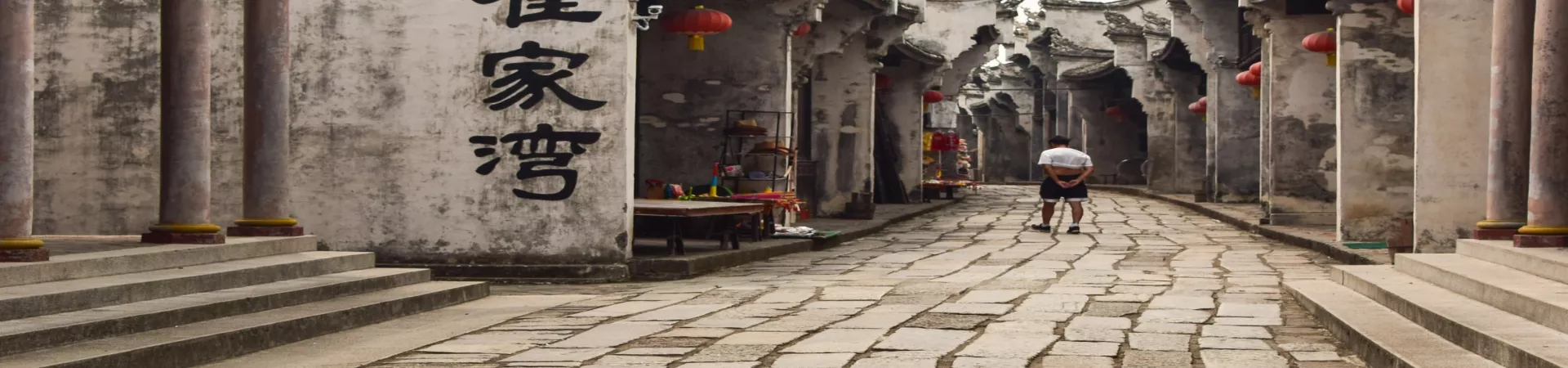
Nestled on the northern shore of the vast Honghu Lake in Jianli City, Jingzhou, Hubei Province, lies Qujiawan Ancient Town. To the casual observer, it appears as a well-preserved Ming and Qing dynasty water-town, with its serene canals, ancient flagstone streets, and traditional wooden structures with white walls and black tiles. However, Qujiawan holds a significance that transcends its architectural charm. During the late 1920s and early 1930s, this tranquil town transformed into the vibrant, pulsating heart of the Hunan-Hubei-West Hubei Revolutionary Base, earning it the legendary title of "Little Moscow." Today, as the Qujiawan Revolutionary Memorial Site, it stands not merely as a collection of old buildings but as a profound open-air museum, chronicling a pivotal chapter in China's modern revolutionary history.
I. Historical Significance: The Heart of the Soviet
A. The Rise of a Revolutionary Capital Following the setbacks of the Great Revolution in 1927, the Chinese Communist Party sought to establish rural revolutionary bases. The Hunan-Hubei-West Hubei Border Region, centered around the Honghu Lake area, became one of the most crucial and enduring of these bases. In 1931, the Hunan-Hubei-West Hubei Provincial Soviet Government was established in Qujiawan, formally designating the town as the political, military, and cultural core of the region. For a period, over 120 party, government, and military institutions were concentrated within this small town, directing revolutionary activities across dozens of counties.
B. A Living Community of Revolution Qujiawan was far more than an administrative center; it was a fully functioning revolutionary society. The base area implemented land reform, established a judicial system, promoted literacy and education, and developed its own economic policies. The revolutionaries here, led by figures like He Long, Zhou Yiqun, and Duan Dechang, worked and lived among the local populace. The town's layout thus evolved to accommodate this unique ecosystem, with former merchant shops, ancestral halls, and private homes repurposed into offices, printing houses, hospitals, and barracks.
II. Exploring the Memorial Site: A Walk Through Time
The preserved area of Qujiawan covers approximately 500 meters of the old main street, offering an immersive historical experience. The architecture itself is a silent narrator of its dual heritage.
A. Architectural Fusion: Ming-Qing Foundations and Revolutionary Adaptations The buildings predominantly showcase the style of central Hubei's water-towns from the Ming and Qing dynasties. Intricate wood carvings, horse-head gable walls, and deep, narrow shopfronts line the flagstone road. The genius of Qujiawan lies in how these historical structures were adapted. Visitors can see this transformation firsthand in the meticulously restored key sites.
B. Key Institutions and Their Stories * The Headquarters of the Hunan-Hubei-West Hubei Provincial Soviet Government: Housed in a converted traditional compound, this was the central administrative organ. Its meeting halls and simple offices evoke the austere yet determined atmosphere of the time. * The Hunan-Hubei-West Hubei Provincial Committee of the CPC: This site illustrates the party's leadership structure within the base area. Exhibits detail the political strategies and daily decision-making processes. * The Headquarters of the Second Army Group of the Red Army (He Long's Former Residence): A relatively modest dwelling that served as the nerve center for military operations. It highlights the close connection between the Red Army commanders and the people. * The Political Security Bureau, the Bureau of Justice, and the 《Red Star》 Newspaper Office: These sites reveal the comprehensive nature of the soviet government, showcasing its efforts in legal system construction, internal security, and propaganda. * The Red Army School and the Lenin School: Emphasizing the importance placed on education and ideological training for both soldiers and cadres. * The Arsenal and the Hospital: Practical sites that underscore the logistical challenges and ingenuity of maintaining a revolutionary base under constant military threat.
III. The Honghu Lake Context: A Natural Revolutionary Stronghold
Understanding Qujiawan requires an understanding of its environment. The vast, reed-filled Honghu Lake, with its labyrinth of waterways, provided a natural and formidable stronghold for the revolutionary forces.
A. A Strategic Sanctuary The lake's complex geography made it difficult for enemy forces to navigate and attack, allowing the Red Army to employ effective guerrilla tactics. The phrase "relying on the Honghu Lake" became synonymous with the base's resilience.
B. Symbiosis with the Local People The revolutionary base's survival was inextricably linked to the support of the local fishermen and farmers. The "Honghu Lake Spirit," often celebrated in songs and folklore, embodies the deep unity between the army and the people, who shared resources and risks in their common struggle.
IV. The Modern Visitor Experience: Reflection and Remembrance
Today, Qujiawan is both a patriotic education base and a destination for historical tourism. The preservation efforts have maintained an authentic atmosphere.
A. Immersive Atmosphere Walking down the quiet old street, past buildings adorned with historical placards and faded revolutionary slogans, visitors are transported to the 1930s. The lack of excessive commercial development adds to the solemn and reflective ambiance.
B. Museum and Exhibitions The on-site museum houses a collection of precious artifacts, including military uniforms, weapons, documents, and personal effects of revolutionary leaders. Detailed exhibits and historical photographs provide context, explaining the national revolutionary movement through the lens of this specific locality.
C. Connecting with Broader History A visit to Qujiawan offers a granular perspective on the Chinese revolution. It moves beyond textbook narratives to show the practical realities of building a revolutionary society—the triumphs, the hardships, and the daily life—in a specific time and place. It complements the understanding of other revolutionary sites, forming a more complete picture of this transformative period in Chinese history.
Practical Information for the Visit The site is accessible from Jingzhou city. The experience is largely walking-based, so comfortable shoes are recommended. While the historical narrative is central, the surrounding Honghu Lake area offers ecological beauty, and local cuisine, particularly freshwater fish dishes, provides a taste of the region. Visiting Qujiawan is ultimately a journey of historical imagination, inviting contemplation on the forces that shaped modern China within the evocative walls of this "Little Moscow" by the lake.